



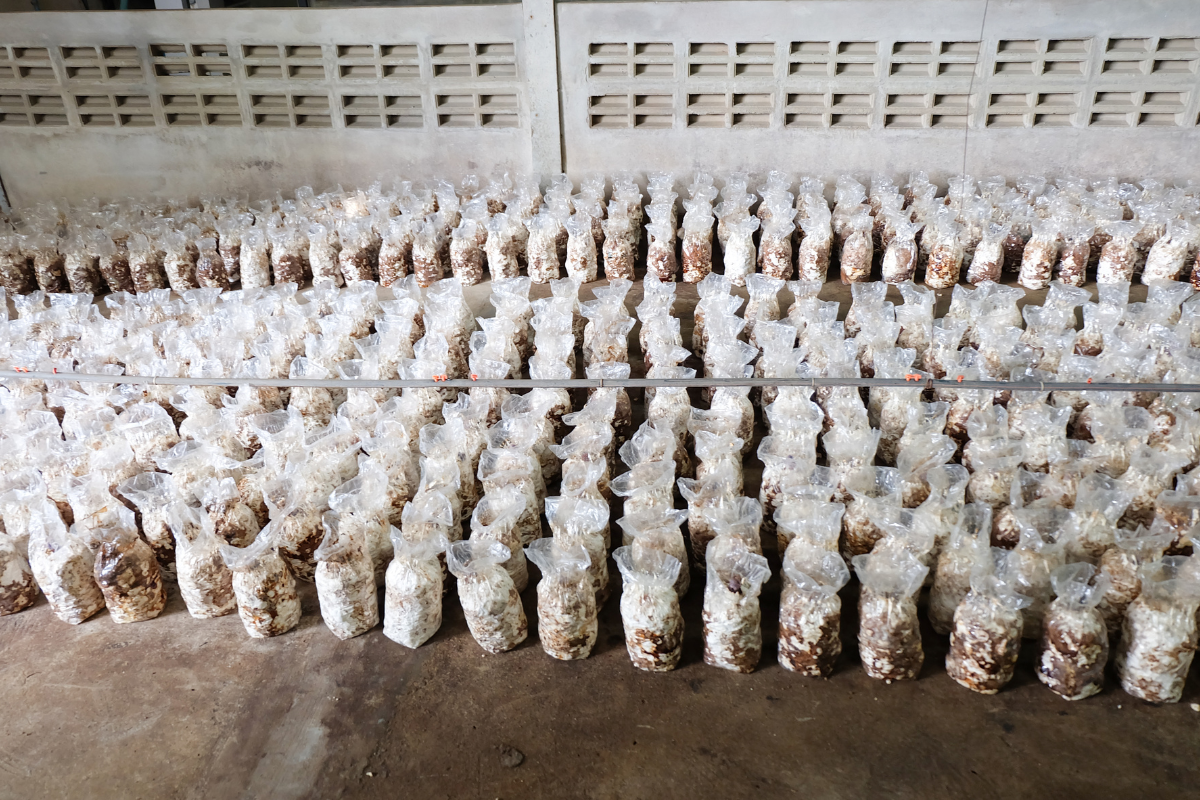
Most crops take three to six months from sowing to harvest. Mushrooms take three to four weeks. For a farmer looking to generate regular income without waiting an entire season, this single fact makes mushroom farming one of the most attractive agri-business opportunities available in India today.
Demand is rising sharply. Urban consumers are buying more mushrooms for health reasons. Hotels, restaurants, and food processing companies need steady supply. Export markets in Europe and the Middle East are paying premium prices for exotic varieties. And the government is actively supporting farmers who want to enter this space.
How Much Land and Money Do You Actually Need
Mushroom farming does not require agricultural land in the traditional sense. It can be done inside a room, a shed, or a low-cost polyhouse. A basic setup of 40 to 50 square metres is enough to start a small commercial unit.
Exotic mushrooms such as shiitake, oyster, and morels cost between 15 and 50 US dollars per kilogram in international markets. In Indian domestic markets, oyster mushrooms sell for Rs 100 to Rs 200 per kilogram, while shiitake and morels command significantly higher prices.
Initial investment for a small unit — including spawn, growing medium, basic equipment, and shed — ranges between Rs 50,000 and Rs 2 lakh depending on scale and variety. Returns on a well-managed unit can begin within the first harvest cycle.
Which Varieties Work Best in India
Oyster mushrooms are the best starting point for new farmers. They grow on paddy straw, wheat straw, and sugarcane bagasse — agricultural waste that most Indian farmers already have. They require minimal infrastructure, grow in 25 to 30 days, and have strong local market demand.
Button mushrooms require more controlled temperature conditions and are better suited to cooler regions like Himachal Pradesh, Uttarakhand, and parts of Punjab and Haryana.
States such as Himachal Pradesh and Punjab already have a thriving mushroom industry and farmers in these regions have established supply chains to urban markets and processing units.
Government Support Available
Mushroom farming qualifies for financial assistance under the National Horticulture Mission and the Pradhan Mantri Formalisation of Micro Food Processing Enterprises scheme. Farmers can also access NABARD-backed loans through Regional Rural Banks for setting up processing and cold storage units to extend shelf life and increase margins.
State agriculture departments in Maharashtra, Odisha, and Uttar Pradesh run dedicated mushroom cultivation training programmes — often free of cost — to help farmers learn spawn preparation, environment management, and post-harvest handling.
Turning raw produce into packaged goods such as dried mushrooms, mushroom powder, and mushroom-based snacks creates additional revenue streams beyond fresh sales. Value-added mushroom products are increasingly finding shelf space in urban supermarkets and on e-commerce platforms — giving farmers direct access to consumers without going through a mandi.
For Indian farmers with limited land and limited capital, mushroom farming offers something rare — fast returns, growing demand, and a product that can be scaled without buying more land.
Also Read: Punarnava Jal – The world’s first organic fertilizer! Know how it is beneficial for farmers?
Contact us – If farmers want to share any valuable information or experiences related to farming, they can connect with us via phone or whatsapp at 9599273766 or you can write to us at “kisanofindia.mail@gmail.com”. Through Kisan of India, we will convey your message to the people, because we believe that if the farmers are advanced then the country is happy.
You can connect with Kisan of India on Facebook, Twitter, and Whatsapp and Subscribe to our YouTube channel.