


Can Farm Ponds Help Farmers Store Rainwater? What Should They Check Before Building One?

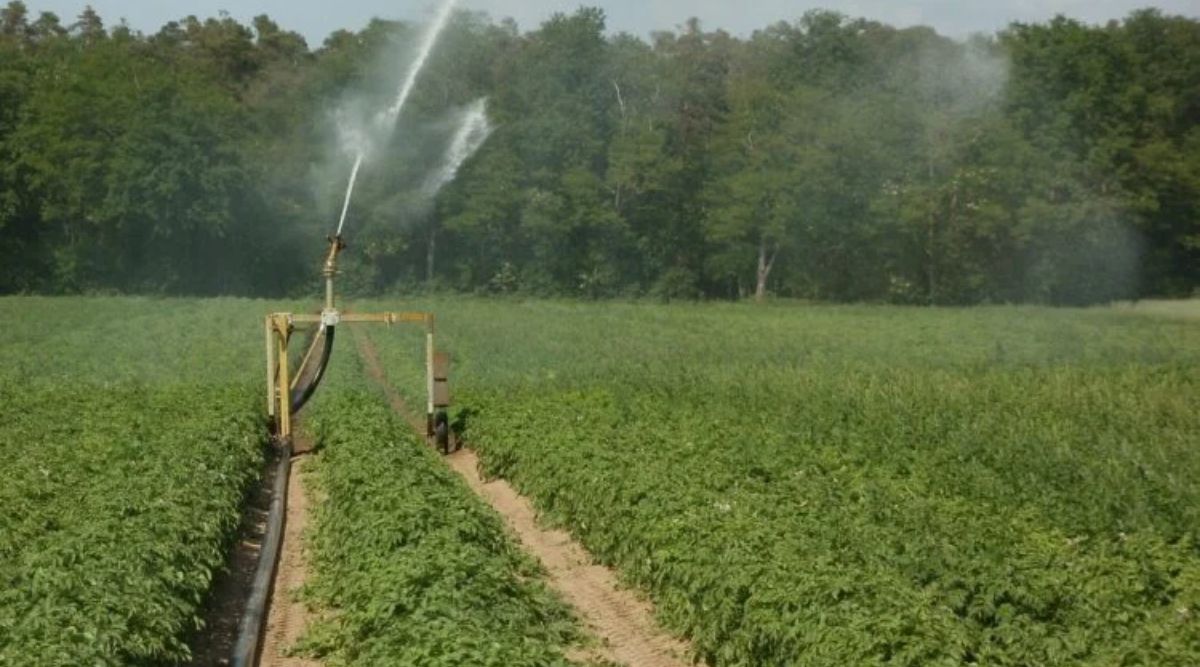
Rainwater that leaves a farm as runoff can sometimes be captured and stored for later use. Farm ponds are designed for this purpose. They can provide water for protective irrigation, livestock and other farm needs when rainfall becomes irregular.
But building a pond does not automatically solve a farm’s water shortage. Its usefulness depends on rainfall, catchment area, soil type, storage capacity, evaporation, seepage and the crops grown around it.
What is a farm pond?
A farm pond is a small water-storage structure built within or near agricultural land to collect runoff from rainfall. The stored water can later be used for irrigation and other permitted farm activities.
The pond can be constructed in different shapes and sizes depending on the land, rainfall and intended use. Its design should consider how much runoff can reach the site and how much water the farmer needs.
A pond that is too small may dry quickly, while an oversized structure can increase construction costs without providing a matching benefit.
The location is one of the most important decisions. A pond needs a suitable catchment area from which rainwater can flow into the storage structure.
Farmers should avoid placing it where runoff carries large amounts of sediment, waste or contaminants. The site should also be accessible enough for maintenance and for moving irrigation equipment.
A technical assessment can help determine whether the selected location can collect enough water. Farmers should not choose a site only because it is the lowest point on the farm.
Soil determines how much water can seep into the ground. Clay-rich soils generally hold water better than coarse, highly permeable soils.
If the soil allows rapid seepage, farmers may need a suitable lining or another design solution. This adds to the construction cost and should be included in the initial calculation.
A soil assessment before construction can help identify the expected seepage conditions. Farmers should also consider whether the stored water could affect nearby structures or fields.
How much rainwater can a pond collect?
The amount depends on rainfall, the size of the catchment area and the runoff characteristics of the land. Heavy rainfall can generate substantial runoff, but not all rainfall becomes available for storage. Some water infiltrates into the soil, while some evaporates or moves away through natural drainage. The pond should therefore be designed using realistic rainfall and runoff information.
Farmers should use local rainfall records rather than assuming that one heavy rainfall event will fill the pond every year. Stored water can provide supplemental irrigation when rainfall does not meet crop requirements. It can be particularly useful during dry periods between rainfall events.
The water should be managed carefully because the pond has a limited storage capacity. Using the entire supply early in the season can leave nothing available when the crop reaches a later water-sensitive stage. Farmers should match the available storage with crop area and irrigation needs. A small pond cannot reliably support a large irrigated area throughout a long dry period.
Open water loses moisture through evaporation, especially during hot and dry weather. The rate depends on temperature, wind, humidity and the surface area of the pond. A large shallow pond can lose more water through evaporation than a deeper pond holding a similar volume. Design therefore matters when farmers want to retain water for longer.
Farmers should discuss pond dimensions with a technical expert before construction. The goal should be to balance storage capacity, land availability and construction cost. Lining can reduce seepage where the natural soil does not hold water adequately. Depending on local conditions, farmers may use different lining materials or construction methods.
But lining also increases the cost of the structure. It may not be necessary where soil already provides sufficient water retention. Farmers should first determine whether seepage is actually a problem. Paying for a lining where it provides little additional benefit can increase the project cost without improving water availability proportionately.
Can farm ponds help during dry spells?
Their main value can come from storing water during periods of rainfall and using it later. This can provide a buffer between rainfall events. The benefit is greatest when the pond fills during the rainy period and the farmer manages the stored water carefully. If rainfall remains very low, the pond may not receive enough inflow to provide meaningful irrigation.
Farmers should therefore see a pond as one part of water management rather than as a substitute for adequate rainfall or a dependable irrigation source. Stored water may have uses beyond crop irrigation, depending on water quality and local rules. Livestock-related use requires attention to hygiene and contamination.
Farmers should avoid allowing animals to enter the pond directly if this could damage the banks or contaminate stored water intended for irrigation. Separate arrangements for livestock watering can help protect the pond and reduce erosion around its edges. Farmers should also prevent chemicals, waste and contaminated runoff from entering the storage area.
Runoff can carry soil particles into a farm pond. Over time, sediment can reduce the pond’s effective storage capacity. Farmers should inspect the pond after heavy rainfall and remove accumulated sediment when necessary. Vegetation or suitable measures around the catchment can also help reduce soil erosion.
Ignoring sediment can gradually turn a useful storage structure into a shallow water body. Maintenance therefore needs to be included in the farm’s annual water-management plan.
Can government schemes support farm ponds?
Government support for farm ponds can vary by state, programme and farmer category. Watershed-development and agricultural programmes in different states may provide assistance for water-harvesting structures. Farmers should check with their state agriculture department, watershed department or local implementing agency before starting construction.
They should confirm the current eligibility conditions, approved design, subsidy or assistance amount and documentation requirements. Construction should follow the programme’s technical specifications if financial support is being sought. The first calculation is water demand. Farmers should estimate the area they want to irrigate and the crops they plan to grow.
They should then estimate the pond’s likely water inflow, storage capacity, construction cost and annual maintenance. Pumping and irrigation equipment should also be included. The farmer can then compare the expected benefit with the total cost. A pond may make sense for one farm but not another, even when both receive similar rainfall.
A pond can reduce dependence on groundwater if farmers use stored rainwater for part of their irrigation requirement. The actual reduction will depend on how much water the pond stores and how much the farm normally pumps. Some water may also infiltrate into surrounding soil, depending on the design and local conditions. But farmers should not assume that every pond will automatically recharge groundwater significantly.
Recharge depends on geology, soil, pond design and local groundwater conditions.
What should farmers check before building?
Farmers should begin with rainfall, catchment and soil information. They should then assess water demand, pond size, location, seepage and construction cost.
They should also check whether the proposed site has any legal, drainage or land-use restrictions. If government assistance is involved, the farmer should obtain approval before construction where required.
A technical assessment can prevent costly mistakes. Building a pond first and discovering later that it cannot collect or retain enough water can leave the farmer with an expensive structure that provides little benefit.
Farm ponds can help farmers capture rainfall that would otherwise leave the field as runoff. They can provide stored water for supplemental irrigation and other farm needs.
Also Read: Punarnava Jal – The world’s first organic fertilizer! Know how it is beneficial for farmers?
Contact us – If farmers want to share any valuable information or experiences related to farming, they can connect with us via phone or whatsapp at 9599273766 or you can write to us at “kisanofindia.mail@gmail.com”. Through Kisan of India, we will convey your message to the people, because we believe that if the farmers are advanced then the country is happy.
You can connect with Kisan of India on Facebook, Twitter, and Whatsapp and Subscribe to our YouTube channel.