



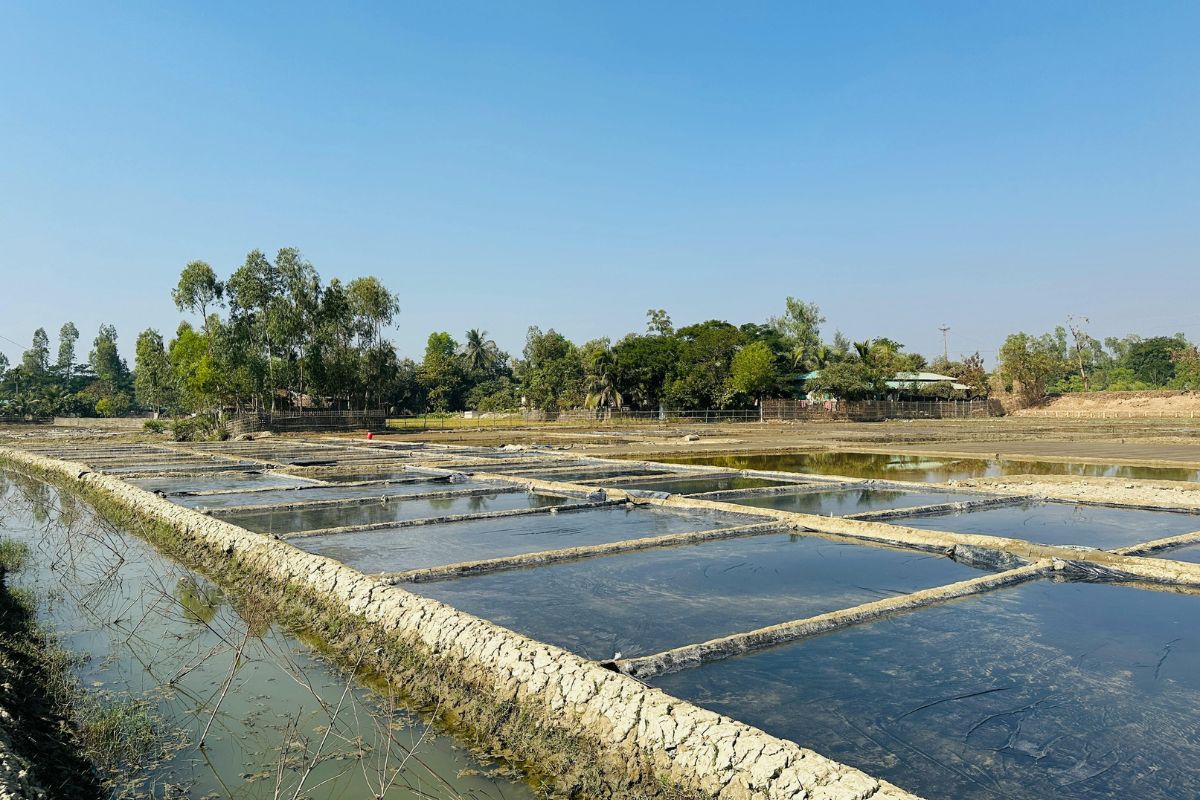
A farm pond can produce more than one type of fish when species with different feeding habits and water-use patterns are raised together. This practice, known as fish polyculture, allows farmers to use different parts of the pond and can increase the overall use of available natural and supplied feed.
ICAR-Central Institute of Fisheries Education’s Kolkata Centre has started a scientific demonstration of feed-based, species-diversified fish polyculture in 25 farmers’ ponds in Dhemaji district of Assam. The programme began on 6–7 October 2026 under the institute’s North Eastern Hill region scheme.
The participating farmers had already received skill-development training from ICAR-CIFE. The institute provided fish fingerlings and pelleted feed and gave technical guidance covering pre-stocking, stocking and post-stocking management.
The demonstration is designed to show farmers how scientific management can improve traditional carp polyculture. ICAR expects the programme to act as a practical model for more than 100 fish farmers in the area, although the final production and income results are not yet available.
How Does Fish Polyculture Work?
Different fish species occupy different feeding zones and have different food preferences. A well-designed combination can therefore make better use of the pond than relying on a single species. Common carp-based systems may combine surface, column and bottom-feeding fish according to local recommendations.
The exact combination should not be copied blindly from another farm. Water depth, pond size, water quality, availability of feed, local climate and market demand all affect the suitable stocking plan.
Feed management is also important. The Assam demonstration specifically includes pelleted fish feed along with scientific guidance. Farmers need to provide feed according to fish size, stocking density and recommended feeding practices rather than adding excessive feed.
Overfeeding can increase production costs and deteriorate water quality. Uneaten feed decomposes and can contribute to changes in water conditions. Farmers should therefore observe feeding response and follow technical advice instead of assuming that more feed will automatically produce more fish.
Why Scientific Management Matters
Before stocking fish, farmers need to prepare the pond properly. Water quality, pond depth, unwanted fish, aquatic weeds and other conditions should be checked. Proper preparation helps reduce problems after fingerlings are introduced.
Stocking density also needs careful planning. Too many fish in a pond can increase competition for food and oxygen and may reduce growth. Too few fish may leave available resources underused. The right density depends on the pond and the production system being followed.
After stocking, farmers should regularly observe fish behaviour and water conditions. Fish coming to the surface, reduced feeding, unusual swimming or sudden mortality can indicate water-quality or health problems that need immediate attention.
ICAR-CIFE’s Assam programme is structured around pre-stocking, stocking and post-stocking management. This is important because successful fish farming is not simply about putting fingerlings into a pond and waiting for harvest. Regular management determines whether the system performs well.
Can Farmers Earn More From the Same Pond?
Polyculture can potentially improve pond productivity because different fish species use different available food resources. But farmers should not assume that every mixed-species system will automatically increase income.
Returns depend on fingerling prices, feed costs, mortality, growth rate, harvest size and the local selling price. Farmers also need to consider labour, pond preparation, water management and transportation costs before calculating profitability.
Market demand should be checked before stocking. A species may grow well but provide poor returns if buyers are limited or prices are low in the local market. Farmers should identify nearby markets and preferred fish sizes before finalising the production plan.
Harvesting can also be staggered depending on the species and local practice. Partial harvesting may provide earlier cash flow while allowing remaining fish to continue growing. The method should be planned according to the stocking system and market conditions.
For farmers already owning ponds, diversification can provide another source of farm income. But the pond should first be assessed for its suitability, and farmers should calculate expected costs rather than treating polyculture as a low-cost activity by default.
What Farmers Should Check Before Stocking Fish
Farmers should first test or assess pond water quality and make sure the pond has a reliable water source. They should also check whether the pond is suitable for the species being considered and whether the water can support the intended stocking density.
The next step is to buy healthy fingerlings from a reliable hatchery or authorised source. Poor-quality or unhealthy seed can reduce survival and increase production risk. Farmers should ask their fisheries department or KVK for recommendations on suitable suppliers.
Feed should also be purchased according to the production plan. Farmers should keep records of the quantity and cost of feed used because feed can form a major part of aquaculture expenditure.
Farmers should maintain basic records of stocking numbers, feed, mortality, growth and sales. These records help calculate the actual cost of production and show whether the system is delivering a better return than the farmer’s previous pond-management method.
Could This Model Work for Small Farmers?
Small farmers can consider polyculture where they already have a suitable pond and access to local fish markets. The advantage is that the farmer can use an existing water resource for another farm enterprise rather than depending entirely on crop income.
But technical support is important, particularly for farmers who are new to aquaculture. Farmers should approach their district fisheries office, KVK or agricultural university before changing stocking practices.
The Assam demonstration shows one way research institutions can support farmers: training is combined with fingerlings, feed and technical guidance. Such demonstrations allow farmers to observe the production system rather than relying only on written recommendations.
Farmers should also remember that the Assam programme is still a demonstration. ICAR has not yet reported the final fish yield, production cost or additional income from the 25 ponds. Therefore, those figures should not be presented as guaranteed returns.
Is Fish Polyculture Worth Trying?
Fish polyculture can help farmers make better use of pond resources by combining compatible species with different feeding habits. When supported by proper stocking, feeding and water management, it can become an additional farm enterprise.
The most important step is to design the system according to local conditions. Farmers should check pond suitability, fish availability, feed costs and market demand before investing.
ICAR’s latest Assam demonstration is worth watching because its results could provide field-level evidence on whether feed-based, species-diversified carp polyculture can improve productivity and returns for small farmers.
For farmers considering aquaculture, the practical starting point is simple: get the pond tested, choose suitable species with technical guidance, buy healthy fingerlings and keep detailed production records.
Also Read: Punarnava Jal – The world’s first organic fertilizer! Know how it is beneficial for farmers?
Contact us – If farmers want to share any valuable information or experiences related to farming, they can connect with us via phone or whatsapp at 9599273766 or you can write to us at “kisanofindia.mail@gmail.com”. Through Kisan of India, we will convey your message to the people, because we believe that if the farmers are advanced then the country is happy.
You can connect with Kisan of India on Facebook, Twitter, and Whatsapp and Subscribe to our YouTube channel.