


Pulses in Crop Rotation: Can Adding a Pulse Crop Improve Farm Soil and Income?

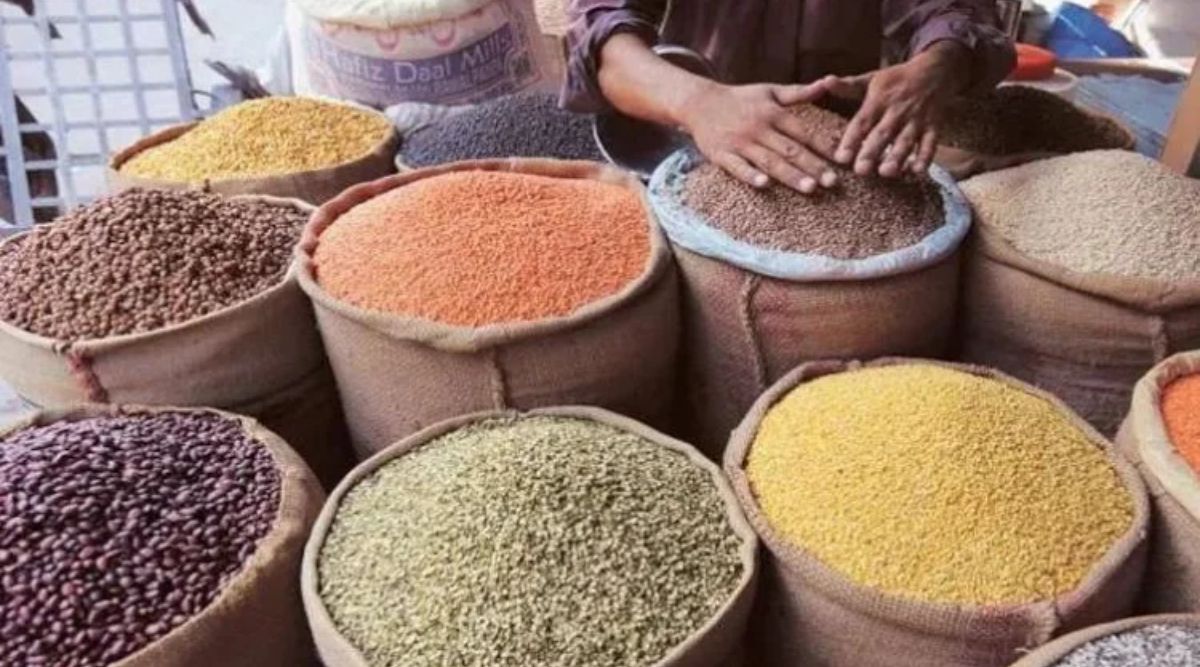
Many Indian farms depend heavily on one or two major crops. Adding pulses such as chickpea, lentil, pigeon pea or green gram to a crop rotation can provide another source of income while helping farmers manage soil fertility and water resources.
Pulses are legumes, and many form associations with beneficial bacteria that help fix atmospheric nitrogen in the soil. This does not eliminate the need for fertilisers, but it can contribute to nutrient cycling when pulses are properly integrated into the farming system.
The value of pulses also extends beyond the field. India has a large domestic demand for pulses, making them important food crops as well as potential diversification options for farmers.
How Do Pulses Help Soil?
Legume crops can form nodules on their roots where nitrogen-fixing bacteria live. These bacteria convert atmospheric nitrogen into forms that the plant can use.
After the pulse crop is harvested, some nutrients remain in crop residues and roots. When residues decompose, part of the nutrients can return to the soil and become available to subsequent crops.
The benefit depends on the crop, soil, variety, climate and management. Farmers should not assume that growing any pulse will automatically reduce fertiliser requirements for the following crop.
ICAR has promoted pulse-based crop rotations and diversification as part of sustainable farming systems. Soil testing remains important because farmers need to understand existing nutrient levels before changing their fertiliser programme.
Pulses can also contribute organic matter when residues are properly managed. Farmers who remove every residue from the field may reduce some of the potential soil-health benefit, although residues can have other valuable uses.
The suitable pulse depends on the region and season. Chickpea and lentil are important rabi pulses, while pigeon pea, mung bean and black gram are grown in different parts of India during kharif or summer seasons.
Farmers should select crops according to rainfall, irrigation availability, soil type and local market demand. A pulse that performs well in one state may not be suitable for another region.
Short-duration pulses can sometimes fit between two major crops. This can increase cropping intensity without requiring farmers to change their entire production system.
Farmers should also choose improved varieties recommended for their agro-climatic region. Disease resistance, maturity period and tolerance to local weather conditions can be more important than simply selecting a variety advertised as high-yielding.
Can Pulses Save Water?
Many pulse crops can require less irrigation than some water-intensive cereal production systems, although water needs vary by crop and growing conditions.
Chickpea, for example, is largely grown under rainfed conditions in several parts of India. Farmers with limited irrigation may therefore consider pulses as part of a broader crop-diversification strategy.
Water savings are not automatic. A farmer who gives excessive irrigation to a pulse crop can still waste water. Irrigation should be based on crop stage, soil moisture and local weather.
Crop diversification can also reduce the risk of depending entirely on one water-demanding crop. This can become increasingly useful in regions facing groundwater stress or uncertain rainfall.
Crop rotation spreads economic risk. If one crop suffers from poor prices or weather damage, another crop in the rotation may provide income during the season.
Farmers should still calculate expected returns before selecting a pulse. Seed, labour, fertiliser, irrigation, plant protection, harvesting and transport costs all need to be considered.
Market access is particularly important. A crop may be profitable at the farm gate in one district but less attractive in another because of transportation costs or limited local buyers.
Farmers can explore local mandis, Farmer Producer Organisations, cooperatives, processors and government procurement channels where applicable. Before increasing pulse acreage, they should understand where and when the crop can be sold.
Do Pulses Reduce Fertiliser Use?
Pulses can contribute nitrogen to the farming system through biological nitrogen fixation, but they should not be treated as a complete substitute for fertiliser.
The amount of nitrogen fixed varies with crop species, bacterial association, soil conditions and plant growth. Farmers should continue to follow soil-test-based nutrient recommendations for both the pulse crop and the crop that follows.
Rhizobium inoculation can improve nodulation in suitable pulse crops when compatible strains and recommended practices are used. Farmers should obtain inoculants through reliable sources and follow the recommended method of application.
Balanced fertilisation remains important. Phosphorus, potassium, sulphur and micronutrients can also influence pulse growth, so focusing only on nitrogen can lead to nutrient imbalances.
How Can Farmers Start?
Farmers do not need to replace their main crop immediately. A practical approach is to introduce a pulse into a portion of the farm and compare yield, input costs, water use and market returns with the existing rotation.
For example, farmers can examine whether a short-duration pulse fits between two existing crops without delaying the following sowing. The decision should be based on local crop calendars and available moisture.
Farmers should also discuss suitable pulse varieties and production practices with their KVK or agriculture department. Local recommendations can help identify disease risks, seed requirements and appropriate sowing periods.
Pulses can become more than a secondary crop. When properly planned, they can diversify farm income, contribute to soil nutrient cycling and reduce dependence on a single crop. Their success depends on choosing the right crop, variety, season and market for the farm.
Also Read: Punarnava Jal – The world’s first organic fertilizer! Know how it is beneficial for farmers?
Contact us – If farmers want to share any valuable information or experiences related to farming, they can connect with us via phone or whatsapp at 9599273766 or you can write to us at “kisanofindia.mail@gmail.com”. Through Kisan of India, we will convey your message to the people, because we believe that if the farmers are advanced then the country is happy.
You can connect with Kisan of India on Facebook, Twitter, and Whatsapp and Subscribe to our YouTube channel.