



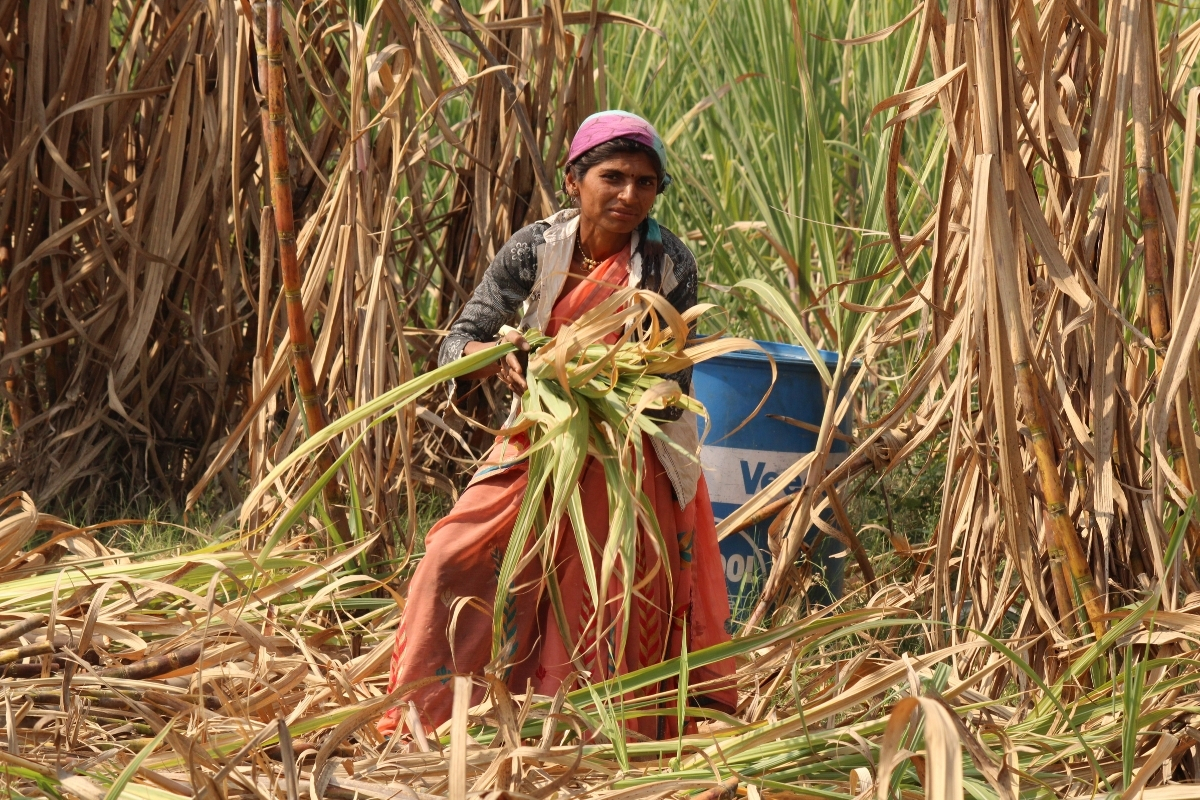
Farmers growing sugarcane often wait many months before harvesting the crop and receiving the main income. Growing a suitable second crop between sugarcane rows during its early growth stage may offer an additional harvest. The approach needs careful planning because both crops compete for sunlight, nutrients, water and space.
The Indian Council of Agricultural Research’s Indian Institute of Farming Systems Research has been demonstrating sugarcane and groundnut intercropping in Kushawali and nearby villages in Sardhana block, Meerut district, Uttar Pradesh. During a visit on 16 May 2026, ICAR’s Director General reviewed the demonstrations and spoke with farmers and scientists.
The research aims to explore whether groundnut can use available space during the early stages of sugarcane growth while contributing to oilseed production. The model is being studied as a way to make better use of farmland, but farmers should not assume that the same combination will produce equal returns in every region.
How Intercropping Works
Intercropping means growing two or more crops in the same field during overlapping periods. The crops are usually arranged in a planned row pattern so that farmers can manage their growth, irrigation, fertiliser and harvesting without one crop excessively affecting the other.
Sugarcane takes several months to mature. During its early growth, the canopy may not fully cover the ground, leaving some space available for a compatible intercrop. Groundnut is a legume and can fix atmospheric nitrogen through its association with soil bacteria. The amount of nitrogen available to the following crop depends on growing conditions and residue management.
Groundnut also produces edible oilseed, creating a potential second harvest before the sugarcane is ready. Yet the extra crop requires seed, labour and other inputs. Farmers need to compare the additional income with these costs and check whether the intercrop affects sugarcane growth or harvesting operations.
What Farmers Should Check Before Sowing
1. Confirm Local Suitability
Sugarcane and groundnut have different soil, moisture and management requirements. Farmers should check whether their soil type, growing season, rainfall and irrigation supply suit both crops. Advice from the local agriculture department or Krishi Vigyan Kendra can help determine whether the combination has been tested in their area.
2. Plan Row Spacing
The intercrop must fit between sugarcane rows without creating excessive competition. Farmers should follow a locally tested planting pattern rather than choosing spacing by guesswork. The correct arrangement depends on the sugarcane variety, planting method, machinery and the recommended groundnut variety.
3. Check Water Availability
Both crops need suitable moisture during establishment and active growth. Groundnut can suffer when water is inadequate at important growth stages, while excess moisture can also harm crop performance. Farmers should assess irrigation access before sowing and avoid adding an intercrop that places too much pressure on a limited water supply.
4. Calculate the Extra Cost
Farmers should estimate groundnut seed, labour, fertiliser, irrigation, plant protection and harvesting costs before starting. They should also check whether local buyers or markets are available. The relevant measure is the additional net return after expenses, not the gross value of the second crop alone.
Can Groundnut Improve Soil Health?
Groundnut belongs to the legume family. With suitable soil conditions and effective root-nodule bacteria, it can fix atmospheric nitrogen. This process supports the plant’s nitrogen requirement, but it does not mean that all fixed nitrogen immediately becomes available to sugarcane growing beside it.
The benefit to the wider farming system depends on how much crop residue and root material remain in the soil after harvest. Removing most plant material can reduce the nutrients returned to the field. Farmers should continue to follow soil-test-based fertiliser recommendations for sugarcane instead of automatically cutting fertiliser doses.
Intercropping can also increase management demands. Farmers must monitor both crops for weeds, pests and diseases, and ensure that operations for one crop do not damage the other. The system is most useful when the additional harvest can be managed without compromising the main crop.
How Farmers Can Test the Model Safely
Farmers interested in sugarcane and groundnut intercropping should first seek recommendations from their local KVK or sugarcane development office. They should ask whether the system has been tested under local conditions, which varieties are recommended, and what row arrangement and sowing window are suitable.
A small trial can help farmers compare intercropped sugarcane with a normal sugarcane plot. They should record the input costs, groundnut yield, sugarcane growth and final returns from both plots. Results from one season should be treated cautiously because rainfall, pest pressure and market prices can change.
ICAR’s demonstration programme offers a research-backed reason to examine sugarcane and groundnut intercropping. Its value for an individual farm will depend on local field results, additional costs and the effect on sugarcane yield. Farmers should adopt the model only after confirming that the crop combination fits their conditions.
Also Read: Punarnava Jal – The world’s first organic fertilizer! Know how it is beneficial for farmers?
Contact us – If farmers want to share any valuable information or experiences related to farming, they can connect with us via phone or whatsapp at 9599273766 or you can write to us at “kisanofindia.mail@gmail.com”. Through Kisan of India, we will convey your message to the people, because we believe that if the farmers are advanced then the country is happy.
You can connect with Kisan of India on Facebook, Twitter, and Whatsapp and Subscribe to our YouTube channel.