



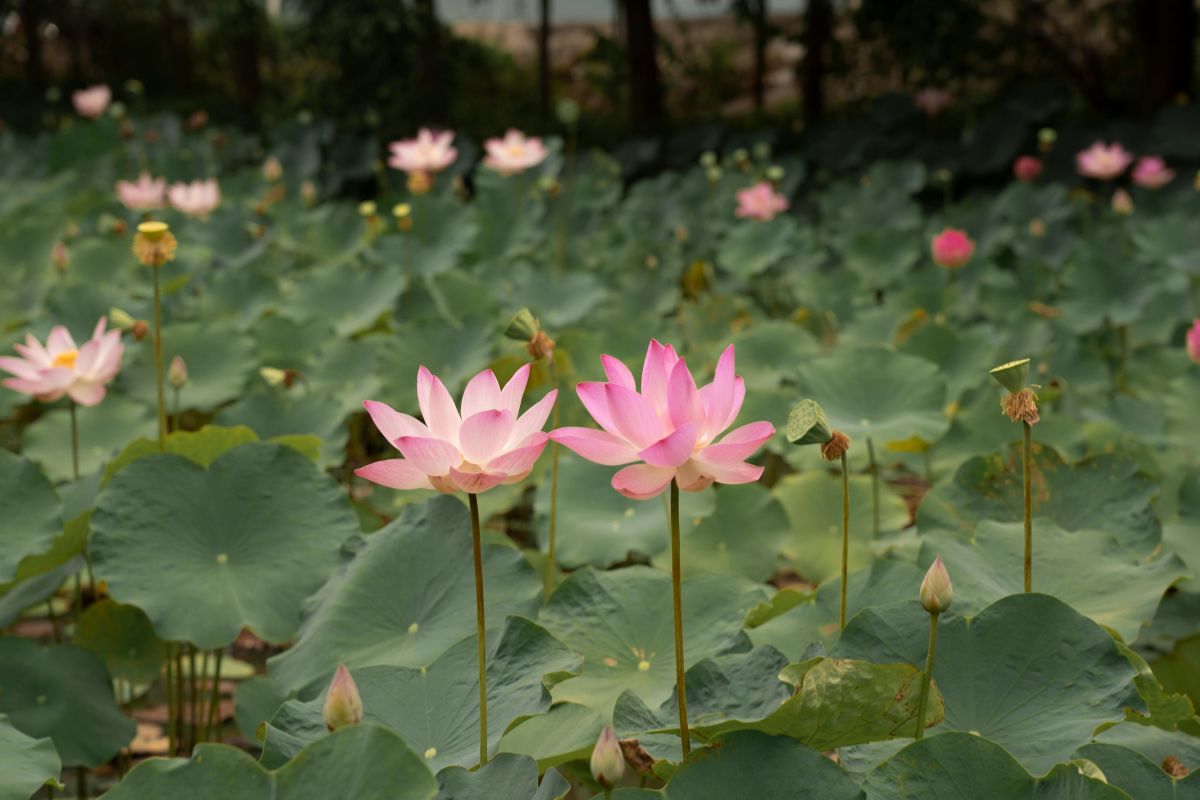
On a cold morning along the wetlands of Srinagar, farmers wade waist-deep into water, searching beneath thick layers of mud for one of Kashmir’s most valuable traditional crops. Locally known as Nadru, the lotus stem has been part of Kashmiri cuisine for centuries. Today, it is also becoming an important agri-business opportunity for hundreds of farming families across the Valley.
From the lakes of Srinagar to wetlands in Ganderbal, Bandipora, and Anantnag, demand for lotus stems has grown steadily over the past decade. Restaurants, retail chains, and online food sellers are increasingly sourcing the product, turning what was once a seasonal local crop into a growing commercial enterprise.
For many farmers, lotus stem cultivation now provides higher returns than several conventional agricultural activities.
Unlike traditional field crops, lotus stems are cultivated in lakes, ponds, and wetlands.
The edible stem develops underwater beneath lotus plants that spread across large water bodies during the growing season. Harvesting requires considerable skill and physical effort. Farmers manually extract stems from deep mud, often working for hours in cold water.
The work remains largely unchanged despite advances in agricultural mechanisation elsewhere.
In Kashmir’s Dal Lake, Wular Lake, and several marshland ecosystems, harvesting teams begin work early in the morning before produce is transported to local wholesale markets.
The crop’s unique growing environment makes large-scale mechanisation difficult, preserving a labour-intensive farming tradition.
Demand Extends Far Beyond Kashmir
For generations, Nadru was consumed primarily within Kashmir.
Today, that market has expanded significantly.
Kashmiri communities living in Delhi, Mumbai, Bengaluru, and other cities have created strong demand for the vegetable outside the Valley. Restaurants specialising in Kashmiri cuisine rely heavily on lotus stems for popular dishes such as Nadru Yakhni and Nadru Monje.
Retailers have also begun supplying fresh and processed lotus stem products to urban consumers interested in regional foods.
The expansion of cold-chain logistics has made transportation easier, allowing farmers to access markets that were previously difficult to reach.
As demand increases, prices often remain attractive for growers.
The lotus stem economy extends beyond farmers alone.
Harvesting, transportation, sorting, wholesale trading, retail sales, and food processing all generate employment linked to the crop.
In several wetland communities around Srinagar, entire families participate in different stages of the value chain.
For households with limited agricultural land, aquatic farming provides an alternative source of income.
Many families combine lotus stem harvesting with fishing, vegetable cultivation, and tourism-related activities.
The diversification helps reduce economic risk while making better use of natural resources available in wetland regions.
Like many traditional farming systems, lotus stem cultivation faces environmental challenges.
Wetland ecosystems across Kashmir are under pressure from pollution, encroachment, urban expansion, and changing weather patterns. Farmers say water levels have become less predictable in some areas.
Warmer temperatures and changing rainfall patterns can affect aquatic ecosystems that support lotus cultivation.
Environmental experts warn that protecting wetlands is essential not only for biodiversity but also for the livelihoods that depend upon them.
Without healthy lakes and marshes, the future of lotus stem farming could face serious challenges.
Value Addition Offers New Opportunities
Entrepreneurs are increasingly exploring processed lotus stem products including vacuum-packed vegetables, ready-to-cook items, dehydrated products, and specialty food ingredients.
These efforts allow producers to extend shelf life and reach consumers outside traditional markets.
Food businesses see potential because lotus stems are closely associated with Kashmir’s culinary identity.
Branding and packaging are helping transform a traditional agricultural product into a premium food category.
For farmers, value addition offers the possibility of capturing a larger share of consumer spending rather than relying solely on raw produce sales.
The story of lotus stem farming reflects a broader shift taking place across Indian agriculture.
Consumers are increasingly seeking regional foods with strong cultural identities. Farmers are looking beyond production and focusing on branding, processing, and market development.
Nadru sits at the intersection of those trends. What was once harvested mainly for local kitchens is now reaching customers across the country.
For the farming families working in Kashmir’s wetlands, the crop remains physically demanding to produce. Yet its growing popularity is creating opportunities that previous generations could scarcely imagine.
Beneath the waters of Kashmir’s lakes, an old crop is finding a new future.
Also Read: Punarnava Jal – The world’s first organic fertilizer! Know how it is beneficial for farmers?
Contact us – If farmers want to share any valuable information or experiences related to farming, they can connect with us via phone or whatsapp at 9599273766 or you can write to us at “kisanofindia.mail@gmail.com”. Through Kisan of India, we will convey your message to the people, because we believe that if the farmers are advanced then the country is happy.
You can connect with Kisan of India on Facebook, Twitter, and Whatsapp and Subscribe to our YouTube channel.