


Explainer: Why Tamil Nadu’s Village-Level Agriculture Model Is Getting National Attention

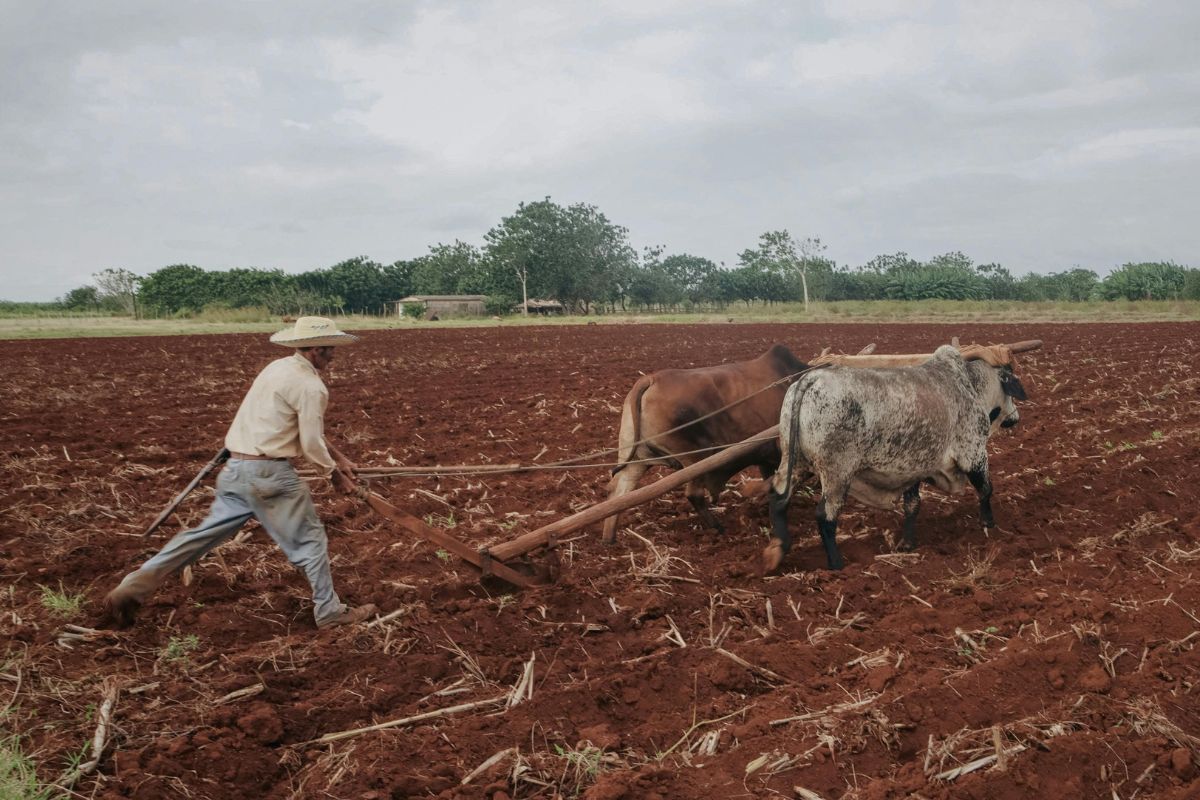
Tamil Nadu is quietly building one of India’s most detailed village-level agriculture systems. Instead of focusing only on subsidies or crop procurement, the state government is expanding programmes that combine mechanisation, water conservation, climate farming, village outreach, and local agricultural infrastructure together.
The centrepiece of this push remains the Kalaignarin All Village Integrated Agricultural Development Programme, launched to cover all village panchayats across the state through phased implementation. The programme aims to combine multiple state and central agriculture schemes into one village-level development system.
Agriculture experts say Tamil Nadu’s approach is attracting attention because it focuses on complete rural agricultural ecosystems instead of isolated schemes.
Most agricultural schemes in India focus mainly on individual farmer benefits such as subsidies or crop support. Tamil Nadu’s programme works differently. It targets entire village panchayats through integrated development planning.
Under the scheme, villages receive support for:
- Farm ponds
- Desilting of tanks and channels
- Micro-irrigation
- Coconut and fruit saplings
- Vegetable cultivation
- Sprayers and farm tools
- Bund crop seeds
- Home garden kits
The government said the programme aims to strengthen agricultural productivity, water conservation, and rural livelihoods simultaneously.
Researchers say this village-level approach matters because farming problems are often connected with local water systems, common infrastructure, and shared rural resources.
Tamil Nadu Is Expanding the Scheme Further in 2025-26
The programme is still expanding. In the 2025-26 Agriculture Budget, Tamil Nadu announced extension of the Kalaignarin All Village Integrated Agricultural Development Programme to the remaining 2,338 village panchayats. The government allocated ₹269.50 crore for this phase, expected to benefit around 9.36 lakh farmers.
Tamil Nadu has increasingly used its separate agriculture budget to push climate-resilient farming, mechanisation, and local agricultural infrastructure.
The state’s agriculture allocation increased significantly during recent years, crossing ₹47,000 crore in the latest interim agriculture budget.
Labour shortages are becoming a serious issue across Indian agriculture. Younger rural workers increasingly move toward urban jobs while ageing farmers remain in villages. Tamil Nadu’s agriculture programmes are responding heavily through mechanisation support.
The state announced:
- 130 custom hiring centres
- Subsidies for power tillers and weeders
- Distribution of agricultural machinery
- Farm mechanisation support for small farmers
Officials said thousands of agricultural machines and tools will be distributed through village-level development programmes.
Agriculture experts say custom hiring centres may become increasingly important because most small farmers cannot afford expensive farm machinery independently.
Hill Farmers Are Getting Separate Support
Tamil Nadu also recently announced the Malaivazh Uzhavar Munnetra Thittam, or Hill Farmers Development Scheme, targeting farmers in hilly districts. The programme focuses on:
- Millet cultivation
- Vegetable farming
- Integrated farming
- Micro-irrigation
- Value addition
- Mechanisation
The government allocated ₹22.80 crore for around 63,000 hill farmers across 20 districts.
Agriculture experts say hill farming often receives less attention despite facing severe climate and infrastructure challenges.
Another major initiative involves the creation of 1,000 Chief Minister’s Farmers Service Centres across Tamil Nadu. These centres will provide:
- Seeds and fertilizers
- Crop guidance
- Pest management advice
- Modern farming support
- Value-addition training
The programme also aims to create rural agricultural employment by involving agriculture graduates and diploma holders.
Researchers say local extension systems are becoming increasingly important because climate change is making farming decisions more complex.
Tamil Nadu’s agriculture planning heavily emphasizes water management because much of the state depends on rainfed agriculture and faces periodic drought pressure.
Several schemes now focus on:
- Farm ponds
- Summer ploughing
- Tank desilting
- Micro-irrigation
- Soil moisture conservation
The government recently announced a summer ploughing programme covering three lakh acres to improve soil moisture retention and water conservation.
Agriculture experts say future farming systems in southern India may depend heavily on groundwater management and rainwater conservation.
Tamil Nadu’s Model Reflects a Bigger Shift
Tamil Nadu’s agriculture strategy reflects a larger shift happening inside Indian farming policy. States are increasingly moving beyond simple subsidy systems toward integrated rural development models connected with climate resilience, mechanisation, water management, and village infrastructure.
Researchers say the state’s focus on village-level agricultural ecosystems may become important because farming challenges are becoming interconnected. Water shortages, labour migration, climate instability, and shrinking landholdings now affect agriculture simultaneously.
Tamil Nadu’s model is still evolving.
But agriculture experts say it represents one of the clearest examples of how Indian states are beginning to redesign farming policy around long-term rural sustainability instead of only seasonal crop production.
Also Read: Punarnava Jal – The world’s first organic fertilizer! Know how it is beneficial for farmers?
Contact us – If farmers want to share any valuable information or experiences related to farming, they can connect with us via phone or whatsapp at 9599273766 or you can write to us at “kisanofindia.mail@gmail.com”. Through Kisan of India, we will convey your message to the people, because we believe that if the farmers are advanced then the country is happy.
You can connect with Kisan of India on Facebook, Twitter, and Whatsapp and Subscribe to our YouTube channel.