



When the Covid-19 pandemic disrupted supply chains across India, Kerala faced a challenge shared by many states. Large quantities of vegetables, fruits, and essential food items consumed by households were arriving from outside the state. Transport restrictions and uncertainty exposed the risks of depending heavily on external supplies.
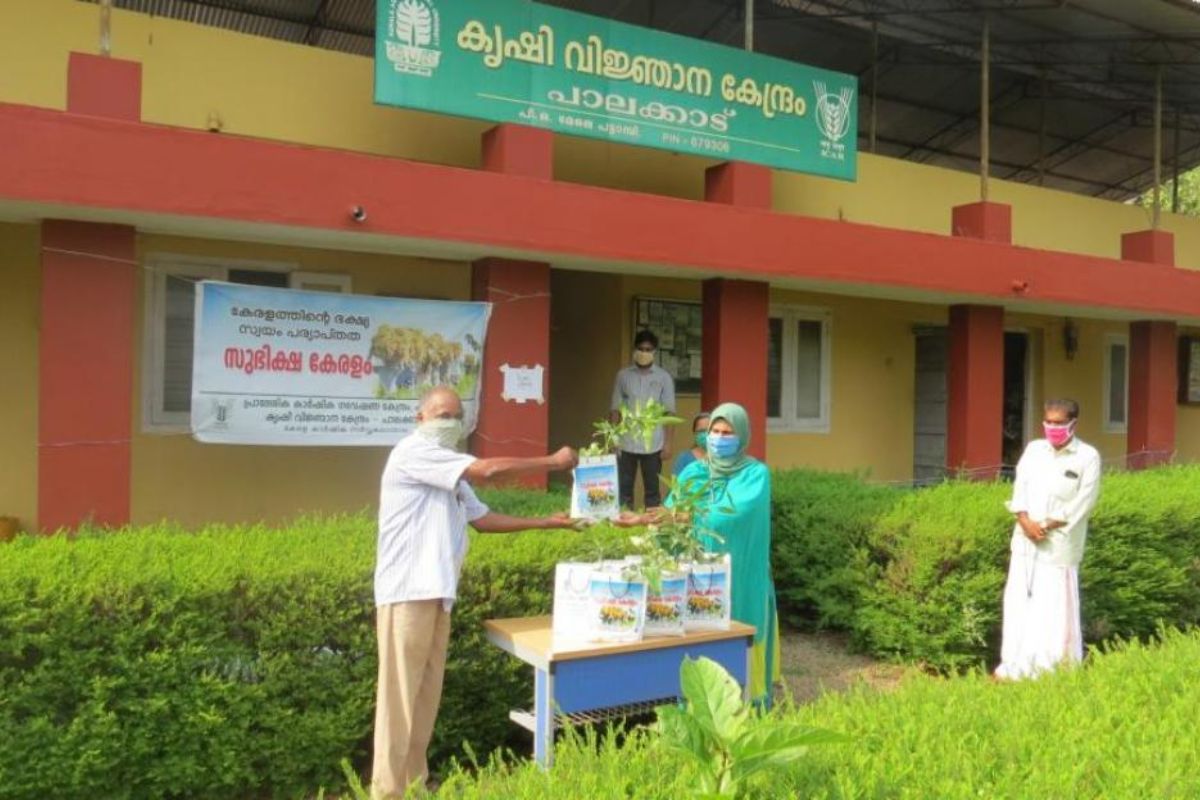
In response, the Kerala government launched Subhiksha Keralam, an ambitious programme aimed at increasing local food production and encouraging communities to grow more of what they consume. Several years later, the initiative continues to shape conversations around food security, kitchen farming, and self-reliant agriculture in the state.
The programme was not designed as a short-term emergency measure alone. It reflected a broader effort to strengthen local production systems and reduce dependence on imports from neighbouring states.
Kerala’s geography presents unique agricultural challenges. Rapid urbanisation, fragmented landholdings, and changing land use patterns have reduced the area available for cultivation in many regions.
Despite being known for crops such as coconut, rubber, spices, and banana, Kerala imports a significant share of its vegetables from states including Tamil Nadu and Karnataka.
Subhiksha Keralam sought to address this gap.
The programme encouraged cultivation of vegetables, fruits, tubers, and other food crops across available land. Local governments, farmer groups, self-help groups, and community organisations participated in efforts to bring unused land back under cultivation.
The focus extended from commercial farms to household gardens and community farming projects.
Officials argued that food security begins at the local level and that every available space could contribute to production.
Kitchen Gardens Became a Movement
One of the most visible outcomes of the programme was the rapid expansion of kitchen gardens.
Across urban and rural Kerala, households began growing vegetables such as tomato, chilli, brinjal, okra, spinach, and cucumber in backyards, terraces, balconies, and small plots.
Agricultural officers distributed seeds, seedlings, and technical guidance through local institutions.
For many families, kitchen gardening reduced dependence on market purchases while increasing access to fresh produce.
The movement also attracted younger participants who had little previous connection with agriculture. Schools, resident associations, and neighbourhood groups joined cultivation drives that brought farming into everyday life.
In several districts, vegetable production increased noticeably as thousands of households began contributing small quantities of produce.
Beyond household gardens, community farming became another important component.
Women’s self-help groups under the Kudumbashree network played a central role in cultivating leased land and common spaces. These groups organized collective farming activities that generated income while increasing local food production.
In districts such as Alappuzha, Thrissur, Palakkad, and Malappuram, community farms produced vegetables, bananas, and other food crops on a scale larger than individual kitchen gardens.
The model helped address one of Kerala’s biggest agricultural constraints: limited land ownership.
By pooling resources and working collectively, groups were able to cultivate land that might otherwise remain unused.
Lessons in Food Security
The programme gained attention because it highlighted a question many states are now considering.
How much food should a region produce for itself?
The pandemic demonstrated how quickly supply chains can be disrupted by unforeseen events. Rising fuel costs, extreme weather, and transportation challenges have reinforced concerns about food system resilience.
Subhiksha Keralam encouraged policymakers to view agriculture not only as an economic activity but also as a strategic necessity.
Increasing local production does not eliminate the need for trade, but it can reduce vulnerability during periods of disruption.
The experience showed that even densely populated regions with limited farmland can expand food production through community participation.
The programme also revealed several long-term challenges. Many participants entered farming during the pandemic but struggled to maintain cultivation after normal economic activity resumed. Labour shortages, rising input costs, and limited market access affected some projects.
Urban expansion continues to reduce agricultural land in many parts of Kerala.
Farmers also face increasing climate-related risks including floods, landslides, unseasonal rainfall, and heat stress.
Maintaining momentum requires continued support, technical guidance, and economic incentives that make cultivation viable over the long term.
Without those factors, temporary gains can be difficult to sustain.
A Model Other States Are Watching
Despite the challenges, Subhiksha Keralam remains one of India’s most closely watched state-level food production initiatives.
Its emphasis on decentralised cultivation, community participation, and household food production offers lessons for regions facing similar concerns about food security.
The programme demonstrated that agriculture is not confined to large farms. Small plots, community spaces, school gardens, and household backyards can collectively contribute significant production when supported by coordinated efforts.
For Kerala, the initiative helped revive interest in local cultivation at a time of crisis.
For other states, it offers an example of how food security can begin much closer to home than many people imagine.
Also Read: Punarnava Jal – The world’s first organic fertilizer! Know how it is beneficial for farmers?
Contact us – If farmers want to share any valuable information or experiences related to farming, they can connect with us via phone or whatsapp at 9599273766 or you can write to us at “kisanofindia.mail@gmail.com”. Through Kisan of India, we will convey your message to the people, because we believe that if the farmers are advanced then the country is happy.
You can connect with Kisan of India on Facebook, Twitter, and Whatsapp and Subscribe to our YouTube channel.