


From Chikiti to Chicago: How a Young Farmer Turned Black Rice Into an Export Business

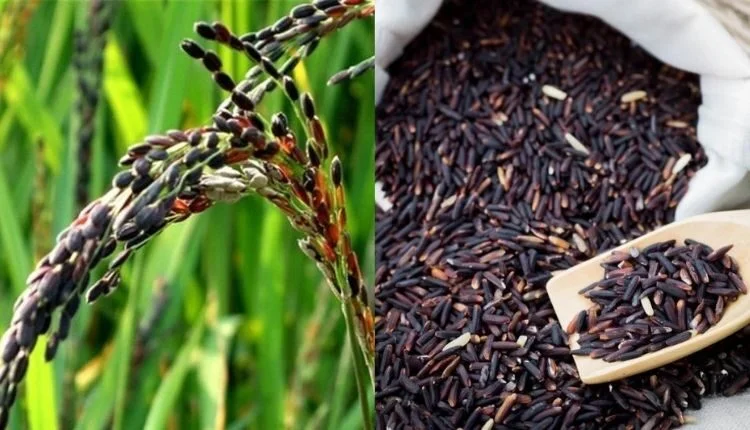
At 36, Bikram Gouda could have looked for a job outside agriculture. Instead, the postgraduate from Chikiti in Odisha’s Ganjam district returned to farming and looked for a crop with stronger market potential. He chose Labanya black rice and began treating farming not only as crop production, but as a business built around quality and market demand.
Black rice is a specialty crop with growing demand among consumers looking for alternative grains. Gouda wanted to take this opportunity further. His aim was not simply to grow black rice for the local market, but to produce grain that could meet the quality requirements of international buyers.
With technical support from Krishi Vigyan Kendra Ganjam-II and guidance from ICAR-Agricultural Technology Application Research Institute, Kolkata, he adopted scientific cultivation practices. The support covered the crop cycle as well as harvesting, drying, grading, cleaning, storage and packaging.
The focus on quality became central to his approach. ICAR says Gouda learned integrated and organic nutrient management, eco-friendly pest and disease management and scientific water management. He was also introduced to export standards and traceability requirements.
How did seven tonnes reach Chicago?
Growing a specialty crop is only the first step when the target is an international market. Gouda needed to maintain grain quality after harvest and understand how export buyers assess agricultural products. KVK scientists provided technical guidance throughout the production and post-harvest stages.
The intervention helped him move beyond the traditional focus on yield. Grain had to be harvested at the right time, dried properly and cleaned and graded before storage and packaging. These steps helped maintain the quality required by the overseas buyer.
The result was seven tonnes of Labanya black rice that were exported to Chicago in the United States. The consignment generated a gross income of ₹8.4 lakh, according to ICAR. The achievement turned a specialty crop into a commercially viable opportunity for the farmer.
Gouda’s experience also shows why post-harvest handling matters. A farmer may produce a high-value crop, but poor drying, storage or packaging can reduce its quality and market value. For specialty crops, buyers can demand consistent grain quality and proper traceability.
His journey also involved continuous interaction with agricultural scientists. Rather than receiving a single training session and working independently, he received field-level technical support during different stages. This helped him adjust his practices and understand how production decisions affected the final product.
What can other farmers learn from the model?
The biggest lesson is that a high-value crop alone does not guarantee higher income. Farmers need to consider the entire chain from seed selection and cultivation to grading, packaging and marketing. Gouda’s success came from combining crop diversification with quality management and access to a premium market.
The case also highlights the role of agricultural extension services. KVKs can help farmers understand new crops, production methods and post-harvest practices. They can also connect farmers with technical knowledge that may otherwise be difficult to access, especially when farmers are trying a crop for the first time.
Gouda’s farm has already influenced other farmers in the area. ICAR says five progressive farmers have adopted black rice cultivation under his guidance. His farm has also become a learning site for nearby farmers interested in specialty and export-oriented crops.
For farmers considering black rice, market research should come before large-scale cultivation. They need to check which varieties are suitable for their area, expected production costs, local buyers, processing facilities and possible demand. Farmers should also understand that export markets have specific quality and documentation requirements.
The story from Chikiti shows that diversification does not always mean adding many crops to the same farm. It can also mean choosing one specialty crop and building a stronger business around it. When production quality, scientific guidance and market access come together, a local farm can reach markets far beyond its district.
Gouda’s seven-tonne shipment to Chicago is therefore more than an export achievement. It shows how a young farmer can turn a specialty crop into an organised agricultural enterprise. His experience offers a simple lesson for other farmers: producing more is only one part of earning more; producing the right quality for the right market can matter just as much.
Also Read: Punarnava Jal – The world’s first organic fertilizer! Know how it is beneficial for farmers?
Contact us – If farmers want to share any valuable information or experiences related to farming, they can connect with us via phone or whatsapp at 9599273766 or you can write to us at “kisanofindia.mail@gmail.com”. Through Kisan of India, we will convey your message to the people, because we believe that if the farmers are advanced then the country is happy.
You can connect with Kisan of India on Facebook, Twitter, and Whatsapp and Subscribe to our YouTube channel.