


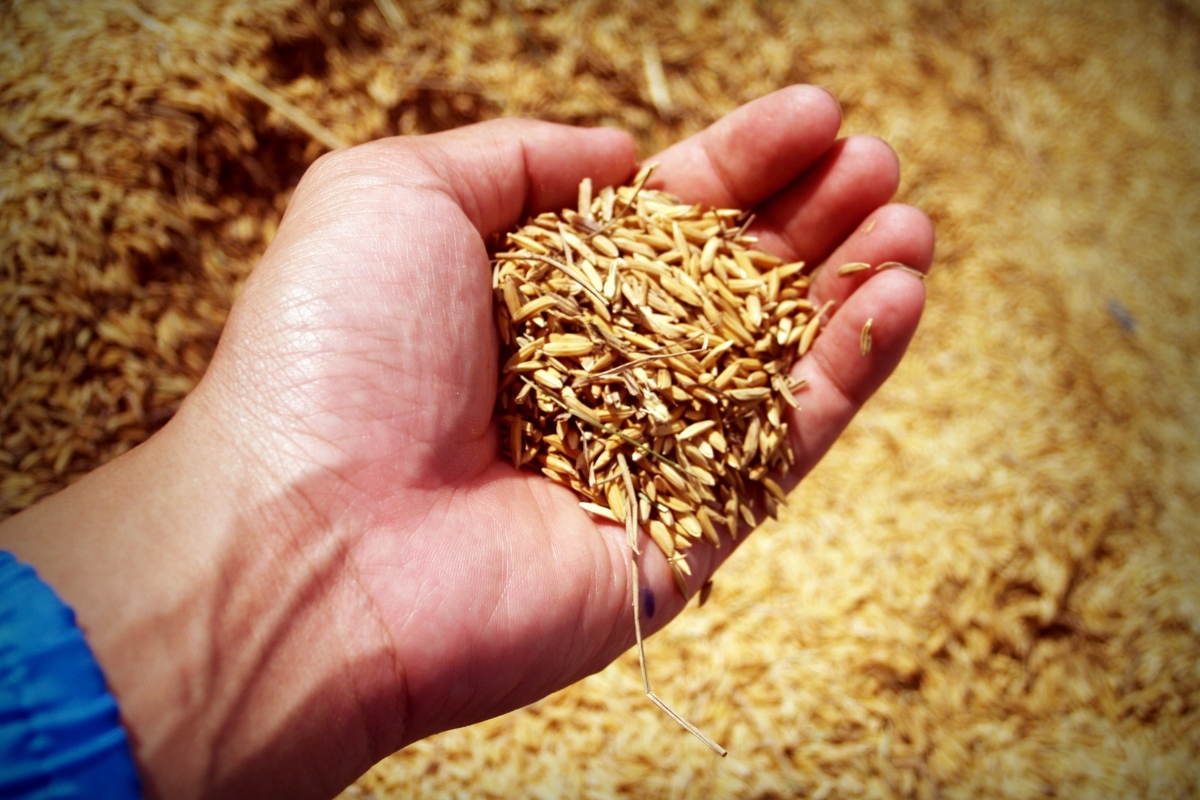
A small consignment of indigenous rice from Tripura has opened a new market for local farmers. On September 2, 2026, 18 metric tonnes of NPOP-certified ethnic rice were flagged off for export to Austria and the Netherlands with support from APEDA.
The consignment included four local rice varieties: Aromatic Kali Khasa, Aromatic Harinarayan, Biron and Maimi Hanga. The export may appear small compared with India’s total agricultural trade, but it shows how local crops can reach international buyers through organised production and marketing.
Many farmers grow crops with local demand, but selling beyond their district requires more than production. Buyers need consistent quality, reliable supply, grading, packaging and documentation. Small farmers often struggle to provide these requirements individually. This is where Farmer Producer Organisations and Farmer Producer Companies can play an important role by bringing produce from many farmers together.
A single small farmer may not produce enough to meet the requirements of a large buyer. But a group of farmers producing the same crop can combine their output and create a larger marketable quantity.
Aggregation is one of the main business activities promoted through India’s FPO programme. FPOs also work in input supply, processing, value addition, marketing and export promotion.
This can change how farmers approach a crop. Instead of each farmer negotiating separately with local traders, an organised group can work towards larger buyers.
India has many traditional crop varieties that remain important within local food systems. Some have limited commercial reach because farmers lack access to processing, branding and larger markets. The Tripura rice export shows one possible pathway.
The four rice varieties were aggregated for European markets after meeting organic certification requirements under the National Programme for Organic Production. The lesson is not that every traditional crop will become an export product.
The lesson is that a local crop may have market potential if farmers understand who wants to buy it.
Certification can open some markets
International buyers often require proof that a product meets specific production and quality standards. Organic certification can become important when farmers want to sell produce as certified organic.
The Tripura rice consignment carried NPOP certification, which helped create the basis for its export to Austria and the Netherlands. Certification also creates responsibilities. Farmers and producer groups need to follow the required production practices and maintain records. A product cannot simply be labelled organic because farmers use fewer chemical inputs.
One mistake farmers can make is searching for buyers only after the crop is ready. By that stage, they may have limited time to negotiate or improve quality. Producer groups can begin market planning earlier.
They can identify:
- Potential buyers
- Required varieties
- Quality standards
- Packaging needs
- Quantity requirements
- Delivery schedules
This allows farmers to plan production around actual demand. The crop then becomes part of a market strategy rather than a product waiting for a buyer. India has now formed 10,000 Farmer Producer Organisations under the central government scheme launched in 2020-21. These groups are involved in activities ranging from input supply and aggregation to processing, marketing and export promotion.
Government data also shows that FPOs operate at different business scales. As of 2024-25 audited accounts, 1,135 scheme-supported FPOs reported turnover above ₹1 crore, while thousands remained at smaller turnover levels. This shows that forming a group is only the first step. The real challenge is building a viable business.
Raw agricultural produce often earns farmers less than a processed and properly packaged product. Rice, for example, may require cleaning, grading and packaging before it can meet the requirements of premium buyers. FPOs can help farmers develop these facilities collectively.
Government data shows that 5,765 FPOs under the central scheme had their own processing units as of August 2026. Processing does not guarantee higher profits. The additional value must be greater than the cost of equipment, labour and marketing. But for suitable crops, value addition can create access to different buyers.
Digital platforms can help groups find buyers
Farmer groups no longer need to depend only on physical markets. Digital platforms are creating additional ways for FPOs to display products and connect with buyers. The government’s Farmer Connect portal, managed by APEDA, allows FPOs and exporters to create profiles, post offers and view buyer enquiries.
The platform currently shows enquiries for products including onions and moringa leaf powder, along with offers from producer groups. Digital access does not replace direct business relationships. But it can help farmers and producer groups identify buyers they may not meet locally.
India’s National Agriculture Market, or e-NAM, is another platform designed to connect agricultural markets. As of June 30, 2026, 1.89 crore farmers and 2.78 lakh traders were registered on the platform. The platform also allows participation by buyers across different regions.
Government data shows that inter-state trade through e-NAM increased from 563 metric tonnes in 2018-19 to 2,984.3 metric tonnes in 2025-26. For farmers, this creates more potential buyers. It does not guarantee a higher price for every crop. Quality, demand and transport costs still matter.
A single successful export does not automatically create a permanent market. International buyers usually need reliable supply over time. Farmer groups must therefore plan production carefully. They need to know whether enough farmers can grow the required variety and maintain the expected quality.
They also need to manage:
- Certification
- Quality testing
- Packaging
- Storage
- Transport
- Export documentation
A market opportunity can disappear if the supply chain fails.
The 18-tonne rice consignment is important because it connects a local crop with international buyers. It also shows the different steps needed to move produce beyond a regional market. Farmers need more than good production. They need organised aggregation. They need quality control.
They need market links. APEDA described the export as an effort to create new market opportunities for local farmers and strengthen Tripura’s connection with international agricultural markets.
Also Read: Punarnava Jal – The world’s first organic fertilizer! Know how it is beneficial for farmers?
Contact us – If farmers want to share any valuable information or experiences related to farming, they can connect with us via phone or whatsapp at 9599273766 or you can write to us at “kisanofindia.mail@gmail.com”. Through Kisan of India, we will convey your message to the people, because we believe that if the farmers are advanced then the country is happy.
You can connect with Kisan of India on Facebook, Twitter, and Whatsapp and Subscribe to our YouTube channel.