


How a Young Assam Farmer Turned Rice-Fallow Land Into ₹29,863 Extra Income

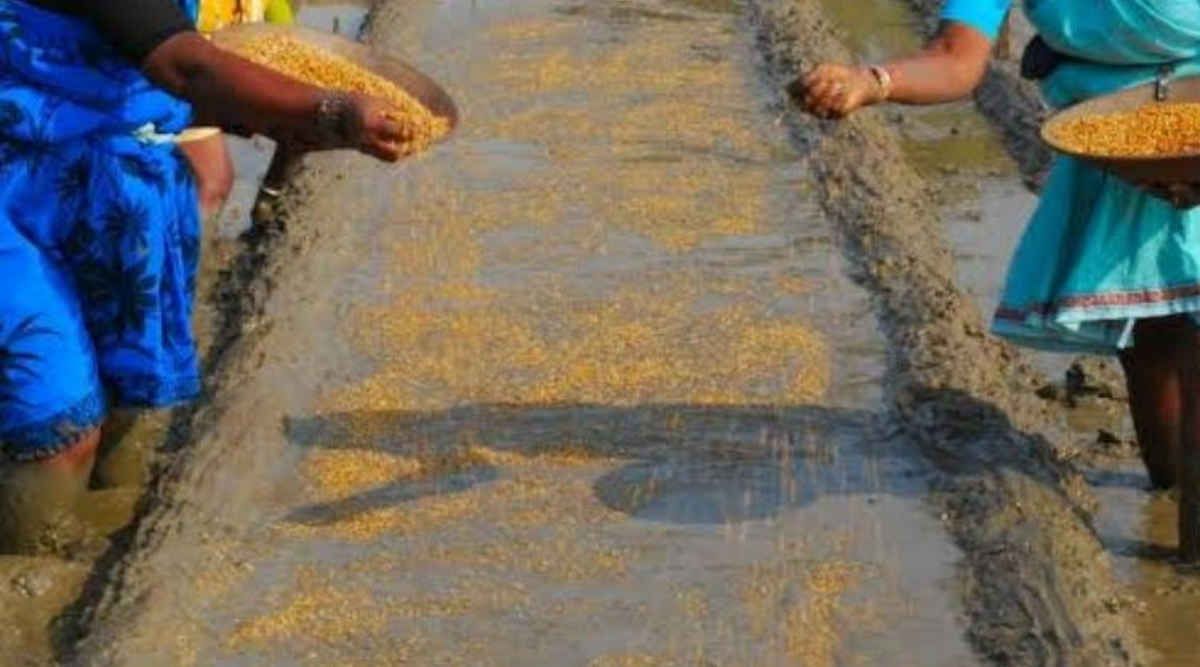
For years, Shri Kripanath Preme’s 1.5-hectare farm in Mohura Chapori village of Lakhimpur district, Assam, followed the same cycle. Sali rice was grown during kharif, but after harvest, much of the land remained unused throughout rabi because the family had not explored a second crop.
Kripanath, a postgraduate, decided to stay in his village and support his father in farming. Rice alone was not providing enough income for the family, so he approached Krishi Vigyan Kendra (KVK), Lakhimpur, for advice on growing a rabi crop after the Sali rice harvest.
KVK scientists surveyed rice-fallow areas in the village and identified an opportunity to introduce rapeseed and mustard cultivation. Under the Promotion of Rapeseed & Mustard in Rice Fallow Areas programme during Rabi 2025–26, KVK demonstrated late-sown toria variety TS-38 on one hectare of Kripanath’s fallow land.
The change was simple: instead of leaving the field unused after rice, Kripanath planted a second crop. He sowed TS-38 during the fourth week of November, immediately after harvesting Sali rice, following the production practices recommended by KVK scientists.
TS-38 Gave 8.95 Quintals Per Hectare
The demonstration produced encouraging results. Kripanath harvested 8.95 quintals of toria per hectare, the highest yield recorded among the farmers covered under the programme. The crop generated a reported net income of ₹29,863 per hectare.
The benefit-cost ratio of the demonstration was 2.24. For a farmer who previously left the land unused during rabi, the result showed that rice-fallow fields could provide another crop and another source of income without requiring additional farmland.
The recommended seed rate for TS-38 was 10 kg per hectare. The package used in the demonstration included 87 kg urea, 220 kg single super phosphate, 25 kg muriate of potash and 10 kg borax per hectare. Farmers should not copy these quantities blindly because nutrient requirements depend on soil conditions and local recommendations.
The timing was also important. Late-sown toria was selected because the crop needed to fit into the short period available after Sali rice harvest. Farmers considering a similar system need to check whether their rice harvest and local weather allow enough time for the rabi crop.
Rice-fallow areas represent land that could potentially support another crop after the main rice harvest. Bringing such fields under rabi cultivation can increase cropping intensity and farm output without requiring farmers to expand their cultivated area.
The approach may be particularly useful where farmers have suitable residual soil moisture after rice. But not every rice-fallow field can support a second crop. Water availability, soil moisture, drainage, sowing time and the duration of the remaining growing season all need to be considered.
In Kripanath’s case, KVK scientists first surveyed the area and then demonstrated a suitable crop and variety. This kind of local technical support can reduce the risk of farmers selecting a crop that cannot mature within the available time.
The success also attracted interest from neighbouring farmers. According to ICAR, several farmers in the area are now interested in bringing their own rice-fallow fields under rabi cultivation and adopting TS-38. Kripanath himself plans to expand the crop over a larger area in the coming season.
What Can Farmers Learn From His Experience?
The first lesson is to look at the whole farming calendar rather than treating the rice harvest as the end of the season. A field that remains unused for several months may offer an opportunity for another crop if moisture and time permit.
The second lesson is the importance of crop selection. Kripanath did not simply plant any mustard variety after rice. KVK Lakhimpur selected a late-sown toria variety that could fit the local rice-fallow conditions.
The third lesson is to seek local technical guidance. Farmers can approach their nearest KVK or agriculture department to identify suitable rabi crops, varieties and sowing windows. Recommendations from another state or district may not work under the same conditions.
Farmers should also calculate costs before adopting a second crop. Seed, fertiliser, labour, irrigation, harvesting and marketing expenses must be included. The additional income is useful only when the second crop provides a worthwhile return after these costs.
The model can be considered by farmers whose rice fields remain unused after harvest, but it should not be copied without checking local conditions. Farmers need enough residual moisture or irrigation and sufficient time for the selected crop to mature.
The first step should be to discuss the field with a local KVK or agriculture officer. Farmers can ask whether late-sown toria, mustard or another rabi crop is recommended for their area and whether suitable seed is available.
Farmers can also start with a small area before expanding. This allows them to compare crop performance, labour requirements, pest problems and market returns with the cost of leaving the land fallow.
Kripanath’s experience shows that the opportunity does not necessarily come from buying more land. It can come from using existing farmland more effectively within the same agricultural year.
From Rice Harvest to a Second Income
Kripanath Preme’s experience demonstrates how a simple change in the cropping calendar can create an additional income opportunity. His one-hectare TS-38 demonstration produced 8.95 quintals per hectare and a reported net income of ₹29,863.
The result does not guarantee the same return for every farmer. Soil, rainfall, sowing date, variety, input prices and market conditions will affect the outcome.
But for farmers with suitable rice-fallow fields, the idea is worth investigating. A visit to the local KVK before the rice harvest can help determine whether a short-duration rabi crop can turn an otherwise idle field into a productive second season.
Also Read: Punarnava Jal – The world’s first organic fertilizer! Know how it is beneficial for farmers?
Contact us – If farmers want to share any valuable information or experiences related to farming, they can connect with us via phone or whatsapp at 9599273766 or you can write to us at “kisanofindia.mail@gmail.com”. Through Kisan of India, we will convey your message to the people, because we believe that if the farmers are advanced then the country is happy.
You can connect with Kisan of India on Facebook, Twitter, and Whatsapp and Subscribe to our YouTube channel.