



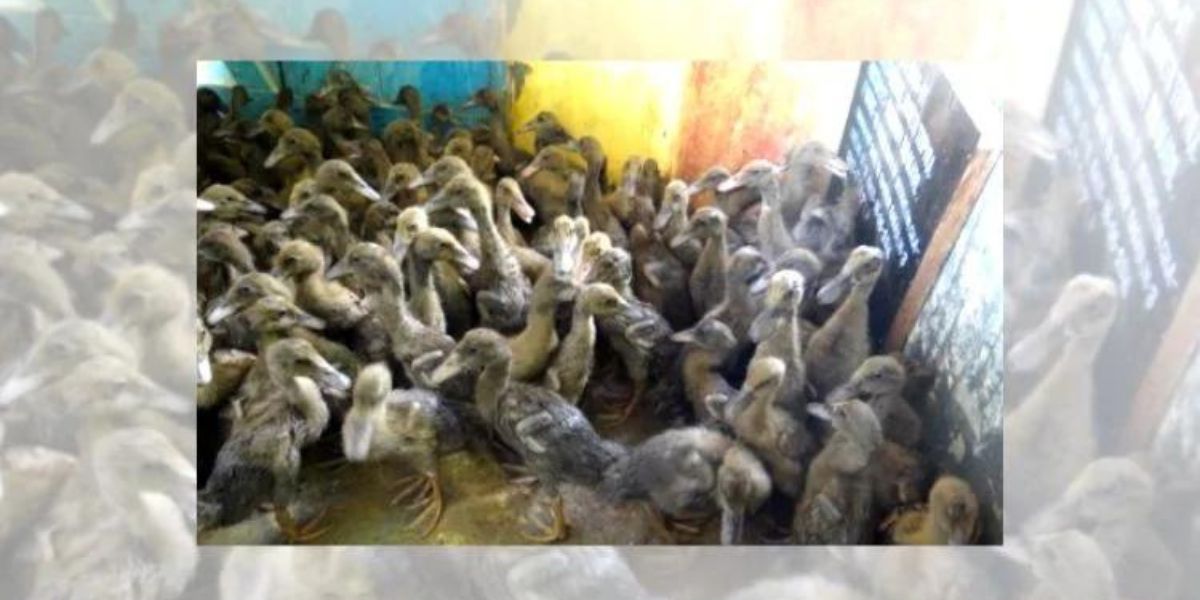
In the floodplains and wetlands of Assam, ducks have long been a familiar part of rural life. As the morning sun rises over ponds, beels, and low-lying fields, flocks move across the water searching for snails, insects, aquatic plants, and leftover grains. For generations, families have raised ducks alongside crop cultivation and fishing, creating a farming system closely linked to the region’s natural landscape.
What was once viewed mainly as a household activity is now developing into a more organised rural enterprise.
Across districts such as Nagaon, Barpeta, Nalbari, Morigaon, Dhemaji, and Lakhimpur, duck farming clusters are expanding with support from farmer groups, cooperatives, and livestock development programmes. These clusters are helping producers improve productivity, access better markets, and generate additional income throughout the year.
The growth of the sector reflects the increasing importance of livestock diversification in rural economies.
Assam possesses one of the largest wetland networks in India. Thousands of ponds, lakes, floodplain wetlands, and seasonal water bodies create conditions that are highly suitable for duck rearing.
Unlike many other poultry systems, ducks can obtain a significant portion of their nutrition from natural sources available in aquatic environments. This reduces feed costs, which are often the largest expense in livestock production.
Farmers frequently allow birds to forage in harvested paddy fields where they consume insects, weed seeds, and grain residues. The arrangement benefits both ducks and farmers by converting natural resources into productive output.
The system fits particularly well within mixed farming landscapes.
Egg Production Creates Regular Cash Flow
One reason duck farming remains attractive is its ability to generate consistent income. While crop earnings may arrive only once or twice a year, eggs provide a regular source of revenue that helps households manage day-to-day expenses.
Local markets across Assam maintain strong demand for duck eggs, which are widely consumed in both rural and urban areas. Restaurants, retailers, and households often prefer duck eggs because of their size and culinary characteristics.
This demand creates reliable marketing opportunities for producers.
For many families, egg sales help cover costs related to education, healthcare, and agricultural investments. The steady cash flow improves financial stability in regions where income can otherwise be seasonal.
A major challenge for small livestock producers is accessing profitable markets. Individual farmers often lack the scale needed to negotiate effectively with traders or supply larger buyers consistently.
Duck farming clusters are helping address this issue.
By organising producers into groups, clusters improve collective marketing, input procurement, and access to technical services. Farmers can coordinate sales, reduce transportation costs, and strengthen their bargaining position.
Several groups are also exploring small-scale hatcheries and feed production units to reduce dependence on outside suppliers.
The collective model is helping transform duck farming from a household activity into a more structured business.
Indigenous Breeds Remain Important
Assam is home to several indigenous duck varieties that have adapted to local environmental conditions over many generations. These birds are valued for their ability to perform under free-range management systems and variable weather conditions.
Livestock experts increasingly recognise the importance of preserving local genetic resources while improving productivity. Indigenous breeds often possess traits that support resilience, including adaptability to local diseases and climatic conditions.
Breeding programmes in the state are therefore focusing on balancing productivity improvements with conservation goals.
Maintaining genetic diversity remains an important part of long-term livestock development.
The future of the sector depends on both productivity and sustainability.
Climate variability is encouraging farmers to diversify income sources beyond conventional crop cultivation. Floods, irregular rainfall, and changing weather patterns can affect agricultural production across large areas.
Duck farming offers a degree of resilience because birds can utilise environments that may be unsuitable for many crops during certain periods of the year. Wetlands, seasonal water bodies, and flood-affected landscapes often remain productive for duck rearing.
This flexibility makes the activity particularly valuable in regions experiencing increasing environmental uncertainty.
Many development programmes now promote livestock diversification as part of broader climate adaptation strategies.
Duck farming fits naturally within that approach.
A Traditional Practice Finds New Momentum
The sight of ducks moving through Assam’s wetlands is nothing new. What is changing is the way farmers view the activity.
Increasing market demand, stronger producer organisations, and improved technical support are transforming duck rearing into a more significant economic enterprise. The sector continues to build upon traditional knowledge while adopting new approaches to production and marketing.
For rural households, ducks provide eggs, meat, and income. For the state, they represent an agricultural activity well suited to local ecological conditions.
As interest in diversified livestock systems continues to grow, Assam’s duck farming clusters are demonstrating how a traditional practice can become an important driver of rural livelihoods in the modern agricultural economy.
Also Read: Punarnava Jal – The world’s first organic fertilizer! Know how it is beneficial for farmers?
Contact us – If farmers want to share any valuable information or experiences related to farming, they can connect with us via phone or whatsapp at 9599273766 or you can write to us at “kisanofindia.mail@gmail.com”. Through Kisan of India, we will convey your message to the people, because we believe that if the farmers are advanced then the country is happy.
You can connect with Kisan of India on Facebook, Twitter, and Whatsapp and Subscribe to our YouTube channel.