



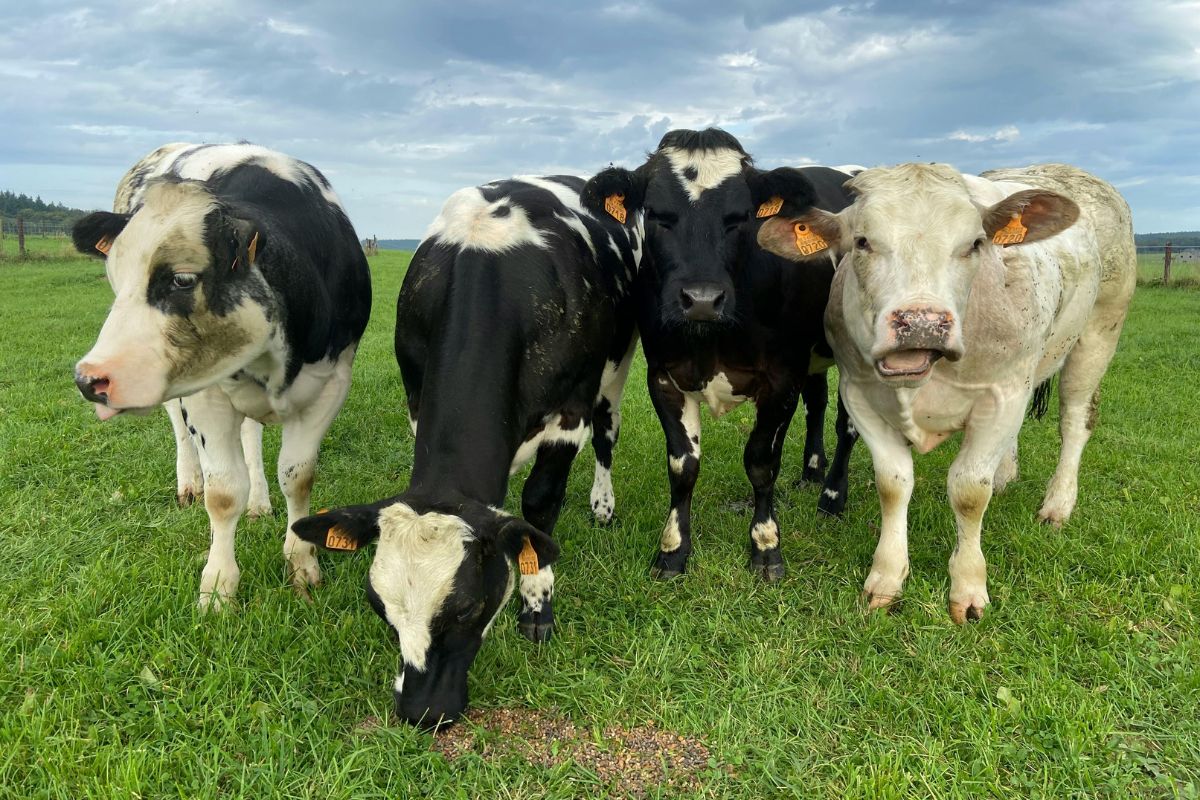
India is expanding the use of scientific breeding methods to improve the productivity of indigenous cattle while retaining traits that help animals adapt to local conditions.
The Indian Council of Agricultural Research has placed greater focus on demand-driven livestock research, with breeding, animal health and reproductive technologies among the areas being taken closer to farmers. The approach was highlighted during ICAR’s 97th Annual General Meeting held in New Delhi on August 18.
Milk production depends on several factors, including breed, nutrition, animal health, management and reproductive performance.
Scientific breeding can help farmers select animals with desirable traits and use them more effectively for future generations. The aim is not simply to increase milk yield but also to retain characteristics such as disease tolerance, adaptability and reproductive performance.
This is important for indigenous cattle because many local breeds have developed under India’s varied climatic and farming conditions.
For small dairy farmers, improvements in reproductive performance can also affect the economics of the herd. A healthy animal that produces calves regularly can remain productive for longer and contribute more consistently to farm income.
Reproductive technology can speed up genetic improvement
Assisted reproductive technologies can help scientists and breeders multiply animals with desirable genetic characteristics more quickly than conventional breeding alone.
Techniques such as artificial insemination, embryo transfer and in-vitro embryo production can be used to increase the number of offspring from selected animals.
ICAR institutes have been working on such technologies for indigenous breeds. These methods can help expand access to superior genetics when suitable breeding infrastructure and trained personnel are available.
For farmers, the practical benefit comes when improved breeding services reach village-level dairy systems. A technology developed at a research centre has limited value if farmers cannot access quality semen, veterinary support or timely reproductive services.
Farmers need more than improved genetics
Genetic improvement cannot compensate for poor nutrition or inadequate animal care.
A high-performing animal still requires sufficient feed, clean water, disease prevention, proper housing and timely veterinary care. Breeding programmes therefore work best when they are combined with better overall herd management.
The government has been expanding veterinary services through programmes aimed at improving animal health and breeding support. As of July 2026, 4,019 Mobile Veterinary Units were operating across 29 states and Union Territories, according to government data.
These services can be particularly useful for farmers in areas where veterinary facilities are far from villages.
Indigenous breeds remain important
India has a large diversity of indigenous cattle breeds. These animals are associated with different regions and farming systems, and many possess traits that can be useful under local conditions.
The focus on improving indigenous cattle does not mean that every farmer should replace existing animals. Breed selection needs to consider local climate, feed availability, milk market and farm size.
Farmers also need reliable information before selecting breeding services. Poor-quality breeding material or indiscriminate crossing can create problems if the resulting animals are not suited to the local production system.
The challenge is reaching the farm
ICAR’s agriculture strategy now places greater emphasis on moving research from laboratories to farmers through stronger links with industry, state departments and extension networks.
For cattle farmers, the success of breeding programmes will depend on how well this research reaches villages.
Access to quality breeding material, trained technicians, veterinary care and accurate animal records will be important. Farmers also need to know which traits they are selecting for and what kind of animal suits their farm.
Scientific breeding can improve dairy production, but it works best when it becomes part of everyday herd management.
For India’s small dairy farmers, the goal should be practical: healthier animals, better reproduction and more consistent milk production without losing the traits that make indigenous cattle suitable for local farming conditions.
Also Read: Punarnava Jal – The world’s first organic fertilizer! Know how it is beneficial for farmers?
Contact us – If farmers want to share any valuable information or experiences related to farming, they can connect with us via phone or whatsapp at 9599273766 or you can write to us at “kisanofindia.mail@gmail.com”. Through Kisan of India, we will convey your message to the people, because we believe that if the farmers are advanced then the country is happy.
You can connect with Kisan of India on Facebook, Twitter, and Whatsapp and Subscribe to our YouTube channel.