



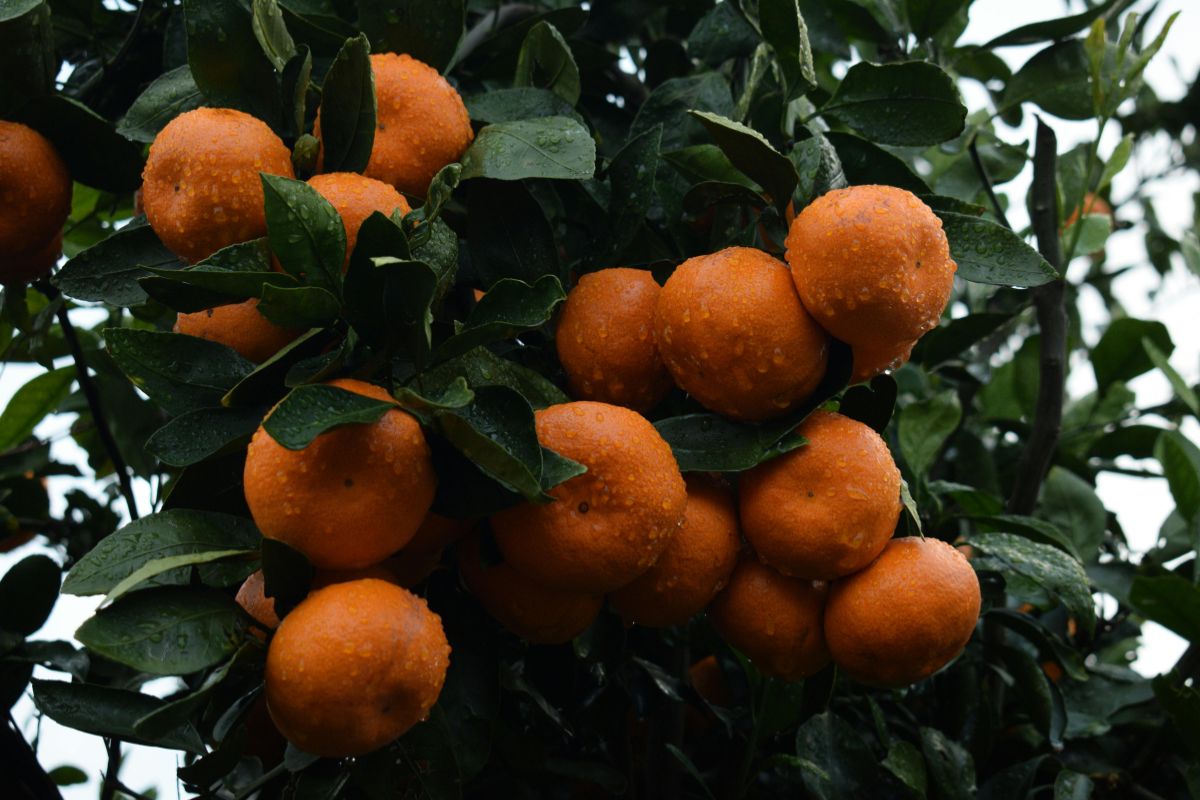
The orange orchards of Nagpur and neighbouring districts have long been among the most recognisable agricultural landscapes in central India. Every year, trucks loaded with bright orange fruit leave farms across Nagpur, Amravati, Wardha, and parts of Akola, supplying markets throughout the country.
But citrus growers say a less visible threat is beginning to affect their orchards.
It is not drought. It is not disease and it is rising night temperatures.
Farmers and horticulture experts across Maharashtra’s citrus belt are increasingly concerned about warmer nights, which are affecting flowering, fruit development, and overall orchard productivity. While daytime heat often attracts attention during discussions about climate change, many orchard owners say nighttime temperatures are becoming equally important.
The changes are creating new uncertainties for one of India’s most important fruit-producing regions.
Citrus crops thrive under specific climatic conditions. The trees require a balance between day and night temperatures during different stages of growth. Cooler nights play an important role in fruit development, colour formation, and maintaining tree health.
For decades, the climate of central Maharashtra provided these conditions naturally.
Growers could rely on seasonal patterns that remained relatively stable from year to year.
Today, many farmers say those patterns are changing.
Night temperatures that once dropped significantly after sunset are remaining elevated for longer periods.
The difference may appear small on paper, but orchard owners say the impact becomes visible over an entire growing season.
Flowering Cycles Are Becoming Less Predictable
Orange cultivation depends heavily on proper flowering.
A healthy flowering season lays the foundation for fruit production months later. Farmers in Maharashtra’s citrus belt report that changing temperature patterns are affecting this process.
Some orchards experience uneven flowering.
Others witness reduced fruit setting.
In certain cases, flowers emerge earlier or later than expected, making orchard management more complicated.
Unlike annual crops that can be replanted every season, orange trees represent long-term investments.
A farmer may spend years developing an orchard before reaching peak production.
Any disruption to flowering cycles therefore has consequences extending well beyond a single harvest.
Warmer temperatures also influence water requirements. As nights become hotter, trees lose more moisture and remain under greater stress. Farmers say irrigation needs have increased compared with previous decades.
This is particularly challenging in regions already facing groundwater pressure.
Many orange-growing districts depend heavily on borewells and farm ponds. During years of weak rainfall, maintaining adequate irrigation becomes increasingly expensive.
Electricity costs, pump operation, and water management now form a larger share of orchard expenses than they once did.
For small growers operating on limited margins, these additional costs can significantly affect profitability.
Orange farming is not only about production volume. Quality matters just as much. Colour, size, sweetness, and appearance influence prices in wholesale markets.
Traders often pay premiums for fruit that meets specific quality standards.
Horticulture experts say temperature changes can affect these characteristics. Warmer nights may influence fruit colour development and maturation patterns, creating challenges for growers targeting premium markets.
Export-oriented producers are particularly sensitive to quality variations because international buyers maintain strict standards.
As climate conditions become less predictable, maintaining consistency becomes more difficult.
Farmers Are Looking for Adaptation Strategies
Across Maharashtra’s citrus-growing districts, farmers are experimenting with ways to protect orchards from climate-related stress.
Micro-irrigation systems are becoming more common.
Mulching is being used to retain soil moisture.
Some growers are improving canopy management to reduce temperature stress within orchards.
Agricultural universities and horticulture departments are also studying citrus varieties that may perform better under changing climatic conditions.
The focus is shifting from simply increasing production to maintaining productivity under increasingly uncertain weather conditions.
The importance of oranges extends far beyond individual farms.
The citrus industry supports nursery operators, labourers, transporters, traders, packers, exporters, and processing businesses across central India.
Entire local economies depend on successful harvests.
When production falls or fruit quality declines, the effects ripple through multiple sectors.
This is why climate concerns are attracting attention not only from farmers but also from policymakers and agricultural institutions.
Protecting the citrus sector has become an economic issue as much as an agricultural one.
Climate change is often associated with dramatic events such as floods, droughts, and heatwaves. For Maharashtra’s orange growers, the challenge is more gradual.
It arrives quietly after sunset.
A few degrees of extra warmth during the night may not seem significant to most people. For an orange tree, however, those changes can influence growth, flowering, fruit quality, and farm income.
Across India’s citrus belt, farmers are learning that the future of orchard farming may depend as much on what happens during the night as it does during the day.
Also Read: Punarnava Jal – The world’s first organic fertilizer! Know how it is beneficial for farmers?
Contact us – If farmers want to share any valuable information or experiences related to farming, they can connect with us via phone or whatsapp at 9599273766 or you can write to us at “kisanofindia.mail@gmail.com”. Through Kisan of India, we will convey your message to the people, because we believe that if the farmers are advanced then the country is happy.
You can connect with Kisan of India on Facebook, Twitter, and Whatsapp and Subscribe to our YouTube channel.