



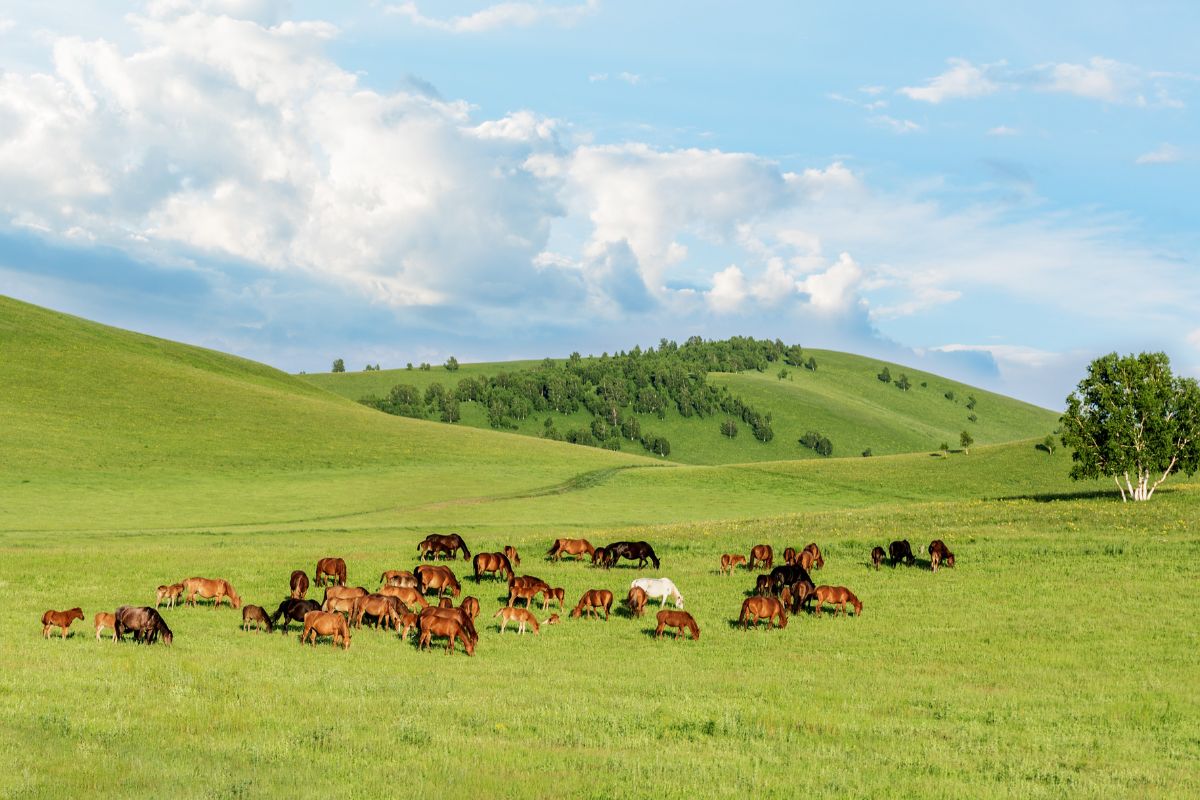
Across Mongolia’s vast steppes, livestock farming has supported rural communities for centuries. Sheep, goats, cattle, horses, and camels remain central to the country’s economy and culture.
Yet climate change and land degradation are placing increasing pressure on these grazing systems.
Rising temperatures, recurring droughts, harsh winters, and overgrazing have contributed to the deterioration of large areas of pastureland. As grassland quality declines, livestock productivity and rural livelihoods face growing risks.
In response, Mongolia has launched extensive grassland restoration and sustainable grazing initiatives aimed at rebuilding pasture health and strengthening resilience.
The effort is attracting global attention because it addresses both environmental and agricultural challenges at the same time.
Pasture quality directly influences livestock performance. Animals depend on healthy grasslands for nutrition, particularly in extensive grazing systems where supplementary feeding remains limited. When pasture productivity declines, animal health and production often suffer.
Restoration programmes focus on improving vegetation cover and encouraging sustainable grazing practices. Better grasslands provide more reliable forage while supporting long-term livestock productivity. The connection is straightforward. Healthy land supports healthy animals.
Climate Change Is Increasing Pressure
Mongolia has experienced significant climate-related challenges in recent decades. Droughts have become more frequent in some regions, while extreme winter events known as dzuds continue to threaten livestock populations. These conditions place enormous pressure on both animals and grazing resources.
Researchers note that degraded grasslands recover more slowly after environmental shocks. Restoration therefore plays an important role in climate adaptation strategies. Resilient landscapes help communities withstand difficult seasons. The need for action continues to grow.
Many restoration projects rely on cooperation among herding communities. Pasture resources are often shared, making collective management essential. Local groups work together to regulate grazing pressure and protect vulnerable areas from excessive use.
Community participation has become a key feature of successful programmes. Researchers frequently find that long-term restoration efforts perform better when local people are directly involved in decision-making. The approach strengthens both environmental and social outcomes. Shared resources require shared responsibility.
Grassland restoration supports more than livestock production. Healthy rangelands provide habitat for wildlife, improve soil stability, and contribute to broader ecosystem health. Restoring vegetation helps reduce erosion while improving ecological resilience. Environmental and agricultural objectives often align.
When pasture conditions improve, both livestock and natural ecosystems benefit.
This dual advantage is one reason restoration projects receive strong support from conservation and development organisations. The benefits extend across entire landscapes.
Modern restoration efforts increasingly use satellite imagery and digital monitoring tools. These technologies help track vegetation recovery, grazing patterns, and environmental conditions across vast areas. Information gathered through monitoring supports better management decisions.
Technology complements traditional herding knowledge rather than replacing it. The combination provides a stronger foundation for sustainable grazing systems. Data is helping improve pasture management. Better information leads to better planning.
Restoring the Foundation of Rural Livelihoods
For Mongolia’s herding communities, grasslands are more than natural ecosystems.
They are the foundation of livelihoods, food production, and cultural traditions. Protecting these resources is therefore essential for the future of rural life.
The country’s restoration initiatives demonstrate how environmental recovery can support agricultural development at the same time.
Improved pasture management strengthens livestock production, increases resilience to climate shocks, and protects valuable ecosystems.
As climate pressures continue to intensify, the importance of healthy grasslands will only grow.
Across Mongolia’s steppes, restoring the land is helping secure the future of livestock farming.
Also Read: Punarnava Jal – The world’s first organic fertilizer! Know how it is beneficial for farmers?
Contact us – If farmers want to share any valuable information or experiences related to farming, they can connect with us via phone or whatsapp at 9599273766 or you can write to us at “kisanofindia.mail@gmail.com”. Through Kisan of India, we will convey your message to the people, because we believe that if the farmers are advanced then the country is happy.
You can connect with Kisan of India on Facebook, Twitter, and Whatsapp and Subscribe to our YouTube channel.