


Is Your Soil Alive? The Hidden World Beneath Every Indian Farm
A Field May Look Empty, but the Soil Below It Is Never Truly Empty

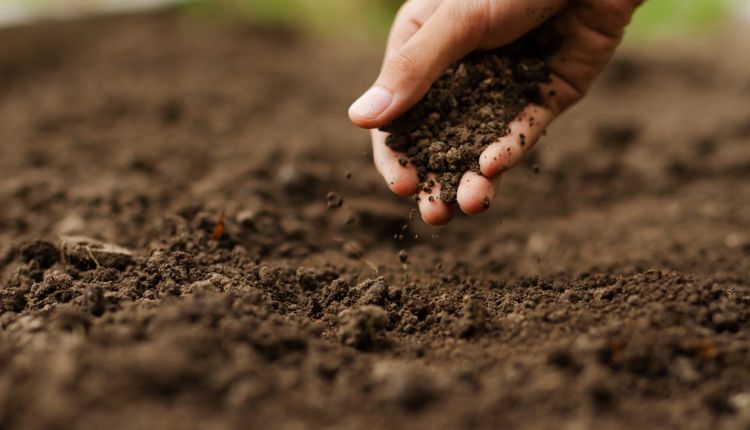
When a farmer looks across a field, most of the visible activity is above the ground. Leaves open toward sunlight. Stems grow taller. Flowers attract insects. Grain, pods, fruits and fodder gradually take shape.
The soil underneath appears much quieter. It may look like a simple mixture of sand, clay and dust. It may seem to serve only three purposes: holding the plant upright, storing some water and receiving fertiliser. But beneath every crop lies a complex living world.
Soil contains bacteria, fungi, algae, protozoa, nematodes, mites, springtails, ants, termites, earthworms and many other organisms. Plant roots are also part of this underground community. Together, they break down crop residues, move nutrients, create channels, form soil aggregates and interact continuously with the growing crop.
This is why regenerative agriculture begins with a simple but powerful idea: Soil is not only a material. It is also a living system. However, saying that soil is alive does not mean that every organism in it is useful. Some soil organisms support crops. Some cause diseases. Some feed on roots. Some compete with one another. Soil health depends on balance, diversity, food, moisture, air and the way the field is managed.
For Indian farmers, understanding this hidden life can help explain many familiar field experiences. Why does one field absorb rain quickly while another becomes waterlogged? Why does crop residue disappear faster in one place? Why do roots remain white and healthy in one soil but turn weak in another? Why does the same fertiliser work differently in neighbouring fields? Part of the answer may lie in the biology below the surface.
What Do Scientists Mean by “Living Soil”?
Soil itself is not alive in the way a plant or animal is alive. It does not breathe, reproduce or grow as one organism. But soil is a habitat containing an enormous number of living organisms. These organisms interact with minerals, water, air, organic matter and roots. Their combined activity helps soil perform important functions.
A living and active soil can:
* break down dead plant material
* release nutrients from organic matter
* support root growth
* create pores through which air and water move
* help form stable soil aggregates
* influence plant diseases
* support biological nitrogen fixation
* store and cycle carbon
The phrase “living soil” therefore refers to soil with active biological processes, not merely soil that contains an occasional earthworm. Nearly all agricultural soils contain life. The important question is not simply whether organisms are present. The better question is:
Is the soil environment allowing a useful, balanced and active biological community to function? A dry desert soil, a flooded paddy soil, a black cotton soil and a humid coconut garden will support very different biological communities. Living soil does not look the same everywhere.
Soil Life Exists at Many Different Sizes
Some soil organisms can be seen easily. Others are too small to observe without a microscope.
Microorganisms
The smallest and most numerous organisms include bacteria, fungi, actinomycetes, algae and protozoa. They live on soil particles, around roots, inside pores and on decomposing organic material. Many of them help break down residues and release nutrients. Some form partnerships with roots. Others compete with or suppress disease-causing organisms.
But some bacteria and fungi also cause crop diseases. Soil biology is not divided neatly into “good organisms” and “bad organisms.” Their effect depends on species, crop, soil and environmental conditions.
Small soil animals
Mites, springtails, tiny worms and nematodes occupy the next level. Some feed on fungi and bacteria. Some break organic matter into smaller pieces. Some nematodes attack plant roots, while others feed on microbes or pests.
Larger organisms
Earthworms, ants, termites and beetle larvae are among the more visible soil animals. Their movement can change soil structure, create channels and mix organic material.
Again, their effects differ. Earthworms often improve soil structure, but termites can either help decompose residues or damage crops and wood, depending on species and conditions. The underground world is not a peaceful village. It is a busy food web filled with cooperation, competition, predation and recycling.
The Rhizosphere: The Busy Zone Around Every Root
The most active biological area in many agricultural soils is the narrow zone surrounding plant roots. Scientists call it the rhizosphere. Roots do more than absorb water and nutrients. They also release sugars, amino acids, organic acids and other substances into the surrounding soil. These materials are often called root exudates. They act as food and signals for microorganisms.
Because of this food supply, microbial activity near roots can be much greater than in soil farther away. Different crops support different microbial communities because their roots release different compounds and grow at different depths. This creates an underground marketplace.
The plant supplies energy-rich compounds. Certain microorganisms help make nutrients available, produce growth-related substances or protect root space from some pathogens. Others simply use the food without providing a clear benefit.
This is why living roots are so important in regenerative agriculture. A bare field does not provide the same continuous food supply to soil organisms as a field containing an actively growing crop or suitable cover crop.
But in dry Indian regions, keeping living roots throughout the year may not always be practical. A cover crop that consumes scarce moisture can create another problem. The regenerative principle must therefore be adapted to rainfall and water availability.
Bacteria: Tiny Workers with Many Different Jobs
Bacteria are among the most abundant organisms in soil. Different groups perform different functions. Some bacteria decompose simple organic compounds. Some transform nitrogen from one form into another. Rhizobium bacteria form nodules on the roots of suitable legumes and help convert atmospheric nitrogen into a form connected with plant nutrition.
Other bacteria can dissolve or mobilise certain nutrients under particular conditions. Some produce compounds that influence root growth. Some compete with plant pathogens. This is the scientific basis behind several biofertilisers and microbial products.
However, farmers should remain cautious about exaggerated claims. A packet containing beneficial bacteria does not automatically transform poor soil. The microorganisms must survive storage, match the crop, establish in the field and find suitable moisture, temperature and organic food.
If soil is extremely dry, highly saline, waterlogged or lacking organic material, an introduced microbe may not perform as expected. Biological products are tools, not magic.
Fungi: The Underground Network Builders
Fungi are another major part of soil life. Their thread-like structures, called hyphae, can spread through soil and organic material. Some fungi break down tough crop residues that bacteria cannot easily decompose. Others form partnerships with roots.
Mycorrhizal fungi, for example, connect with the roots of many plants. Their fine fungal threads explore a larger soil volume than the root alone and may help the plant access phosphorus and water. In return, the plant supplies sugars to the fungus.
These partnerships are valuable, but they are not equally important in every crop. Some crop families respond strongly to mycorrhiza, while others form limited or no such association. Flooding, heavy phosphorus application, soil disturbance and crop choice can also influence the relationship.
Fungi also include important plant pathogens such as Fusarium, Rhizoctonia and Pythium. So a soil rich in fungal activity is not automatically healthy. The kind of fungi and the balance among organisms matter.
Earthworms: Useful Engineers, but Not a Complete Soil Test
Earthworms are often described as a sign of healthy soil, and in many situations they are. As earthworms move through soil, they create channels. These channels can improve air movement, drainage and root penetration. Earthworms also consume organic material and soil, producing casts that can differ chemically and physically from the surrounding soil.
Fields with residue, moisture and organic matter often support more earthworms than dry, bare or heavily disturbed soils. But earthworm numbers are also controlled by climate and soil type. A dry field in Rajasthan cannot be judged by the same earthworm standard as a moist plantation soil in Kerala.
Some Indian soils naturally support fewer earthworms because of heat, moisture shortage, salinity or texture. Flooded rice systems may contain different species from upland fields. Therefore, finding earthworms can be encouraging, but not finding them does not by itself prove that the soil is dead. Earthworms are one indicator, not the entire diagnosis.
How Soil Organisms Build Structure
One of the most important jobs performed by soil life is helping soil particles bind into aggregates. Aggregates are groups of sand, silt, clay and organic materials held together. The spaces between them allow water to enter, air to circulate and roots to grow.
Bacteria produce sticky substances that can help bind particles. Fungal threads physically connect particles. Roots press through soil and release compounds. Earthworms and other soil animals mix materials and create channels.
When this structure is strong, the soil may become more crumbly and porous. When the structure is weak, the surface may seal after rain, form a hard crust or break into fine particles that are easily eroded. This helps explain why biological health and physical health cannot be separated. Soil organisms need good structure, and their activity also helps create that structure.
Soil Life and the Nutrient Cycle
Crop nutrients do not remain in one fixed form. They move through what scientists call nutrient cycles. A plant absorbs nitrogen, phosphorus, sulphur and other nutrients. After harvest, some nutrients leave the field in grain, vegetables or fodder. Others remain in roots and residues.
Soil organisms break down these residues. During decomposition, nutrients may gradually return to forms that plants can use. This process is called mineralisation. But biological activity can also temporarily hold nutrients inside microbial cells. This is not always a loss. Nutrients stored in microbial biomass may be released later as organisms die or are consumed.
The speed of this cycle depends strongly on temperature, moisture, aeration and the quality of organic material. A soft green legume residue decomposes differently from dry cereal straw. Straw with a high carbon-to-nitrogen ratio may temporarily tie up available nitrogen while microbes break it down. This is why adding residue does not always create an immediate nutrient benefit. Timing and residue quality matter.
Why Moisture and Air Must Stay in Balance
Like roots, most useful soil organisms need both water and air. When soil becomes too dry, biological activity slows. Microorganisms may become dormant, and decomposition declines. When soil remains saturated for too long, oxygen disappears from the pores. The biological community changes. Organisms that tolerate low oxygen become more active, while aerobic organisms slow down. This is especially relevant in India because agricultural soils experience extreme moisture conditions.
A rainfed field may remain dry for weeks and then receive intense rainfall.
A heavy clay field may stay waterlogged after irrigation.
A puddled rice field supports a different biological system from an upland wheat field.
Regenerative agriculture does not aim to maximise microbial activity at all times. It aims to create the conditions for useful biological processes suited to the crop and soil. Sometimes the first step is not adding microbes or compost. It is improving drainage or moisture management.
What Happens When Crop Residues Return to the Soil?
Crop residue is food for soil organisms. But the way it is managed determines what happens next. When residues remain on the surface, they protect soil from heat, raindrop impact and evaporation. Fungi, insects and other organisms gradually break them down. When residues are incorporated into soil, decomposition may happen faster if moisture, temperature and nitrogen are suitable. But residue management is complicated in India.
Straw is often needed for livestock. Some residues are used as fuel or bedding. Large amounts of loose residue may interfere with sowing. Residues may carry pests or disease if handled poorly. This is why regenerative agriculture cannot simply order every farmer to leave all residue in the field. A practical strategy may include retaining part of the residue, composting some, using suitable machinery, combining residue with nitrogen management or returning livestock manure to the field. The goal is to keep organic material cycling through the farm rather than being entirely lost or burned.
How Tillage Changes the Underground Community
Tillage affects soil life in several ways. It breaks soil aggregates, exposes organic matter to air and physically disrupts fungal networks. Repeated heavy tillage can speed the breakdown of organic carbon and leave soil more exposed to erosion.
But tillage can also control weeds, incorporate amendments, prepare seedbeds and break certain compacted layers. So the regenerative message is not that all tillage is evil.
The better question is:
How much disturbance is truly necessary for this crop, this soil and this weed problem?
In Punjab’s rice–wheat system, zero-till wheat can reduce the need for repeated field preparation.
In a vegetable field, some tillage may be needed for beds and weed management.
In a hard-setting or compacted field, occasional corrective tillage may be useful.
The goal is to reduce unnecessary disturbance, not to replace one rigid rule with another.
Fertilisers and Pesticides: Do They Kill All Soil Life?
This common claim needs careful correction. Fertilisers do not automatically kill all microorganisms. Nutrients can increase plant growth and root activity, which may also increase biological activity. However, long-term imbalanced fertilisation, acidification, salinity or loss of organic matter can change microbial communities and weaken soil functions.
Similarly, pesticides are not all identical. Their effects depend on the chemical, dose, frequency, target organism, soil condition and method of application. Misuse and unnecessary repeated application can harm non-target organisms and disturb ecological balance. But it is inaccurate to claim that one properly applied pesticide always makes the soil dead.
The regenerative approach is to use soil testing, balanced fertilisation, integrated pest management and threshold-based spraying so that crop protection and soil function are both considered. Science requires more precision than slogans.
Can Farmers Recognise Active Soil Without a Laboratory?
A complete assessment requires proper testing, but farmers can observe useful signs.
Soil smell
Healthy, moist soil often has a fresh earthy smell produced partly by microbial compounds. A foul smell may suggest prolonged waterlogging and poor oxygen.
Residue breakdown
If residue remains unchanged for an unusually long time despite suitable moisture, biological activity may be weak. But decomposition also depends on residue type and climate.
Root appearance
Healthy roots are usually well-branched and active. Dark, rotting or poorly developed roots may point to waterlogging, disease, compaction or other stress.
Soil crumbs
A soil that forms stable crumbs rather than hard plates or loose powder may have better aggregation.
Water entry
If irrigation or rain enters the soil instead of immediately running off, the structure may be functioning better.
Visible organisms
Earthworms, insects and fungal growth on decomposing material can show activity, though no single organism is a complete indicator.
Crop uniformity
More even rooting and growth may reflect better soil function, though seed, water and nutrient distribution also matter.
These observations cannot replace a soil test, but they help farmers notice change over time.
Soil Health Is More Than NPK
Most farmers are familiar with soil testing for pH, organic carbon, nitrogen, phosphorus, potassium and micronutrients. These measurements are important, but soil health has three connected parts:
Chemical health
This includes nutrient levels, pH, salinity and toxic elements.
Physical health
This includes texture, aggregation, compaction, porosity, drainage and water-holding behaviour.
Biological health
This includes organic matter decomposition, microbial biomass, enzyme activity, root interactions and soil fauna.
A field can have sufficient phosphorus but poor drainage.
It can contain organic carbon but suffer from salinity.
It can contain microorganisms but lack the moisture or aeration needed for them to function.
That is why regenerative agriculture looks at the whole system instead of chasing one number.
Indian Soils Need Different Biological Strategies
India’s climates and soils differ enormously.
Indo-Gangetic alluvial soils
These can be productive but may face compaction, residue-management problems, nutrient imbalance and declining organic carbon under intensive cereal systems.
Black soils of central and western India
These soils can store substantial moisture but may swell, crack and drain slowly. Biological management must work alongside drainage and careful tillage timing.
Red and lateritic soils
These are often lower in organic matter and nutrient-holding capacity. Biomass recycling, erosion control and balanced fertilisation can be especially important.
Arid sandy soils
Water is the greatest limitation. A heavy cover crop or large biomass requirement may not be practical. Wind protection, hardy rotations and careful residue use may matter more.
Humid plantation soils
High rainfall can increase erosion and nutrient loss. Multi-layer cropping, surface cover, drainage and biomass recycling may support soil life.
The principle is the same: protect and support useful biological processes. The practice must fit the soil.
Can Soil Be Made “More Alive” Quickly?
Some biological activity can respond quickly when moisture and organic food become available. Residue decomposition may increase after rain. Root-zone activity may rise when a crop begins growing. But rebuilding soil function is usually a long-term process.
Stable aggregation, improved organic carbon, deeper root channels and a more resilient biological community may take several seasons or years. This is why farmers should be cautious about products promising to “restore dead soil” within days.
There is no single tonic that can replace crop diversity, roots, organic inputs, suitable moisture, balanced nutrients and time. A microbial product may help in a specific role. Compost may add organic matter. A green manure crop may supply biomass. Reduced disturbance may protect structure. But regeneration comes from a system, not one bottle.
What Can Indian Farmers Do to Support Soil Life?
Farmers do not need to transform the entire farm at once. They can begin with practical steps suited to local conditions. Keep some crop residue where fodder needs allow. Add a pulse or another suitable crop to the rotation.
Avoid repeated unnecessary tillage.
Use well-decomposed manure or compost where available.
Prevent prolonged waterlogging.
Control erosion and runoff.
Use soil-test-based and balanced fertiliser doses.
Avoid unnecessary pesticide applications.
Grow a suitable cover crop where moisture permits.
Return organic material through farmyard manure, green manure or composting.
Observe roots, soil structure and water movement over time.
The purpose is not to maximise the number of microbes. The purpose is to create a soil environment that performs its agricultural functions better.
The Most Important Crop Is Growing Below the Crop
A farmer harvests grain, fibre, fruit, vegetables or fodder. But underneath every visible crop lies another system that determines how well the next crop will grow.
Roots feed organisms.
Organisms break residues.
Residues return nutrients.
Soil structure controls water and air.
Water and air control roots.
Everything is connected.
This is why a field cannot be understood only by looking at its leaves.
The soil below may be compacted, active, waterlogged, diverse, hungry, well-structured or slowly degrading long before the crop shows the full result. Living soil does not mean soil filled with only “good” organisms. It means a functioning biological community supported by suitable physical and chemical conditions.
For Indian farmers, the most useful question is therefore not simply:
“How many earthworms are in my field?”
The better questions are:
Are residues breaking down?
Are roots growing freely?
Is water entering the soil?
Is the field becoming easier or harder to manage?
Are nutrients cycling more efficiently?
Is the crop becoming more stable over time?
Those signs reveal whether the hidden world beneath the farm is working.
Because healthy farming does not begin only with the seed placed in the soil. It also begins with the life already waiting there.
Also Read: Punarnava Jal – The world’s first organic fertilizer! Know how it is beneficial for farmers?
Contact us – If farmers want to share any valuable information or experiences related to farming, they can connect with us via phone or whatsapp at 9599273766 or you can write to us at “kisanofindia.mail@gmail.com”. Through Kisan of India, we will convey your message to the people, because we believe that if the farmers are advanced then the country is happy.
You can connect with Kisan of India on Facebook, Twitter, and Whatsapp and Subscribe to our YouTube channel.