


Peas are usually harvested for their green seeds, but a newer type of pea can give farmers a different market opportunity. Kashi Tripti, developed by ICAR-Indian Institute of Vegetable Research in Varanasi, is an edible-podded pea variety designed for fresh consumption.
Unlike conventional peas where pods are generally discarded after extracting the seeds, Kashi Tripti produces tender pods that can be eaten whole. ICAR says the variety was recommended for commercial cultivation in Uttar Pradesh in 2024, creating an option for farmers targeting fresh vegetable markets.
Kashi Tripti is a mid-season edible-podded pea variety. ICAR reports that plants reach 50% flowering in about 50–56 days after sowing, while the first picking of tender edible pods starts around 80–85 days.
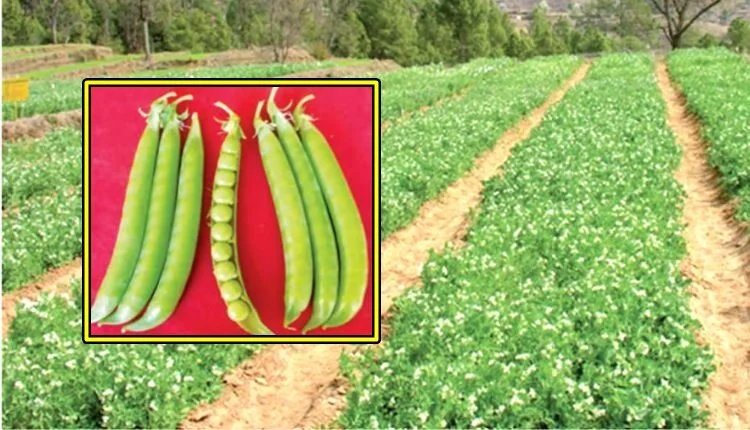
The plants produce around 12–15 attractive green pods each. The pods are crisp and tender and do not have parchment layers, which is an important quality characteristic for a vegetable that is marketed and consumed with the pod intact.
Average pod weight is reported at 7.1–8.0 grams. The variety can produce about 95–100 quintals of edible pods per hectare over three to four pickings under suitable cultivation conditions.
Multiple pickings can be useful for vegetable farmers because harvesting is spread across the crop period rather than depending on one harvest. But actual returns will depend on local labour costs, market prices, crop management and the distance between the farm and the buyer.
Can It Give Farmers A Better Market?
The main opportunity with Kashi Tripti is that farmers are not selling only pea seeds. The entire tender pod becomes the marketable product, creating a vegetable segment aimed at consumers looking for convenient and nutritious foods.
ICAR notes that demand for edible-podded peas has increased, particularly in metropolitan markets, supermarkets, institutional buyers and the hospitality sector. This makes the crop potentially interesting for farmers who have access to organised vegetable markets.
Farmers should still verify demand before planting large areas. A high-yielding vegetable can become difficult to sell if several growers harvest simultaneously or if there is no nearby buyer. Contract arrangements, FPO marketing and direct supply to retailers can reduce some of this risk.
Kashi Tripti also has nutritional characteristics that may help distinguish it from ordinary vegetable peas. ICAR reports protein content of 21.9% on a dry-weight basis, while total soluble solids reach 11°Brix in whole pods and 13.9°Brix in fresh green seeds.
The variety also contains ascorbic acid, phenolics and flavonoids. These characteristics may support marketing based on nutritional quality, although farmers should not assume that nutritional claims automatically create a price premium.
For consumers, the edible pod provides a combination of vegetable texture, protein and fibre. ICAR reports dietary fibre of about 2.5–3.0 grams per 100 grams of fresh edible pods, making the crop relevant to the growing market for nutrient-rich vegetables.
Can It Reduce Crop Losses?
Disease resistance is another useful feature. Kashi Tripti is reported to be resistant to powdery mildew, one of the important diseases affecting pea production.
Disease resistance can help farmers reduce the risk of crop damage and may reduce dependence on repeated plant-protection applications where the disease is a major problem. Farmers should still monitor fields because resistance does not mean the crop is protected from every pest or disease.
Good field sanitation, suitable spacing, timely sowing, balanced nutrition and regular crop monitoring remain important. Farmers should follow locally recommended crop-protection practices rather than assuming that a resistant variety needs no disease management.
Kashi Tripti was developed by ICAR-IIVR in Varanasi and was recommended for commercial cultivation in Uttar Pradesh by the State Variety Release Committee in 2024. Farmers outside the recommended area should first check whether the variety is suitable for their agro-climatic conditions.
The crop’s performance can change with temperature, soil type, irrigation, sowing time and disease pressure. Farmers should therefore consult their state agriculture department, agricultural university or KVK before introducing it on a large area.
For vegetable farmers, market timing is equally important. The value of an edible-podded variety depends heavily on reaching consumers while pods are still tender and attractive. Harvesting, grading, packaging and transportation therefore become part of the production decision.
What Should Farmers Check Before Planting?
Farmers should first identify buyers for edible pods. Supermarkets, hotels, restaurants, vegetable retailers and local consumers may have different quality and packaging requirements. Knowing the target market before sowing can help determine how much area should be planted.
Seed quality is another important consideration. Farmers should obtain genuine seed through recognised sources and confirm the variety identity. They should avoid buying seed solely from sellers promising unusually high returns or claiming that the variety is suitable for every region.
Farmers should also calculate the labour requirement. Kashi Tripti is harvested through multiple pickings, so labour availability during the harvesting period can affect profitability. A farmer with limited family or hired labour should include harvesting costs in the production calculation.
Kashi Tripti offers farmers a different pea business model by combining edible pods, multiple harvests, nutritional qualities and powdery-mildew resistance. Its reported yield potential of 95–100 quintals per hectare makes it particularly interesting for commercial vegetable cultivation.
But yield alone should not decide adoption. Farmers need to compare seed cost, cultivation expenses, labour, irrigation, transportation and local selling prices with the expected returns. The variety is best considered where there is a reliable fresh-vegetable market.
For farmers with access to urban or organised vegetable markets, edible-podded peas could provide an alternative to conventional pea production. Starting with a small area can help test consumer demand and farm performance before expanding cultivation.
Kashi Tripti shows how crop improvement is increasingly targeting not only yield, but also changing consumer preferences and new market opportunities. For farmers, choosing such varieties can be worthwhile when the crop’s agronomic traits and the local market work together.
Also Read: Punarnava Jal – The world’s first organic fertilizer! Know how it is beneficial for farmers?
Contact us – If farmers want to share any valuable information or experiences related to farming, they can connect with us via phone or whatsapp at 9599273766 or you can write to us at “kisanofindia.mail@gmail.com”. Through Kisan of India, we will convey your message to the people, because we believe that if the farmers are advanced then the country is happy.
You can connect with Kisan of India on Facebook, Twitter, and Whatsapp and Subscribe to our YouTube channel.