



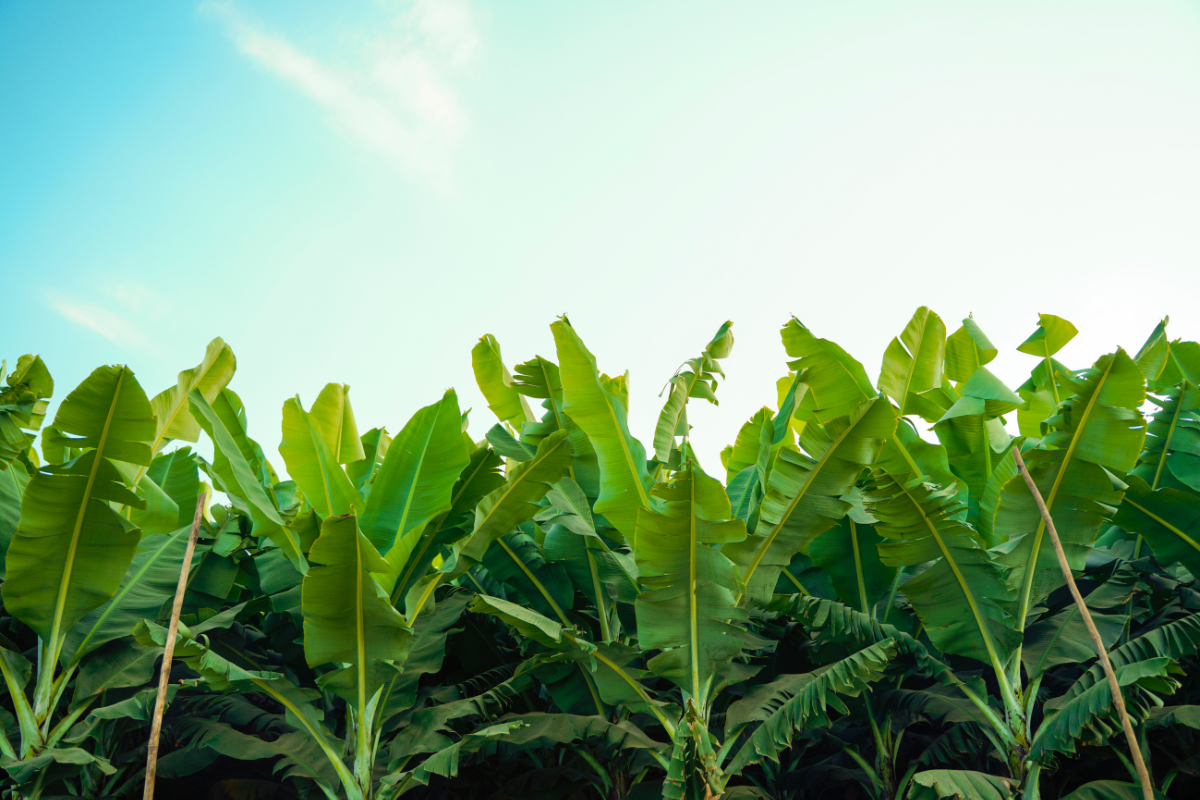
Indian banana farmers have two new varieties to consider after the ICAR-National Research Centre for Banana released Cauvery Thangam and Cauvery Nadan at its Farmers’ Day in Tiruchirappalli on August 21.
The two varieties target different needs. Cauvery Thangam has high provitamin A content, while Cauvery Nadan has been developed for higher yield. Planting material for both varieties has already been distributed to farmers.
Cauvery Thangam has yellow pulp and is rich in provitamin A. ICAR-NRCB has reported around 1,090 micrograms of provitamin A per 100 grams of fresh pulp.
Provitamin A carotenoids are converted by the body into vitamin A. The nutrient is important for normal vision, immune function and growth.
The variety also has good consumer acceptance and a distinctive aroma. According to the NRCB, its fruit can remain fresh for up to eight days, which could help farmers and traders manage transport and marketing.
Around 10,000 tissue-culture plants of the variety have already been distributed to farmers in Tamil Nadu, according to reports from the Farmers’ Day event. Planting material has also been distributed more widely as the varieties move towards adoption.
Cauvery Nadan targets higher yield
Cauvery Nadan is a pacha nadan-type banana developed with higher productivity in mind.
The NRCB has reported that the variety can produce nearly twice the yield of the existing Nadan variety. This could make it useful for farmers looking to increase output from existing banana-growing areas.
Higher yield alone does not guarantee higher farm income. Farmers also need to consider planting material costs, crop duration, input requirements, disease management, labour and the price received at the market.
The variety will need to perform consistently across different farms before its potential can be assessed at a wider scale.
The ICAR-National Research Centre for Banana has been working on banana breeding, crop protection, water management, post-harvest technology and value addition.
The centre maintains a large collection of banana varieties and has developed several improved varieties for different farming and market needs. Its earlier varieties include Kaveri Kalki, which was developed for shorter-duration and high-density cultivation.
The centre is also working on technologies that can help farmers and entrepreneurs use bananas beyond fresh consumption. These include products made from banana powder, chips, stem juice and other parts of the plant.
This gives farmers more ways to earn from the crop, especially where processing and local markets are available.
Farmers need to match varieties with their market
The two new varieties show that banana breeding can target different farmer needs.
Cauvery Thangam focuses on nutritional value, fruit quality and shelf life. Cauvery Nadan focuses more directly on yield.
Farmers should select varieties based on their local climate, soil, water availability and market demand. Banana is a long-duration crop, so changing varieties involves a significant investment of time and inputs.
Quality planting material is also important. Tissue-culture plants can provide uniform planting material when produced and supplied through proper systems.
The release of Cauvery Thangam and Cauvery Nadan expands the choices available to banana growers. Their wider value will depend on field performance, farmer feedback and market acceptance.
For farmers, the important question is not simply which variety gives the highest yield. It is which variety can provide the right combination of yield, quality, crop duration and market price for their farm.
Also Read: Punarnava Jal – The world’s first organic fertilizer! Know how it is beneficial for farmers?
Contact us – If farmers want to share any valuable information or experiences related to farming, they can connect with us via phone or whatsapp at 9599273766 or you can write to us at “kisanofindia.mail@gmail.com”. Through Kisan of India, we will convey your message to the people, because we believe that if the farmers are advanced then the country is happy.
You can connect with Kisan of India on Facebook, Twitter, and Whatsapp and Subscribe to our YouTube channel.