


Why Farmers Are Returning to Black Rice Cultivation

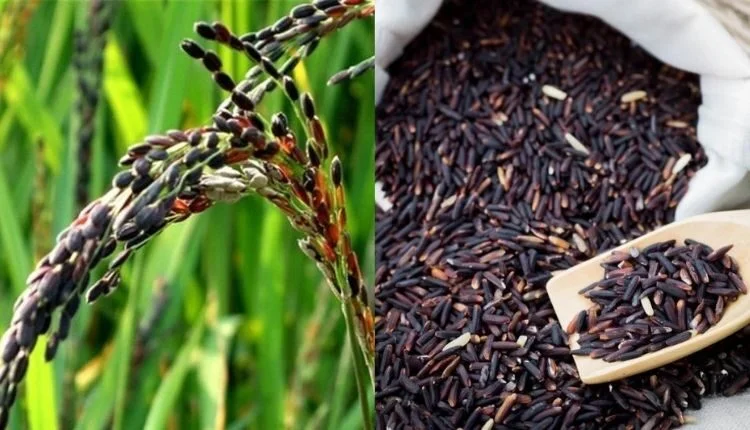
Many farmers are now searching for crops that offer better market prices instead of depending only on high-volume production. Rising cultivation costs and unstable mandi rates are forcing growers to explore specialty crops with premium demand. Because of this, black rice cultivation is slowly expanding across several states including Assam, Manipur, Odisha, Chhattisgarh, and parts of south India.
Black rice was traditionally grown in limited regions and remained linked with local food systems for generations. Earlier, farmers cultivated it mainly for household consumption and local trade. Agriculture experts say consumer demand for traditional and specialty grains has increased sharply during recent years because urban buyers are showing greater interest in heritage food products and nutrient-rich grains.
Black Rice Attracts Premium Prices
One major reason behind rising black rice cultivation is market value. Compared to regular rice varieties, black rice usually sells at much higher prices in retail and online markets. Farmers say premium pricing helps improve profitability even if production volumes remain lower than commercial hybrid varieties.
Agriculture experts say specialty rice markets are growing because restaurants, organic food companies, and export buyers are purchasing traditional rice varieties more actively. Some Farmer Producer Organizations are also branding black rice under regional identity labels to improve direct marketing opportunities.
Farmers Say the Crop Handles Stress Better
Several farmers growing black rice say traditional varieties often tolerate difficult weather conditions better than some modern high-input crops. Agriculture experts believe local rice landraces developed natural adaptability over long periods under regional climate conditions.
Some black rice varieties require fewer chemical inputs and survive irregular rainfall more effectively. Researchers studying climate-resilient agriculture say traditional crops may become increasingly important because weather patterns are becoming more unpredictable across rice-growing regions.
Organic Farmers Prefer Traditional Varieties
Black rice is also becoming popular among organic and natural farming groups. Farmers practicing low-input agriculture often prefer traditional varieties because they usually respond better to compost-based nutrient management systems compared to some commercial hybrids.
Agriculture experts say specialty rice cultivation fits well within sustainable farming models because farmers can target niche markets instead of depending entirely on bulk commodity sales. Some growers now combine black rice cultivation with direct online marketing and local food branding systems.
Demand Is Growing in Urban Markets
Urban consumers are increasingly buying traditional grains through supermarkets, organic stores, and digital marketplaces. Black rice has gained attention because of its dark colour and association with traditional food systems. Restaurants and health-food businesses are also adding specialty rice dishes to menus.
Agriculture market analysts say premium grain demand is creating new opportunities for small farmers willing to grow unique crops. Several startups are now sourcing traditional rice varieties directly from rural producer groups for packaging and retail distribution.
Farmers Face Production Challenges
Despite growing interest, black rice farming still faces several challenges. Traditional varieties often produce lower yields compared to high-yield hybrid rice systems. Harvesting, processing, and storage also require proper management because specialty rice markets demand high-quality grain.
Agriculture experts say seed availability remains limited in several regions. Many farmers still depend on local seed exchange systems to maintain traditional varieties. Researchers are now studying ways to improve productivity without losing traditional crop characteristics.
Governments and Researchers Are Supporting Conservation
Agriculture universities and biodiversity groups are increasing efforts to conserve traditional rice varieties across India. Researchers say many local crops disappeared after commercial hybrid cultivation expanded during previous decades. Black rice cultivation is now being promoted through seed banks, demonstration farms, and traditional agriculture programmes.
Experts believe preserving traditional crops may become important for future food security because genetic diversity helps agriculture respond better to climate and disease challenges.
Black Rice Reflects a Bigger Farming Shift
Agriculture experts believe the return of black rice cultivation reflects a larger shift happening in farming systems. Farmers are no longer focusing only on maximum production. Many are now exploring crops linked with premium pricing, sustainable farming, climate resilience, and direct consumer demand.
Black rice remains a small segment of Indian agriculture today, but its growing popularity shows how traditional crops are finding new relevance in modern farming and food markets.
Also Read: Punarnava Jal – The world’s first organic fertilizer! Know how it is beneficial for farmers?
Contact us – If farmers want to share any valuable information or experiences related to farming, they can connect with us via phone or whatsapp at 9599273766 or you can write to us at “kisanofindia.mail@gmail.com”. Through Kisan of India, we will convey your message to the people, because we believe that if the farmers are advanced then the country is happy.
You can connect with Kisan of India on Facebook, Twitter, and Whatsapp and Subscribe to our YouTube channel.