



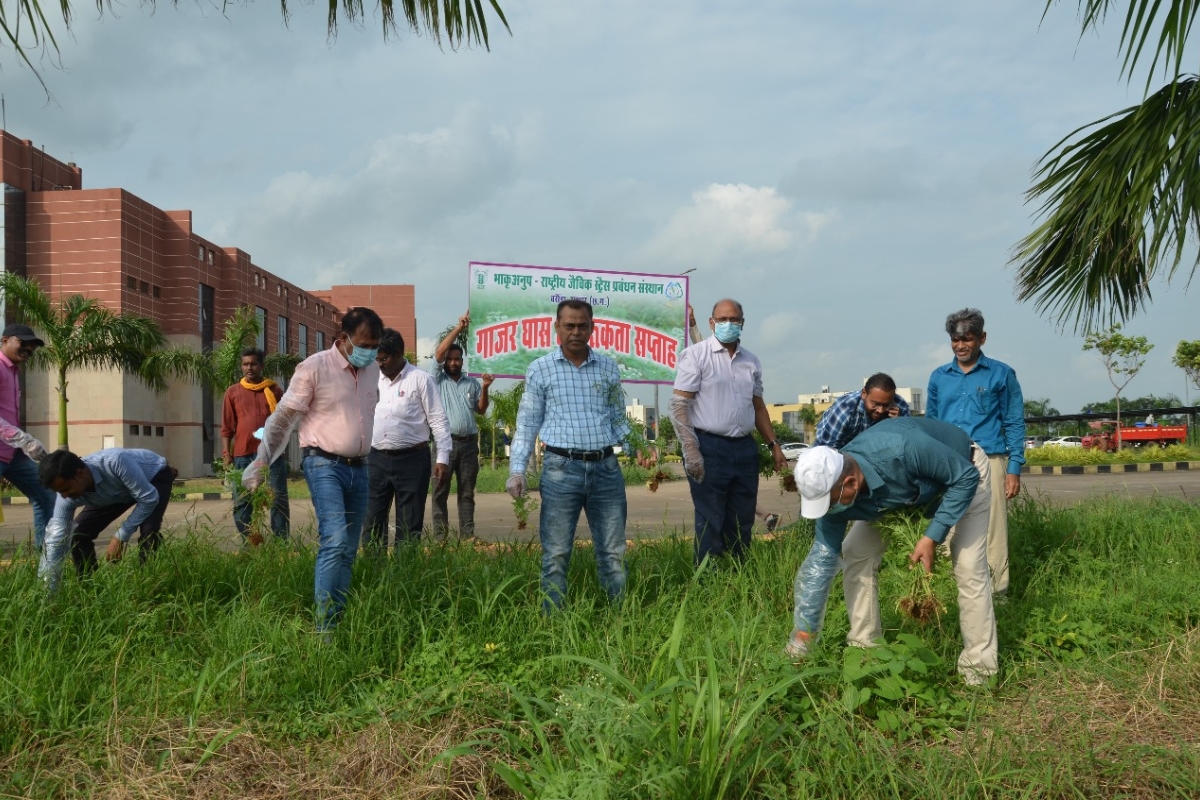
Parthenium, commonly known as Congress grass, remains a growing problem for farmers across India. The invasive weed spreads quickly along field boundaries, roadsides, grazing areas and uncultivated land.
ICAR recently used the 21st Parthenium Awareness Week to train farmers and rural communities on identifying and controlling the weed before it flowers and spreads seeds. Parthenium can compete with crops and other plants for space, nutrients and water.
When it spreads across farm boundaries and nearby land, controlling it becomes harder because seeds can move into cultivated fields. ICAR-CRIDA’s Krishi Vigyan Kendra in Hyderabad recently conducted awareness and eradication activities in villages across Ranga Reddy district. The programme focused on the weed’s effects on crop productivity, livestock, biodiversity and the environment.
The key concern is its ability to reproduce and spread rapidly.
A small infestation can become much larger if farmers allow plants to flower and produce seeds.
Early removal can stop seed spread
ICAR has stressed the importance of controlling Parthenium before flowering and seed formation. Farmers should regularly check field boundaries, irrigation channels, roadsides and uncultivated patches near their farms.
Removing plants early can reduce the number of seeds entering the soil. Once a large number of seeds accumulate in an area, control becomes more difficult because new plants can continue to emerge over time.
The Hyderabad programme focused on early identification and timely removal as part of weed management. For farmers, regular monitoring is often easier than waiting until the weed covers a large area.
One control method may not be enough
ICAR promotes Integrated Weed Management for Parthenium. This means combining different methods rather than depending on only one approach.
Preventive measures include using clean and weed-free seed and keeping farm boundaries under control. Mechanical methods include hand weeding, hoeing and uprooting.
Cultural methods can include timely sowing and crop rotation. Biological methods use natural enemies or bio-agents to manage the weed.
Recommended herbicides can also form part of a control programme where appropriate and used according to official agricultural guidance. The method that works best can depend on the size of the infestation and the location.
Field boundaries need attention
Farmers often focus weed control inside the cropped field. But Parthenium growing on field boundaries can continue supplying seeds into cultivated land. This makes boundary management important.
A coordinated approach can also work better when neighbouring farmers and local authorities manage heavily infested common areas together.
One farmer may clear Parthenium from a field, but seeds can return from nearby roadsides, grazing land or vacant plots.
The recent ICAR programme involved farmers, students, agricultural staff and rural communities, showing that control efforts may need participation beyond individual farms.
Parthenium is not only a crop-field problem. It can spread into grazing land and areas used by livestock.
When invasive weeds dominate these spaces, they can reduce the availability of useful vegetation.
ICAR’s awareness programme specifically highlighted the weed’s potential effects on livestock, biodiversity and the wider environment.
For mixed farms, managing the weed around both crop fields and livestock areas becomes important.
Farmers should also avoid allowing the weed to spread through unmanaged farm waste or soil movement.
Farmers need local advice
The best control method can differ depending on whether Parthenium is growing in a cropped field, along a boundary, in grazing land or in a large uncultivated area.
Farmers can seek guidance from their local Krishi Vigyan Kendra or agriculture department before selecting control measures.
The practical priority is to identify the weed early and prevent flowering and seed formation.
ICAR’s recent awareness drive shows that Parthenium remains an active farm-management issue across India.
For farmers, the first step is simple: check the areas around your fields before the weed spreads.
Early action can reduce the time and cost needed to control a larger infestation later.
I can also keep track of the topics covered today so the next article uses a completely different category and angle.
Also Read: Punarnava Jal – The world’s first organic fertilizer! Know how it is beneficial for farmers?
Contact us – If farmers want to share any valuable information or experiences related to farming, they can connect with us via phone or whatsapp at 9599273766 or you can write to us at “kisanofindia.mail@gmail.com”. Through Kisan of India, we will convey your message to the people, because we believe that if the farmers are advanced then the country is happy.
You can connect with Kisan of India on Facebook, Twitter, and Whatsapp and Subscribe to our YouTube channel.