



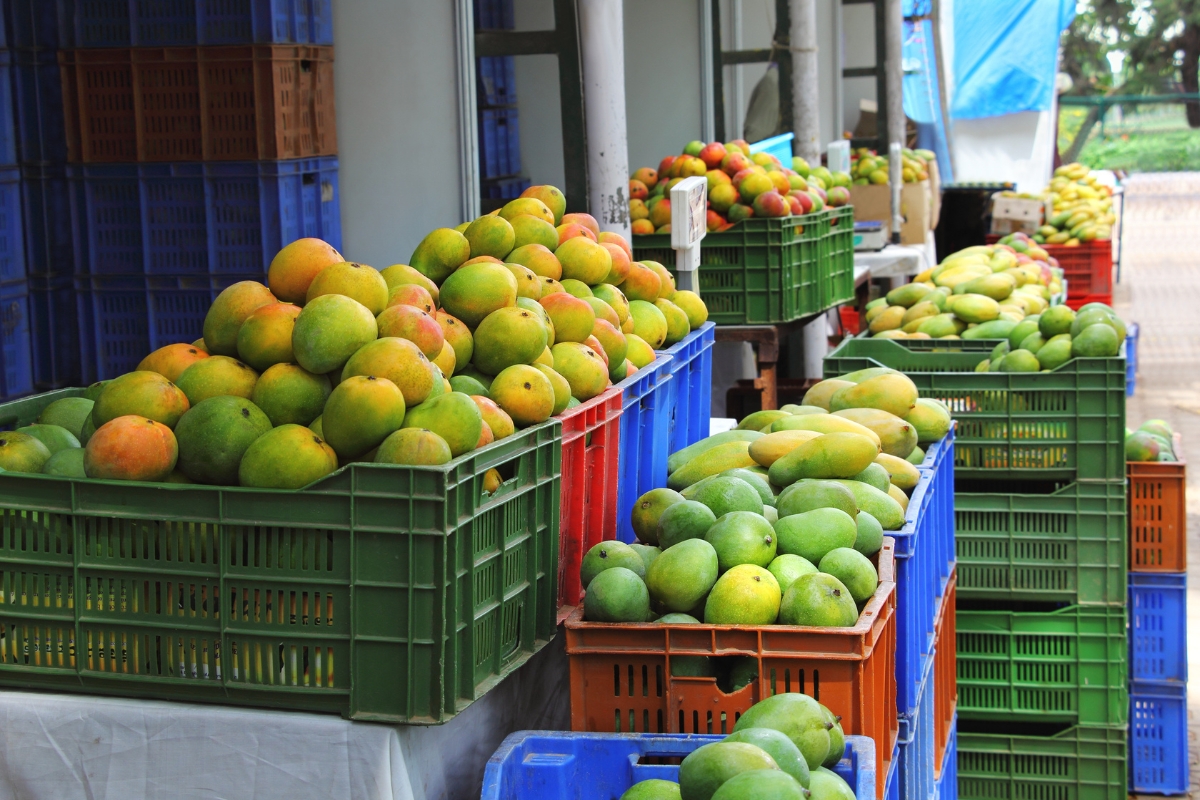
Indian mango growers have gained another route to international markets after a 12.5-tonne shipment of Dashehari and Langra mangoes from Uttar Pradesh’s Amroha reached Dubai by sea.
The shipment demonstrated the commercial use of an export protocol developed jointly by the ICAR-Central Institute for Subtropical Horticulture and the Agricultural and Processed Food Products Export Development Authority.
The development matters because sea transport can offer an alternative to air freight for fresh fruit exporters. Lower transport costs could make exports more practical for larger volumes when the required quality and shelf-life conditions are met.
Dashehari and Langra travel by sea
Dashehari and Langra are important mango varieties grown in northern India. Both have strong domestic demand, but reaching overseas consumers requires careful handling after harvest.
Fresh mangoes can deteriorate during long-distance transport. Exporters therefore need systems that control temperature, ripening and quality from the farm to the destination.
The new shipment from Amroha tested whether the two varieties could complete the journey by sea while maintaining marketable quality. The shipment was sent to Dubai under the protocol developed by ICAR-CISH and APEDA.
For growers, successful sea transport could expand the number of markets that Indian mango exporters can serve.
Sea freight could reduce export costs
Air freight is faster but can be expensive. Sea transport takes longer, which makes post-harvest handling more important, but it can carry larger quantities at a lower transport cost.
This difference matters for farmers and exporters because transport costs affect the final price of fruit in overseas markets.
If sea shipments become reliable, exporters could potentially move larger consignments without depending entirely on air cargo.
The model could be particularly useful for mango-producing districts where large volumes are harvested during a short season.
Post-harvest handling becomes critical
A successful sea shipment requires more than putting harvested mangoes into a container.
Fruit must be harvested at the right stage and handled carefully to prevent bruising and premature deterioration. Sorting and grading are also important because export buyers generally require consistent size and quality.
The export protocol developed by ICAR-CISH and APEDA is aimed at making this process more reliable.
For farmers, this creates a reason to pay greater attention to post-harvest practices. Fruit that is suitable for the domestic market may not automatically meet export requirements.
Amroha farmers could gain another market
Amroha is an important mango-growing district in Uttar Pradesh. The district produces varieties including Dashehari and Langra that are already familiar to consumers across India.
An export market can give farmers another potential buyer beyond domestic traders.
Export markets also come with stricter requirements. Farmers and exporters need to maintain traceability, quality, food-safety standards and proper handling throughout the supply chain.
Farmer Producer Organisations can play a role by bringing produce from multiple growers together, supporting grading and helping exporters source consistent volumes.
The next step is regular shipments
One successful shipment does not establish a permanent export market.
The model needs to be repeated across seasons and tested with different consignments, exporters and buyers. Farmers also need to know whether export demand translates into better prices after grading, packaging and transport costs.
The sea shipment is still important because it demonstrates that Indian mangoes can be moved to an overseas market through a transport route that could support larger volumes.
For mango farmers, the opportunity is not only about selling more fruit. It is about reaching markets where quality, variety and reliable supply can command better returns.
If the protocol proves commercially viable at larger scale, sea-based exports could give Indian mango growers another route to international consumers while reducing dependence on costly air freight.
Also Read: Punarnava Jal – The world’s first organic fertilizer! Know how it is beneficial for farmers?
Contact us – If farmers want to share any valuable information or experiences related to farming, they can connect with us via phone or whatsapp at 9599273766 or you can write to us at “kisanofindia.mail@gmail.com”. Through Kisan of India, we will convey your message to the people, because we believe that if the farmers are advanced then the country is happy.
You can connect with Kisan of India on Facebook, Twitter, and Whatsapp and Subscribe to our YouTube channel.