



In the high-altitude landscapes of Ladakh, farming has always required adaptation. Short growing seasons, extreme temperatures, limited rainfall, and fragile soils make agriculture challenging across much of the region.
Yet one hardy shrub is helping farmers create new opportunities.
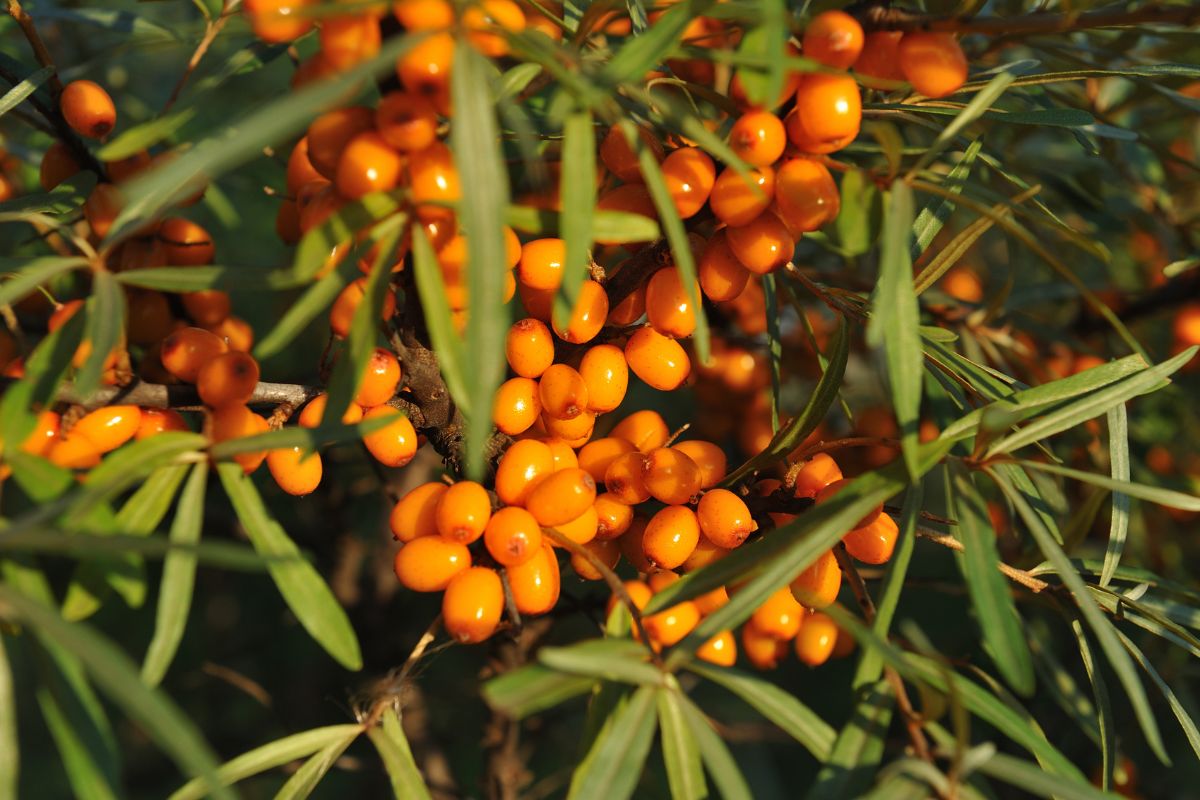
Sea buckthorn, a thorny plant naturally found in the Himalayan cold desert, is attracting increasing attention for its economic and environmental value. Long known to local communities, the plant is now becoming an important source of income through the production of juices, oils, herbal products, and nutritional supplements.
As demand for natural health products grows, farmers and cooperatives are exploring sea buckthorn as a commercially viable crop suited to Ladakh’s unique conditions.
The plant is turning a native resource into a growing agricultural enterprise.
Few crops can survive the conditions found in Ladakh. Winter temperatures often fall far below freezing, rainfall remains scarce, and strong winds can affect vegetation growth. Sea buckthorn has evolved to thrive under exactly these circumstances.
Its deep root system helps it access moisture while stabilising fragile soils. The plant tolerates cold temperatures and performs well in landscapes where many conventional crops would struggle.
Researchers frequently highlight such species when discussing climate-resilient agriculture.
Adaptation is built into the plant’s biology.
This gives it a significant advantage.
Sea buckthorn berries contain vitamins, antioxidants, and various bioactive compounds that have attracted interest from food and wellness industries. Products made from the berries include juices, concentrates, oils, teas, cosmetics, and nutritional supplements. Demand has expanded steadily as consumers seek natural products.
For farmers, this creates access to higher-value markets.
Instead of selling raw agricultural commodities alone, producers can participate in value-added processing activities linked to the crop.
The commercial potential continues to grow.
Market interest is strengthening year after year.
Cooperatives Help Farmers Reach Buyers
One challenge in mountain agriculture is connecting producers with larger markets. Individual farmers often lack the scale required to process and market products independently. Cooperatives are helping overcome this limitation by aggregating production and supporting value addition.
Several producer groups in Ladakh are involved in berry collection, processing, packaging, and marketing activities.
Collective action improves bargaining power while allowing farmers to benefit from growing consumer demand.
The cooperative model is becoming central to sector growth.
It strengthens the entire value chain.
Sea buckthorn contributes more than economic value. The plant plays an important role in soil conservation and land restoration. Its roots help prevent erosion in fragile mountain environments, while its presence supports ecological stability in degraded landscapes.
Researchers note that environmental and agricultural objectives often align in sea buckthorn cultivation.
Farmers gain income while landscapes benefit from improved vegetation cover and soil protection. This combination makes the crop particularly attractive in environmentally sensitive regions.
The benefits reach beyond individual farms.
Entire ecosystems gain support.
Agriculture in Ladakh has traditionally been shaped by environmental limitations. Sea buckthorn demonstrates how local resources can become the foundation of new economic opportunities. Rather than introducing crops unsuited to mountain conditions, farmers are building enterprises around a species already adapted to the landscape.
The approach reflects a broader shift in agricultural thinking.
Success increasingly depends on matching crops to local ecosystems rather than forcing ecosystems to accommodate unsuitable crops.
Sea buckthorn embodies this principle.
Its growth mirrors changing priorities.
Turning a Native Plant Into a Rural Enterprise
For generations, sea buckthorn existed as part of Ladakh’s natural environment.
Today, it is becoming part of the region’s economic future as well. Farmers, cooperatives, and entrepreneurs are transforming a native shrub into a source of income, employment, and value-added production.
The crop offers resilience, market potential, and environmental benefits in a region where all three are essential.
As demand for natural products continues to expand, sea buckthorn is likely to play an increasingly important role in Ladakh’s agricultural economy.
In one of India’s harshest farming environments, a resilient plant is helping create new possibilities for rural communities.
Also Read: Punarnava Jal – The world’s first organic fertilizer! Know how it is beneficial for farmers?
Contact us – If farmers want to share any valuable information or experiences related to farming, they can connect with us via phone or whatsapp at 9599273766 or you can write to us at “kisanofindia.mail@gmail.com”. Through Kisan of India, we will convey your message to the people, because we believe that if the farmers are advanced then the country is happy.
You can connect with Kisan of India on Facebook, Twitter, and Whatsapp and Subscribe to our YouTube channel.