


PM-AASHA 2026: How Farmers Can Get MSP Support for Pulses and Oilseeds

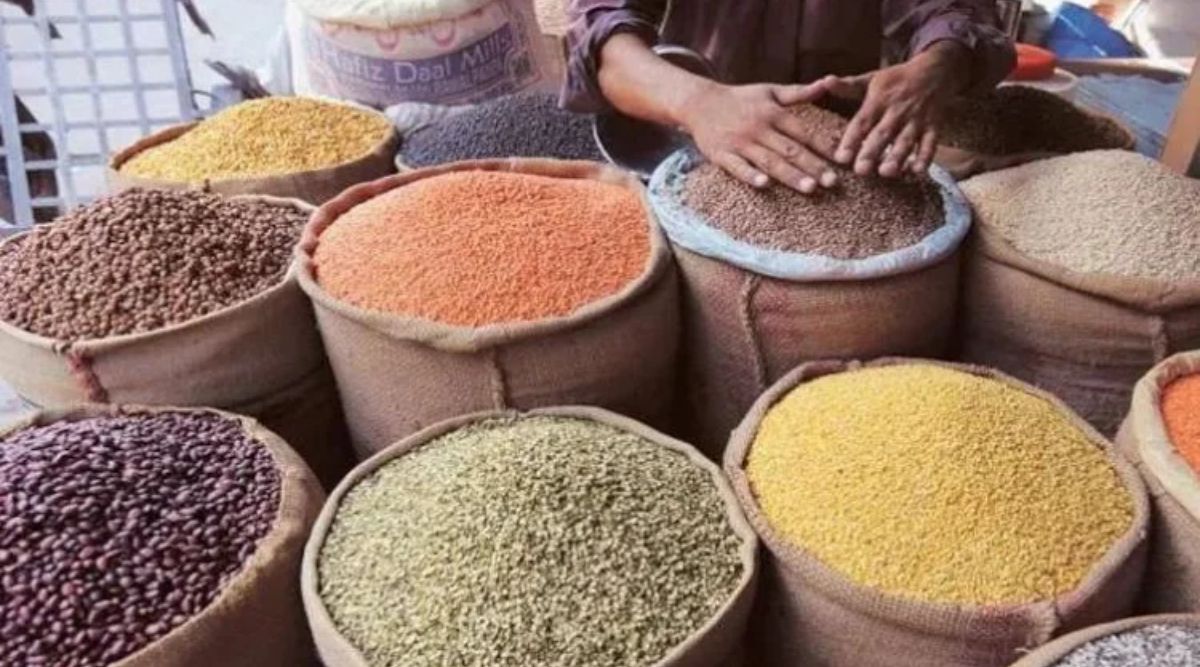
Farmers growing pulses and oilseeds often face a sharp fall in market prices during the harvest season when large quantities reach mandis at the same time. The government’s PM-AASHA framework is designed to provide price support when notified crops trade below their Minimum Support Price.
The Price Support Scheme, or PSS, is activated at the request of the concerned State or Union Territory when market prices fall below the notified MSP during the peak harvesting period. Procurement is carried out through designated Central Nodal Agencies and state-level agencies.
What Is PM-AASHA?
Pradhan Mantri Annadata Aay Sanrakshan Abhiyan, or PM-AASHA, is the government’s price-support framework for agricultural commodities. Its purpose is to help farmers receive remunerative prices while also supporting stable supplies of important food commodities for consumers.
The integrated scheme includes the Price Support Scheme, Price Deficit Payment Scheme and Market Intervention Scheme. The Price Stabilisation Fund also forms part of the broader framework, with consumer-side price management handled by the Department of Consumer Affairs.
For farmers, the most relevant component is often PSS. Under this mechanism, notified pulses, oilseeds and copra can be physically procured at MSP when market prices fall below the government-announced MSP during the relevant harvesting period.
On 30 September 2026, the Centre approved procurement worth ₹5,547.99 crore under PSS for Uttar Pradesh, Karnataka and Telangana. The approved procurement covers 7.06 lakh tonnes of pulses and oilseeds for the Kharif Marketing Season 2026–27.
In Uttar Pradesh, procurement of tur and moong has been approved. Karnataka and Telangana will see procurement of soybean, moong and sunflower under the latest approvals. The allocation is ₹3,992.57 crore for Uttar Pradesh, ₹1,107 crore for Karnataka and ₹448.42 crore for Telangana.
This latest decision matters because procurement under PSS is not automatically available for every crop in every state. The state government has to request the intervention, and the Centre approves procurement based on the applicable scheme conditions and crop situation.
Which Farmers Can Benefit?
Farmers growing notified pulses and oilseeds can benefit when their state activates procurement under PSS. The produce must meet the prescribed Fair Average Quality, or FAQ, standards, and procurement is generally made from farmers who have completed the required registration process.
The government has said procurement agencies such as NAFED and NCCF purchase eligible produce through state-level arrangements. The system is intended to reduce the role of intermediaries and protect registered farmers from having to sell their produce at distressed prices.
Farmers should therefore not assume that having a crop with an announced MSP automatically means they can sell unlimited quantities to a government procurement centre. Procurement depends on the crop, state, approved quantity, registration, quality standards and the procurement window.
The government has provided stronger procurement support for tur, urad and masur as part of efforts to increase domestic pulse production and reduce dependence on imports. Under current policy, the earlier procurement ceiling has been lifted for these three pulses in the relevant procurement framework.
The Mission for Aatmanirbharta in Pulses, approved in October 2025, has an outlay of ₹11,440 crore for 2025–26 to 2030–31. It focuses on tur, urad and masur, including improved and climate-resilient seeds, expanded cultivation, post-harvest infrastructure and procurement support.
The mission also supports pulse-processing infrastructure. Financial assistance is available for eligible new pulse processing and packaging units at 33% of project cost, subject to a maximum assistance of ₹25 lakh. The government has targeted 1,000 such processing units during the mission period.
What About Oilseed Farmers?
Oilseed farmers have two important price-support routes within PM-AASHA. PSS involves physical procurement when the scheme is activated, while the Price Deficit Payment Scheme can provide a direct payment for the difference between MSP and the applicable selling or modal price under prescribed conditions.
Under PDPS, farmers do not hand over their produce to the government for physical procurement. Instead, eligible registered farmers selling specified oilseeds in notified markets can receive the price difference subject to scheme rules and limits.
This distinction is important. Farmers should check which component has been activated in their state and crop before assuming that government support will come through physical procurement or direct payment.
Farmers should first check whether PSS procurement has been approved for their crop and state. They should then complete registration through the designated state or procurement agency within the notified period. Waiting until after harvest can create problems if registration is required beforehand.
Farmers should also maintain valid land and crop records and ensure their produce meets FAQ quality standards. Clean, properly dried and appropriately graded produce is more likely to meet procurement requirements than grain with excessive moisture or other quality defects.
The location of procurement centres is another practical issue. State agencies and Central Nodal Agencies open centres based on production, marketable surplus, farmer convenience, storage and transportation arrangements. Farmers should confirm the nearest authorised centre rather than relying on informal buyers claiming to procure under the scheme.
Can PM-AASHA Prevent Distress Sales?
PM-AASHA cannot guarantee that every farmer will sell every kilogramme at MSP. Its effectiveness depends on whether procurement is activated, whether the farmer is registered, whether the crop meets quality requirements and whether the approved procurement quantity is sufficient.
But where procurement is properly activated, the scheme can provide an important alternative when open-market prices fall below MSP. The latest Kharif 2026–27 approvals show that the government is continuing to use PSS to intervene in pulse and oilseed markets when price pressure develops.
For farmers, the key lesson is to check scheme notifications before harvest rather than after prices have already fallen. Registration, quality, documents and procurement-centre information can determine whether a farmer is actually able to use the MSP support available under PM-AASHA.
Also Read: Punarnava Jal – The world’s first organic fertilizer! Know how it is beneficial for farmers?
Contact us – If farmers want to share any valuable information or experiences related to farming, they can connect with us via phone or whatsapp at 9599273766 or you can write to us at “kisanofindia.mail@gmail.com”. Through Kisan of India, we will convey your message to the people, because we believe that if the farmers are advanced then the country is happy.
You can connect with Kisan of India on Facebook, Twitter, and Whatsapp and Subscribe to our YouTube channel.