
Karnataka’s Kagzi lime Capital Had a Secret Problem. Here Is What Fixed It

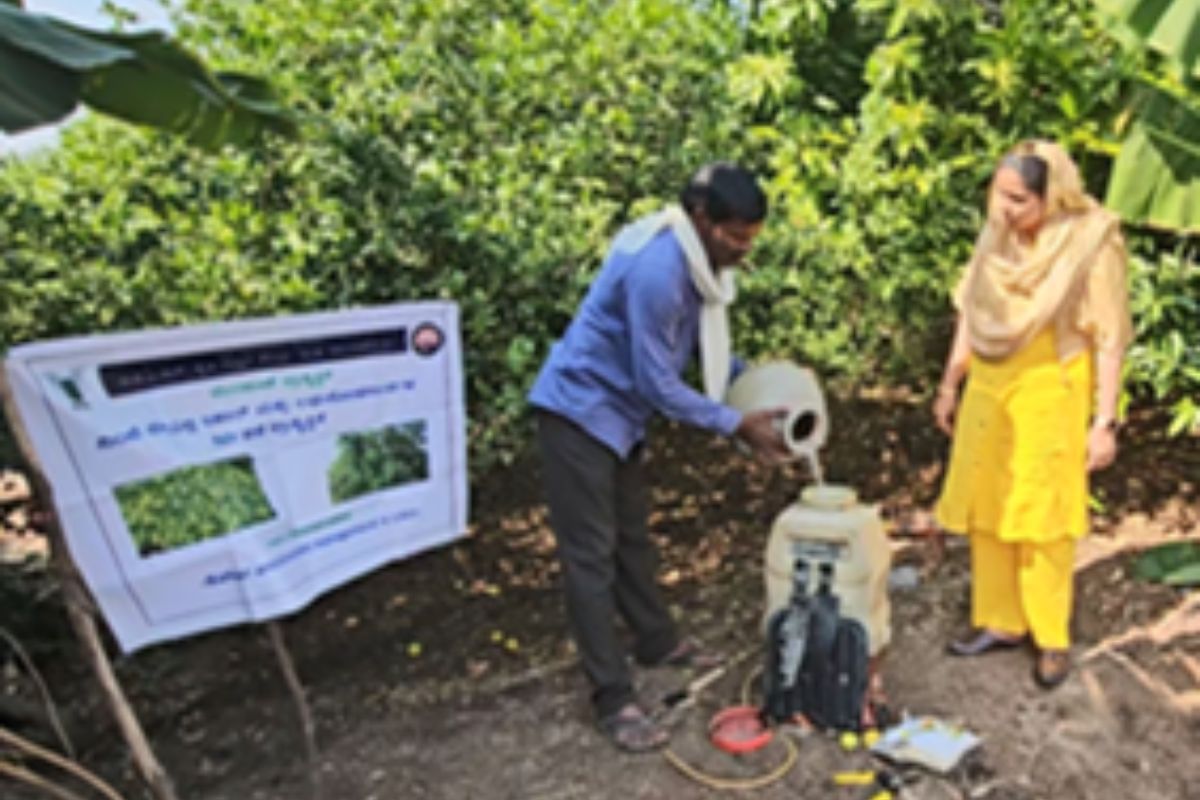
Kagzi lime has grown in Vijayapura district for over a century. The variety is so distinct — thin-skinned, high in juice, prized in kitchens and factories alike — that it earned a Geographical Indication tag in 2023. Vijayapura alone produces nearly 58 percent of Karnataka’s total lime output. Yet for years, the farmers growing it were not earning what the crop was worth.
Yields averaged around 800 fruits per plant per year, well below the achievable potential of 1,000 to 2,000. Fruit dropped before harvest. Sizes were smaller than they should be. Pest attacks came more often. The problem was not the variety or the farmer — it was the soil, and what was missing from it.
What Was Going Wrong
Vijayapura’s semi-arid climate and soil conditions create persistent deficiencies in key nutrients — nitrogen, phosphorus, boron, iron, manganese, and zinc. When these nutrients are missing, lime trees struggle to flower properly, set fruit, and resist pests. Juice content drops. Fruit size shrinks. Market value falls.
Traditional farming practices in the region had not accounted for these deficiencies. Farmers were putting in the work but not getting the returns the crop was capable of delivering.
What Changed
Between 2018 and 2025, ICAR-Krishi Vigyan Kendra (KVK) Indi ran 80 Front Line Demonstrations across 32 hectares in Vijayapura district. The demonstrations introduced an integrated approach combining Bahar management — a technique to regulate flowering — with foliar application of Arka Citrus Special, a balanced micronutrient formulation developed by ICAR-Indian Institute of Horticultural Research, Bengaluru.
The package included regulated irrigation in May, light pruning in June, application of GA₃ at 50 ppm after pruning to stimulate growth, and monthly foliar sprays of Arka Citrus Special mixed with shampoo sachet and lemon juice starting one month before flowering and continuing through to harvest. Pest management using recommended insecticides ran alongside the entire process.
Farmers who adopted the package began seeing results within 30 to 45 days. Fruit drop reduced. Fruit size and colour improved. Juice content went up. Pest incidence fell by 15 to 20 percent compared to plots using traditional practices.
What the Numbers Show
Demonstration plots recorded yield advantages ranging from 16 to 39 percent over farmers’ practice plots across the years. Average yields in demonstration plots reached 21.33 tonnes per hectare, peaking at 24.85 tonnes per hectare in 2024-25.
Before the intervention, district-level net income averaged ₹2,78,852 per hectare with a benefit-cost ratio of 4.79. After adoption, net income rose to ₹4,23,427 per hectare with a benefit-cost ratio of 6.3. In peak years, net returns rose by 71.5 percent. Improved fruit quality also fetched a market premium of ₹250 to ₹500 per 50 kg bag.
How the Technology Reached More Farmers
Arka Citrus Special was hard to find in local markets, which slowed adoption. To fix this, KVK Indi acquired the production technology licence from ICAR-IIHR Bengaluru. With ₹4 lakh from ICAR-ATARI Bengaluru and ₹6 lakh from the Karnataka State Lime Development Board, a dedicated production unit was set up on the KVK Indi campus in September 2022. Production began in January 2023.
By August 2025, over 2,700 kg of Arka Citrus Special had been produced and supplied to approximately 1,525 farmers across 214 hectares in Vijayapura and neighbouring areas. Sales grew from one quintal in 2022-23 to sixteen quintals in 2024-25, generating ₹3.2 lakh in revenue in that year alone.
Alongside demonstrations, KVK Indi conducted more than 200 training programmes, organised over 20 field days, and provided more than 1,000 on-field and off-field consultations across lime-growing villages.
What It Means for the Region
The results go beyond yield. Farmers using the integrated package reduced dependence on chemical fertilisers by 20 to 30 percent. Soil health improved. Fruit shelf life increased. The approach has given Vijayapura’s lime farmers a more stable, more profitable, and more sustainable way to grow a crop their district has depended on for generations.
Also Read: Punarnava Jal – The world’s first organic fertilizer! Know how it is beneficial for farmers?
Contact us – If farmers want to share any valuable information or experiences related to farming, they can connect with us via phone or whatsapp at 9599273766 or you can write to us at “kisanofindia.mail@gmail.com”. Through Kisan of India, we will convey your message to the people, because we believe that if the farmers are advanced then the country is happy.
You can connect with Kisan of India on Facebook, Twitter, and Whatsapp and Subscribe to our YouTube channel.