
One Family, 1.5 Acres, Rs 6 Lakh a Year: The Relay Cropping Story of the Deen Dayal Brothers

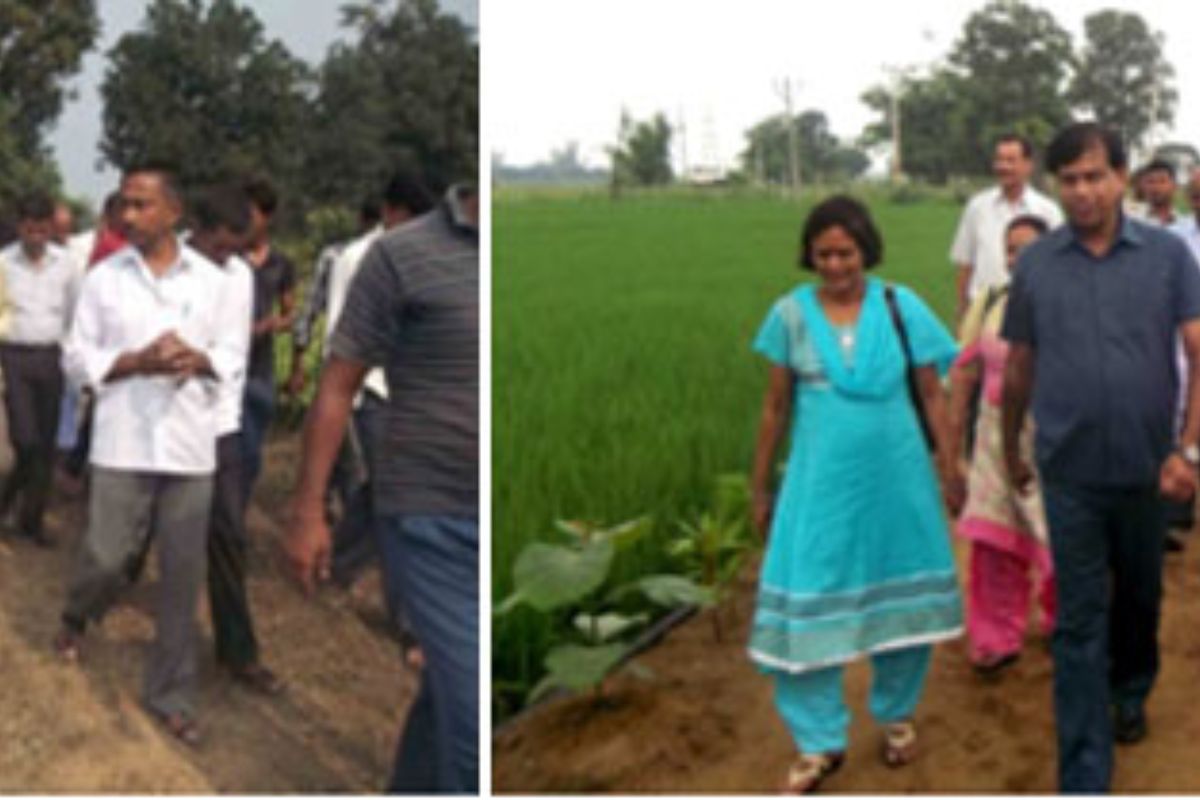
Deen Dayal Singh started farming at the age of 16. He had passed his Intermediate exams, had no extra land, and came from a family with limited resources in Nasriganj block of Rohtas district, Bihar. Today, at 31, he and his family earn approximately Rs 6 lakh per year from just 1.5 hectares of land — without hiring a single outside labourer.
The method behind this achievement is relay cropping. The force behind it is an eight-member family that works the land together, every single day.
What Is Relay Cropping
Relay cropping means planting the next crop in the same field before the current crop has been harvested. The land is never idle. One crop follows another in a carefully planned sequence, ensuring continuous income throughout the year.
Deen Dayal and his brothers have mastered this system across 1.5 hectares. Their cropping calendar runs through all three seasons — summer, rainy, and winter — with each season’s vegetables giving way to the next before the soil has time to rest empty.
The Cropping System
Their relay cropping cycle works as follows. In the rainy season, they grow bottle gourd, cucumber, bitter gourd, and sponge gourd. As these crops near the end of their cycle, winter vegetables are planted in the same field — okra, potato, spinach, cabbage, cauliflower, radish, and coriander. Summer brings brinjal, cucumber, pumpkin, and okra back into rotation.
Key productivity and income figures from their farm:
| Crop | Net Return (Rs/ha) | B:C Ratio |
|---|---|---|
| Okra | 5,60,000 | 10:3 |
| Coriander | 5,60,000 | 8:1 |
| Brinjal | 6,40,000 | 5:1 |
| Tomato | 4,80,000 | 7:1 |
| Spinach | 4,80,000 | 7:1 |
| Cauliflower | 3,20,000 | 5:1 |
Their total net profit from relay cropping across the year stands at approximately Rs 6.70 lakh, with labour costs of Rs 2.32 lakh accounted for — leaving a net saving of Rs 4.38 lakh for the family.
How the Family Works
No outside labour is employed on this farm. All work — planting, watering, weeding, harvesting, and packing — is done by the family itself. Father, mother, three brothers, and their three wives each have a defined role in the farming system.
The two younger brothers, aged 30 and 26, handle all marketing and sales. The older members manage the field operations. This division of labour keeps costs low and efficiency high.
The Role of KVK
The family credits Krishi Vigyan Kendra, Rohtas, Bikramganj for the technical knowledge that made this model work. Continuous guidance from KVK scientists on variety selection, crop sequencing, input management, and market timing helped the family move from basic farming to a structured, profitable operation.
Deen Dayal openly acknowledges this support. “KVK, Rohtas has made me successful through relay cropping in the district,” he has said on record.
Awards and Recognition
At the Purvanchal Kshetriya Kisan Mela 2015, held at the Central Potato Research Station in Patna on February 20, the Union Cabinet Minister for Agriculture personally awarded Deen Dayal Singh a certificate and a shawl for his outstanding contribution to agriculture through family farming.
The family has also received multiple awards at district and university levels for their achievements in relay cropping and family-based agricultural enterprise.
Their story is proof that with the right technique, strong family coordination, and consistent scientific support, even 1.5 acres of land can build a secure and dignified livelihood.
Also Read: Punarnava Jal – The world’s first organic fertilizer! Know how it is beneficial for farmers?
Contact us – If farmers want to share any valuable information or experiences related to farming, they can connect with us via phone or whatsapp at 9599273766 or you can write to us at “kisanofindia.mail@gmail.com”. Through Kisan of India, we will convey your message to the people, because we believe that if the farmers are advanced then the country is happy.
You can connect with Kisan of India on Facebook, Twitter, and Whatsapp and Subscribe to our YouTube channel.