
From Vegetable Shop to 100-Acre Farm: How Dilip Kumar Singh Built a Farming Empire in Bihar

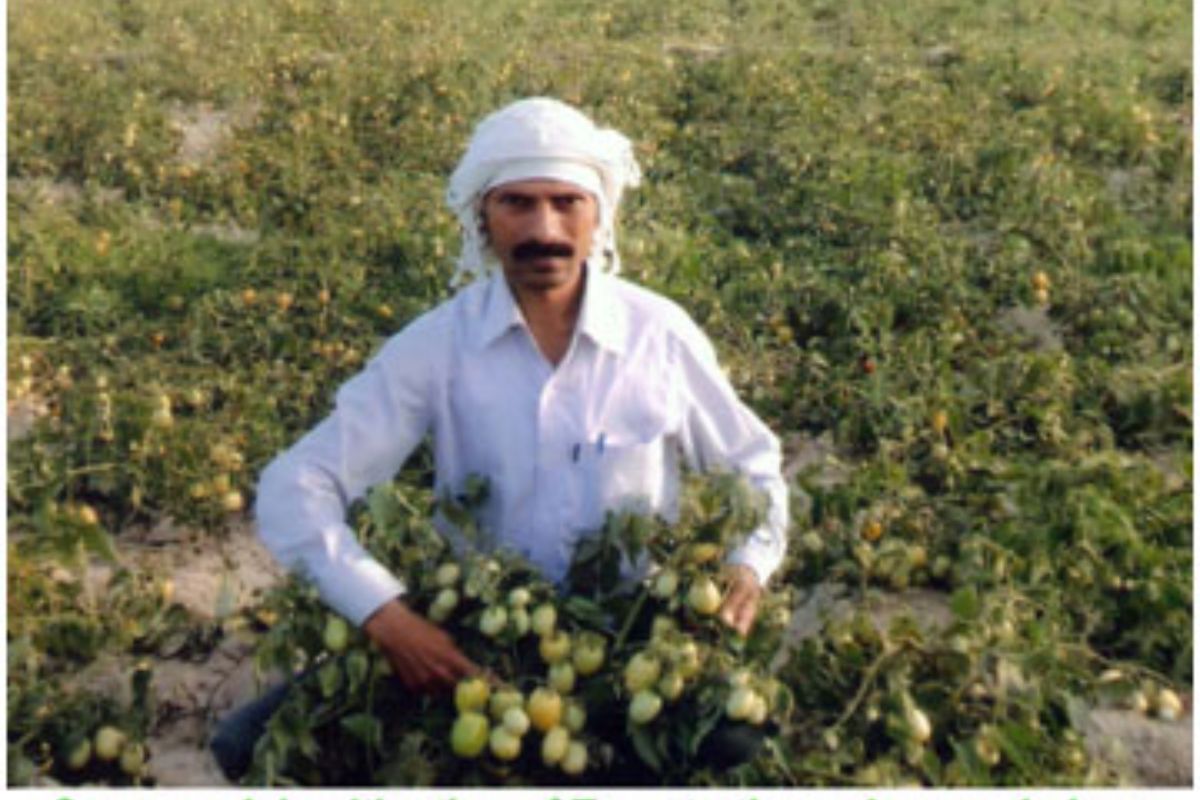
Dilip Kumar Singh was born in 1972 in a poor family in Mehaddiganj village near Sasaram in Rohtas district, Bihar. He could not complete his education beyond Intermediate. In 1993, with no land and no capital, he started selling vegetables to survive.
Today, he farms 100 acres of leased land across seven villages, earns Rs 7 to 10 lakh annually, and provides employment to 15,000 to 20,000 labourers every year. His journey from a vegetable shopkeeper to one of Bihar’s most decorated farmer-entrepreneurs is a story of hard work, scientific guidance, and relentless expansion.
How It Started
Unable to earn enough from vegetable trading alone, Dilip leased 2 acres of land in Mishirpur village in Sasaram block and started growing vegetables. He had no formal farming training but worked the field himself. The produce sold well. The income was better than the shop.
That early success pushed him to expand. He leased more land in nearby villages — Kuraich, Dyalpur, Lalganj, Neema, Kota, Suma, and Jaynagar — and scaled up cultivation to nearly 20 acres. Income improved. But Dilip wanted more.
The Turning Point
In 2004, Dilip came in contact with Krishi Vigyan Kendra, Rohtas, Bikramganj. KVK scientists guided him in the scientific production of tomato, okra, cauliflower, brinjal, potato, onion, chilli, bottle gourd, bitter gourd, and capsicum. For the first time, Dilip understood the connection between variety selection, soil management, and profit.
He then received training from the Indian Institute of Vegetable Research in Varanasi and the Department of Horticulture at BHU. He learned organic vegetable production techniques and applied them on his farm.
With continued technical support from KVK Rohtas and Bihar Agricultural University, Sabour, he scaled up to 100 acres of leased land across multiple villages.
What He Grows and What He Earns
Dilip grows 18 crops including tomato, capsicum, broccoli, bitter gourd, sponge gourd, radish, green chilli, and coriander. His best performing crops by net income per hectare are:
| Crop | Net Income (Rs/ha) | B:C Ratio |
|---|---|---|
| Capsicum | 4,15,000 | 11.9:1 |
| Sponge Gourd | 2,17,500 | 9.7:1 |
| Broccoli | 2,45,000 | 8.2:1 |
| Bitter Gourd | 3,12,500 | 6.3:1 |
| Green Chilli | 2,60,000 | 2.6:1 |
| Tomato | 2,37,500 | 3.8:1 |
What Makes Him Different
Dilip does not rely on a single crop or a single method. He uses inter-cropping, mixed-cropping, and a three-tier human resource management system across his farms. He manages labour efficiently across all seven locations, ensuring that planting, harvesting, and marketing happen in a coordinated cycle.
His innovations have spread to farmers across Bihar and other states. Several agricultural universities including Bihar Agricultural University, Sabour, and Rajendra Agricultural University, Pusa, have recognised his work on multiple occasions.
National Recognition
In 2012-13, the Indian Council of Agricultural Research awarded Dilip Kumar Singh the Jagjivan Ram Abhinav Kisan Puraskar — one of the most prestigious farmer innovation awards in India — for his outstanding contribution to agricultural growth.
His socio-economic status has improved significantly. His children receive quality education. His family lives in a proper house. From a vegetable seller with no land, Dilip Kumar Singh has become a national example of what scientific farming, persistence, and the right guidance can achieve.
Also Read: Punarnava Jal – The world’s first organic fertilizer! Know how it is beneficial for farmers?
Contact us – If farmers want to share any valuable information or experiences related to farming, they can connect with us via phone or whatsapp at 9599273766 or you can write to us at “kisanofindia.mail@gmail.com”. Through Kisan of India, we will convey your message to the people, because we believe that if the farmers are advanced then the country is happy.
You can connect with Kisan of India on Facebook, Twitter, and Whatsapp and Subscribe to our YouTube channel.