
Barren to Bountiful: How Vijay Bahadur Singh Transformed Sandy Wasteland Into a Productive Farm

Three years. That is how long it took Vijay Bahadur Singh to transform a patch of barren, sandy, unproductive land in Sabeya village, Rajpur block, Rohtas district into one of the most talked-about farms in Bihar’s agricultural community.
What he did with that land — and how he did it — is now being studied and replicated by farmers and research institutions across the region.
The Land Nobody Wanted
The 2-hectare patch that Vijay chose to farm was difficult by any measure. Sandy soil. Upland terrain. Low water retention. Conventional irrigation methods would not work. Most farmers in the area had written off such land as unviable for serious cultivation.
Vijay thought differently. He approached the scientists at Krishi Vigyan Kendra, Rohtas, who sensitised him on integrated land and water management. Together, they planned a cropping system suited to the land’s specific challenges.
The Three-Year Transformation
Vijay’s approach rested on three pillars — organic inputs, modern irrigation, and crop rotation.
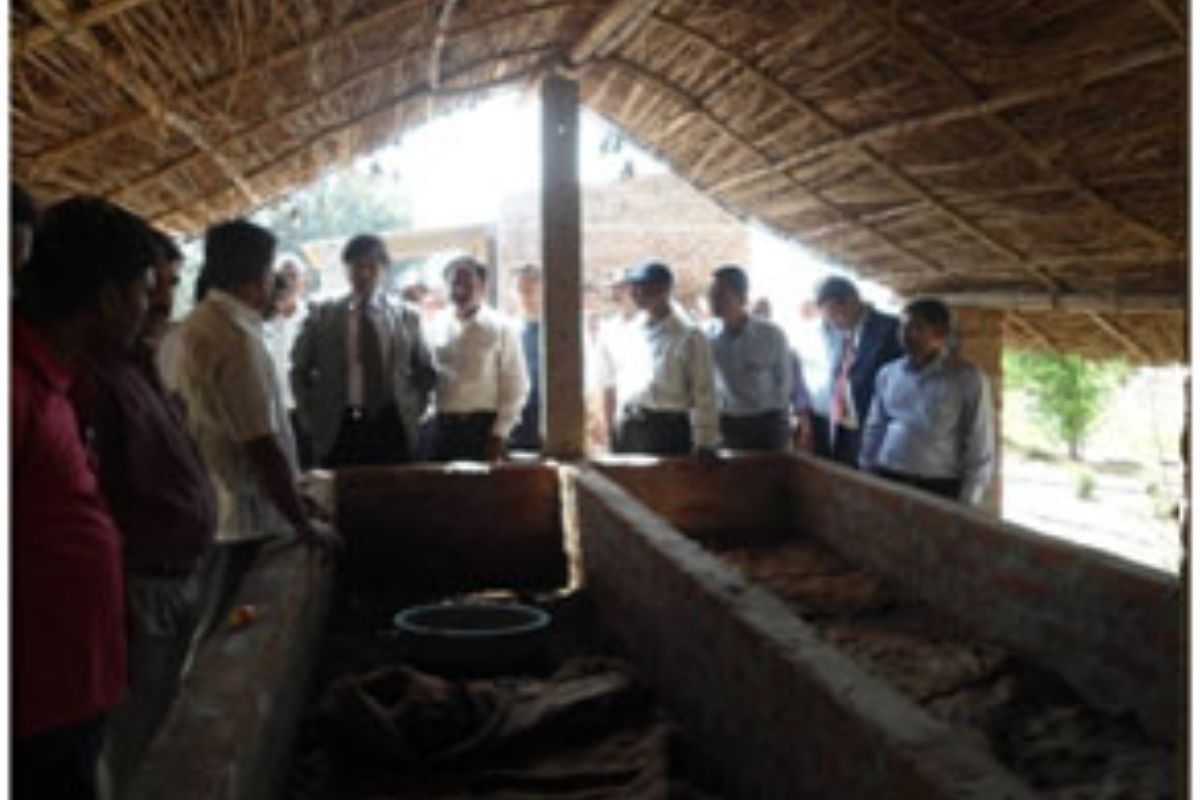
In 2010, he began producing vermicompost on his own farm to meet the organic input demand. He applied organic and inorganic mulch to retain soil moisture and reduce weed pressure. For irrigation, he moved away from conventional flooding and adopted drip irrigation, micro sprinkler, sprinkler, and rain-gun methods for different crops — each matched to the water needs of the plant and the nature of the soil.
Within three years, soil quality improved significantly. Productivity increased. Income followed.
What He Grows and What He Earns
Vijay now grows a diverse range of crops on his transformed land. Key performance figures are:
| Crop | Net Profit (Rs.) | B:C Ratio |
|---|---|---|
| Bitter Gourd | 5,15,000 | 8.6:1 |
| Sponge Gourd | 4,25,000 | 9.45:1 |
| Tomato | 4,35,000 | 5.3:1 |
| Bottle Gourd | 2,20,000 | 4.3:1 |
| Oal | 3,40,000 | 3.9:1 |
| Turmeric | 2,00,000 | 3.5:1 |
Beyond vegetables, Vijay earns Rs 2.5 to 3 lakh annually from selling earthworms produced through his vermicompost units — an additional income stream that most farmers overlook.
Solving the Nilgai Problem
Vijay’s farm, like many in rural Bihar, faced repeated damage from Nilgai — blue bull — and other stray animals. Instead of bearing the losses or spending heavily on conventional fencing, Vijay developed a low-cost protective net using parachute thread with locally woven net skills.
The net costs only Rs 5 per foot to construct and has an effective life of three years. It keeps out Nilgai as well as all other stray animals. Farmers in the surrounding area have begun adopting the same solution.
Recognition and Impact
Bihar Agricultural University, Sabour, Bhagalpur recognised Vijay as the most progressive farmer at its Research Council and Kisan Mela in 2012-13.
He is now used as a master trainer by KVK Rohtas, Bikramganj in its training programmes. District-level officials from the District Agriculture Office, District Horticulture Office, ATMA, and the District Soil Conservation Office regularly call on Vijay to train other farmers in capacity-building programmes across Rohtas district.
A farmer who started with land nobody else wanted has become a trainer that every institution wants.
Also Read: Punarnava Jal – The world’s first organic fertilizer! Know how it is beneficial for farmers?
Contact us – If farmers want to share any valuable information or experiences related to farming, they can connect with us via phone or whatsapp at 9599273766 or you can write to us at “kisanofindia.mail@gmail.com”. Through Kisan of India, we will convey your message to the people, because we believe that if the farmers are advanced then the country is happy.
You can connect with Kisan of India on Facebook, Twitter, and Whatsapp and Subscribe to our YouTube channel.