
She Farmed Four Acres of Rain-Fed Land and Earned ₹2 Lakh a Year. Today She Runs a ₹40 Lakh Farm Enterprise.
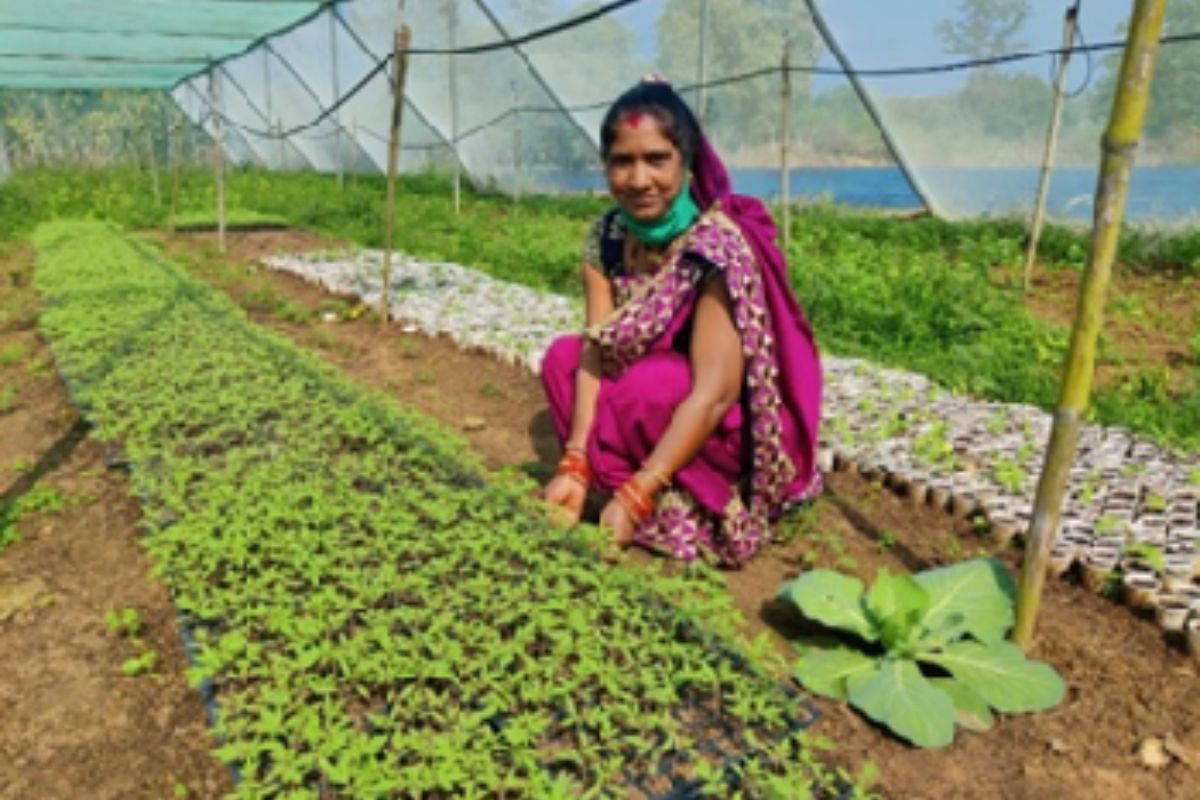
Smt. Lekesh Bai from Village Thanabodi in Kanker district, Chhattisgarh, had only a primary school education and four acres of land that depended entirely on rainfall. Every year, she grew paddy and maize, earned around ₹2 lakh, and hoped the monsoon would not fail her. It was a cycle with no way out.
That changed in 2012 when she connected with Krishi Vigyan Kendra (KVK), Kanker. Thirteen years later, she manages 17 acres under a fully integrated farming system, earns nearly ₹40 lakh annually, and welcomes around 850 farmers to her farm every year to learn how she did it.
What She Did Differently
Before KVK’s intervention, Smt. Lekesh Bai practised traditional rainfed farming with no diversification and high climate risk. Her land produced one or two crops a year with little room for growth.
Through skill-based training, field demonstrations, and continuous technical guidance from KVK Kanker, she began shifting away from mono-cropping. The Agriculture Department helped her construct a tube well. The Horticulture Department supported the adoption of drip irrigation. Together, these interventions converted her rain-dependent land into a reliably irrigated farm and laid the foundation for an Integrated Farming System.
What Her Farm Looks Like Today
Smt. Lekesh Bai now manages 17 acres that run as a diversified, market-oriented enterprise. Twelve acres are under commercial vegetable cultivation using drip irrigation. Three acres grow fodder crops to support her livestock. She runs fish farming integrated with duck rearing on half an acre, goat rearing on another half acre, and poultry farming on 0.1 acre.
Her dairy enterprise stands at 40 cattle. She does not just sell milk. She processes it into paneer and ghee, adding value before it reaches the market and earning more per litre than a direct sale would fetch.
Farm resources are recycled efficiently across the system — waste from one activity feeds into another, cutting input costs and reducing dependence on external supplies.
What She Earns Now
Her annual net income has grown from ₹2 lakh in 2012 to nearly ₹40 lakh in 2025. That is a twentyfold increase in 13 years, driven not by a single crop or a lucky season but by a deliberately built system that generates income across multiple streams throughout the year.
Strong market linkages and support from the Hulume Farmer Producer Organisation ensure she is not at the mercy of middlemen or price crashes in any single commodity.
Who Else Benefits
The shift has created regular employment for local labourers and opened income opportunities for women in the village. Floriculture, dairy processing, and grading activities draw women into productive work, contributing to both household income and financial independence at the community level.
Her farm now functions as a live demonstration unit. Around 850 farmers and farm women visit Thanabodi every year to observe integrated farming in practice and learn how to replicate it on their own land.
The Recognition She Has Received
Her work has been recognised at the national level. She received the Farmer Fellowship Award in 2016 from IGKV Raipur, the Innovative Farmer Award in 2018 from ICAR Patna, and the Best Farmer Award in 2025 from ICAR-NAARM.
On July 16, 2019, Union Agriculture Minister Shri Narendra Singh Tomar conferred the Pandit Deendayal Upadhyay Antyodaya Krishi Puraskar (2018) on her, along with a citation and a cash prize of ₹50,000.
Smt. Lekesh Bai’s story is not about one good harvest. It is about what happens when a farmer with limited land, limited resources, and strong determination gets the right training and institutional support at the right time.
Also Read: Punarnava Jal – The world’s first organic fertilizer! Know how it is beneficial for farmers?
Contact us – If farmers want to share any valuable information or experiences related to farming, they can connect with us via phone or whatsapp at 9599273766 or you can write to us at “kisanofindia.mail@gmail.com”. Through Kisan of India, we will convey your message to the people, because we believe that if the farmers are advanced then the country is happy.
You can connect with Kisan of India on Facebook, Twitter, and Whatsapp and Subscribe to our YouTube channel.