


Chickpea Farming: 7 Steps to Improve Germination and Protect Rabi Crop Yields

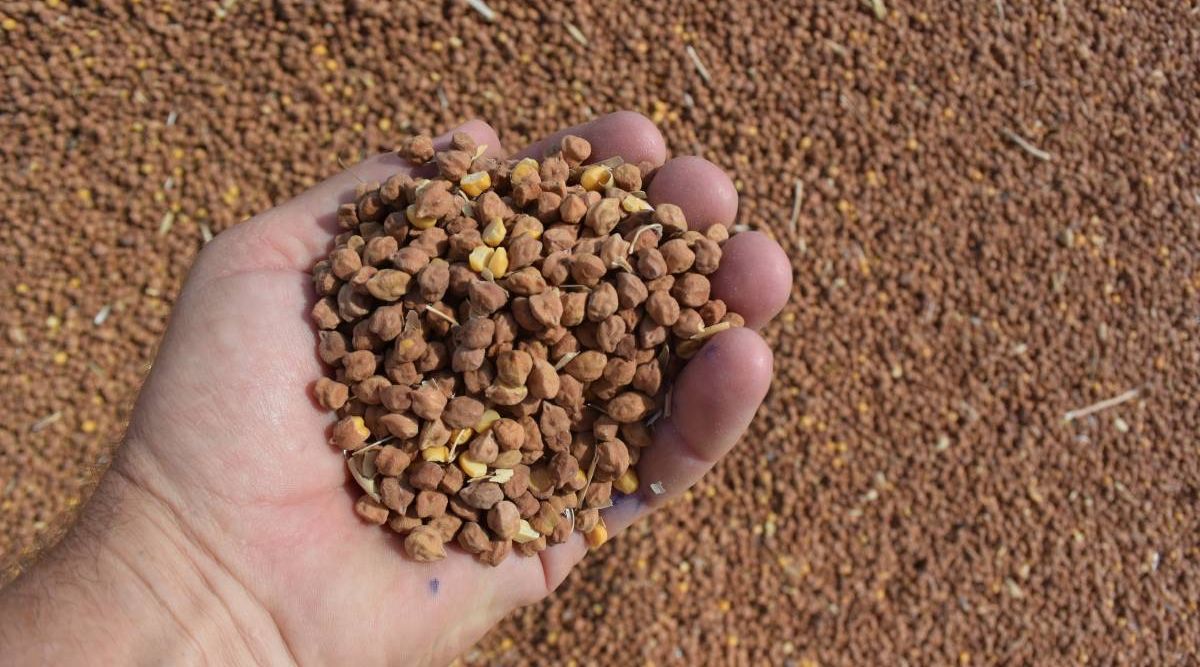
Chickpea, commonly called gram or chana, is an important Rabi pulse crop for Indian farmers. It provides protein-rich grain and can help diversify farm production beyond cereals. The crop performs best when farmers select a suitable variety, establish healthy plants and manage soil moisture throughout the growing season.
The Indian Council of Agricultural Research (ICAR) advises farmers to sow chickpeas during the appropriate seasonal window and avoid delays that expose the crop to moisture stress and high temperatures during pod formation. The exact sowing period depends on the region, variety and local weather conditions.
Seven Steps for Better Crop Establishment
1. Select a variety suited to your region
Farmers should choose certified seed recommended for their agroclimatic zone, soil type and sowing conditions. ICAR’s Indian Institute of Pulses Research lists chickpea varieties with different maturity periods and characteristics, including some with tolerance to moisture stress or resistance to particular diseases.
Do not select a variety only because another farmer obtained a high yield from it. Check whether it suits rainfed or irrigated cultivation, its maturity period and its disease response. Your local Krishi Vigyan Kendra or agriculture department can help identify varieties recommended for your district.
2. Prepare a well-drained field
Chickpeas grow best in well-drained, light to medium-textured soils. Waterlogged, saline or alkaline soils are unsuitable for good crop establishment. Farmers should inspect field drainage before sowing, particularly in areas that receive heavy rain or retain water after irrigation.
Prepare a reasonably fine seedbed without unnecessary repeated tillage. Where the previous crop has left substantial residue, choose a field preparation method that supports proper seed placement. Avoid sowing into wet soil that may restrict germination or create conditions favourable to root diseases.
3. Sow at the recommended time
For many regions, October and November are important chickpea sowing months, but the suitable window varies by location and variety. ICAR’s Rabi advisory identifies mid-October to the end of October as an optimum window for desi chickpea in its recommendations, while kabuli gram may be sown later in October.
Farmers should follow the sowing calendar issued for their state rather than apply one date across India. Delayed sowing can expose plants to higher temperatures during pod filling. Early sowing may also increase particular disease risks in some conditions, so local recommendations matter.
4. Use the correct seed rate and spacing
Seed requirements differ between desi and kabuli chickpeas because seed size varies. ICAR’s general advisory gives a rate of approximately 15–18 kilograms per acre for desi gram and around 37 kilograms per acre for kabuli gram, but the actual requirement should be checked against the chosen variety and seed size.
Place seeds at the depth and spacing recommended for the variety and local soil. Proper spacing allows plants to develop without excessive crowding and makes field operations easier. Use a calibrated seed drill where available, and check seed placement before completing sowing across the entire field.
5. Treat seeds according to expert advice
Seed treatment can reduce the risk of seed-borne and soil-borne diseases. Farmers should use only treatments recommended for chickpea by agricultural authorities, following the product label and prescribed dose. Where biological seed treatments are recommended, check compatibility before combining them with chemical products.
Chickpea can also benefit from suitable Rhizobium inoculation, particularly where the crop has not been grown previously or local recommendations call for it. Use the appropriate culture and application method. Avoid mixing products without guidance, since an unsuitable combination may reduce the effectiveness of beneficial microorganisms.
6. Manage nutrients using soil information
Chickpea needs balanced nutrition, but excessive fertiliser application can raise costs without improving returns. Farmers should base nutrient decisions on soil-test results and local recommendations. Phosphorus is important in pulse production, while other nutrients should be supplied according to the field’s condition and the crop’s requirements.
Inoculated chickpea can obtain some nitrogen through biological fixation when the plants and soil conditions support the process. This does not mean the crop never needs nutrient management. Farmers should consult their local agricultural specialist before applying fertilisers or micronutrients, particularly when deficiency symptoms appear.
7. Protect the crop from moisture stress and weeds
Chickpea is often grown under rainfed conditions, so conserving available soil moisture is important. Keep field operations timely and monitor the crop for wilting, uneven growth and signs of disease. Where irrigation is available, follow local guidance on whether and when supplemental watering is needed.
Weeds can compete with young chickpea plants for moisture, nutrients and sunlight. Inspect fields during early growth and use locally recommended mechanical or other weed-control methods. Monitor for pod borers and wilt symptoms as the crop develops, and seek expert advice before applying pesticides.
Calculate Costs Before Harvest
Good crop management should improve both production and farm returns. Keep records of seed, fertiliser, treatment, labour, irrigation and harvesting expenses. Comparing these costs with the grain harvested helps farmers understand whether a particular variety or cultivation method is financially worthwhile.
Chickpea farming does not offer a guaranteed yield, since rainfall, temperature, soil conditions, pests and market prices all affect results. Farmers can reduce avoidable risks by selecting suitable seed, sowing within the recommended window and seeking advice from local agricultural experts before making major changes.
Also Read: Punarnava Jal – The world’s first organic fertilizer! Know how it is beneficial for farmers?
Contact us – If farmers want to share any valuable information or experiences related to farming, they can connect with us via phone or whatsapp at 9599273766 or you can write to us at “kisanofindia.mail@gmail.com”. Through Kisan of India, we will convey your message to the people, because we believe that if the farmers are advanced then the country is happy.
You can connect with Kisan of India on Facebook, Twitter, and Whatsapp and Subscribe to our YouTube channel.