


Crop Residue Machines: Can Farmers Cut Stubble Burning Costs Through Custom Hiring?

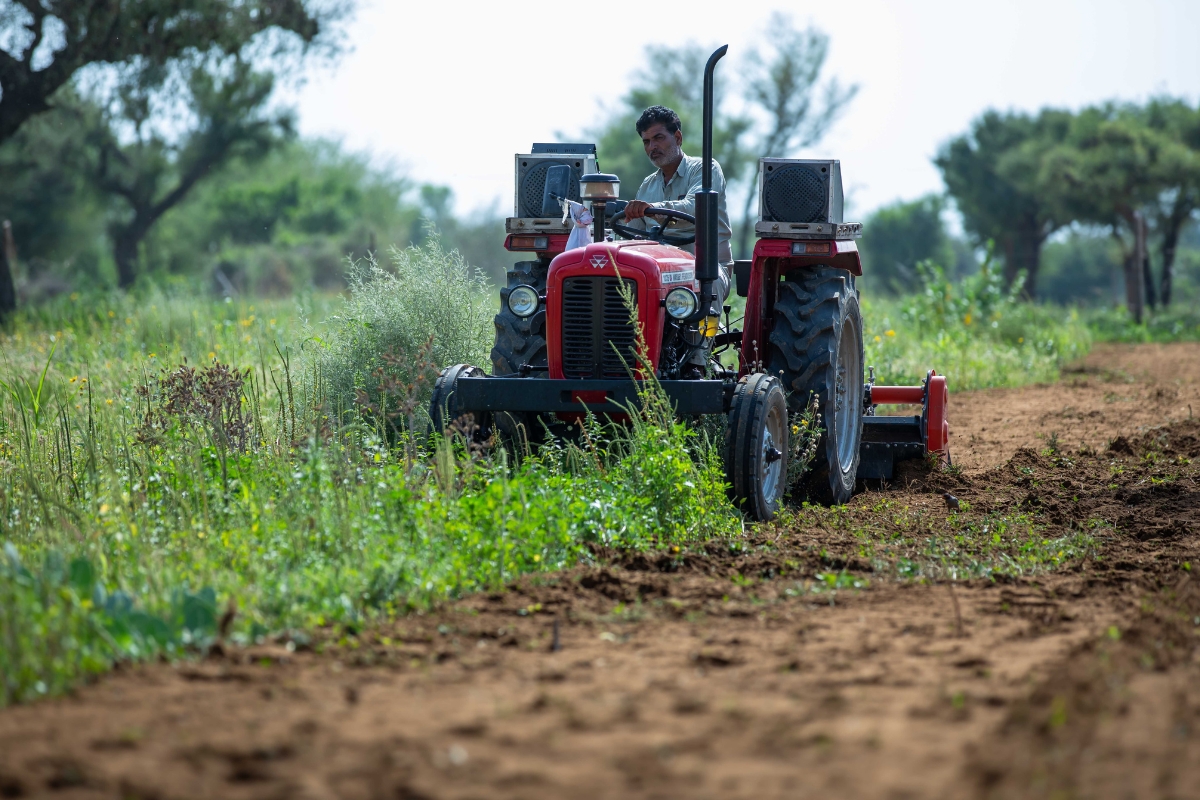
Paddy harvesting leaves farmers with a narrow window to prepare fields for the next crop. When residue remains on the field, farmers may face extra labour and machinery costs. Crop residue management machines can help farmers handle straw faster, while custom hiring centres can reduce the need to purchase costly equipment.
The need is especially important in north India, where paddy harvesting is followed quickly by wheat sowing. In 2026, the Centre said states had planned to distribute more than 46,000 crop residue management machines and establish 910 Custom Hiring Centres for the season.
Farmers do not necessarily need to own every machine. Custom Hiring Centres allow them to rent equipment according to their field requirements. Under the Sub-Mission on Agricultural Mechanization, financial assistance is also available for establishing such centres, making shared access a practical option for small and marginal farmers.
Different machines perform different jobs after harvesting. Straw management systems can cut, spread, incorporate or collect crop residue. Depending on the farming system, equipment may include choppers, shredders, balers, mulchers, straw rakes and machines designed for sowing wheat directly into fields containing rice residue.
The choice depends on what the farmer wants to do with the straw. Farmers planning to retain residue on the field may need chopping and spreading equipment. Those collecting straw for livestock feed or other uses may require balers and rakes. Machinery should match the final residue-management plan.
In Punjab, ICAR recently brought farmers, machinery manufacturers, Custom Hiring Centres and other stakeholders together to discuss crop residue management. The September 2026 workshop focused on coordinated solutions and better use of available machinery, showing the growing role of service providers in residue management.
The government has also linked residue machinery with a wider push for mechanisation. Between 2014–15 and 2025–26, the Sub-Mission on Agricultural Mechanization supported 21.61 lakh machines for individual farmers, along with 27,554 Custom Hiring Centres, 646 Hi-Tech Hubs and 25,608 Farm Machinery Banks
Can Custom Hiring Reduce Farmers’ Costs?
Buying a specialised residue machine can be difficult when it is used only for a few days each year. A rental model spreads the cost across multiple farmers. For small holdings, hiring may therefore make more financial sense than purchasing equipment that remains unused for most of the season.
Farmers should compare the complete hiring cost before booking machinery. This includes rental charges, transportation, fuel, operator fees and any additional field preparation. They should also ask whether the machine can complete the work within their available sowing window, especially when wheat planting must follow paddy harvesting quickly.
The 2026 mechanisation policy gives specific importance to Custom Hiring Centres because small and marginal holdings can make individual machine ownership expensive. Under SMAM, farmers can receive assistance for machinery purchases, while eligible Custom Hiring Centres can receive financial support towards their project costs.
ICAR research has also highlighted custom hiring as a way to reduce the capital burden of mechanisation. A recent ICAR publication noted that shared machinery can improve machine utilisation, reduce per-unit costs and support timely farm operations, including in rainfed farming systems.
Farmers should first identify the residue problem on their own fields. Straw quantity, soil type, crop rotation and the next crop all affect machinery choice. A machine suitable for direct wheat sowing may not be necessary when the farmer plans to collect straw from the field.
Timing is another important factor. Farmers should contact the Custom Hiring Centre before harvesting rather than waiting until fields are ready for sowing. During peak harvesting periods, demand for machinery can rise sharply, making advance booking important for timely field operations.
Farmers should also check whether the operator has experience with the selected machine. Incorrect machine settings can leave uneven residue, damage soil or increase fuel use. Demonstrations and training can help farmers understand operating depth, speed and field conditions before using equipment across larger areas.
Can Machines Also Support Climate-Resilient Farming?
Residue management can contribute to climate-resilient farming when machinery helps farmers retain useful crop residues, reduce unnecessary field operations or avoid burning. Keeping residue on or returning it to soil can add organic material, while avoiding open burning prevents smoke and associated air pollution.
Still, machines alone do not solve every residue problem. Farmers need a complete plan covering harvesting, residue handling, sowing, labour, machinery availability and the next crop. The right equipment can reduce pressure during the short turnaround period between paddy harvest and wheat sowing.
For farmers with small holdings, seasonal machinery needs and limited capital, hiring can provide access without the full cost of ownership. Larger farmers or service providers with enough local demand may find ownership more suitable. The decision should depend on annual usage, rental rates and maintenance costs.
The practical starting point is to contact a nearby Custom Hiring Centre or Farm Machinery Bank before the harvest season. Farmers should compare machines, charges and availability, then select equipment based on their crop sequence. Shared machinery can make residue management more accessible without requiring every farmer to own expensive equipment.
Also Read: Punarnava Jal – The world’s first organic fertilizer! Know how it is beneficial for farmers?
Contact us – If farmers want to share any valuable information or experiences related to farming, they can connect with us via phone or whatsapp at 9599273766 or you can write to us at “kisanofindia.mail@gmail.com”. Through Kisan of India, we will convey your message to the people, because we believe that if the farmers are advanced then the country is happy.
You can connect with Kisan of India on Facebook, Twitter, and Whatsapp and Subscribe to our YouTube channel.