


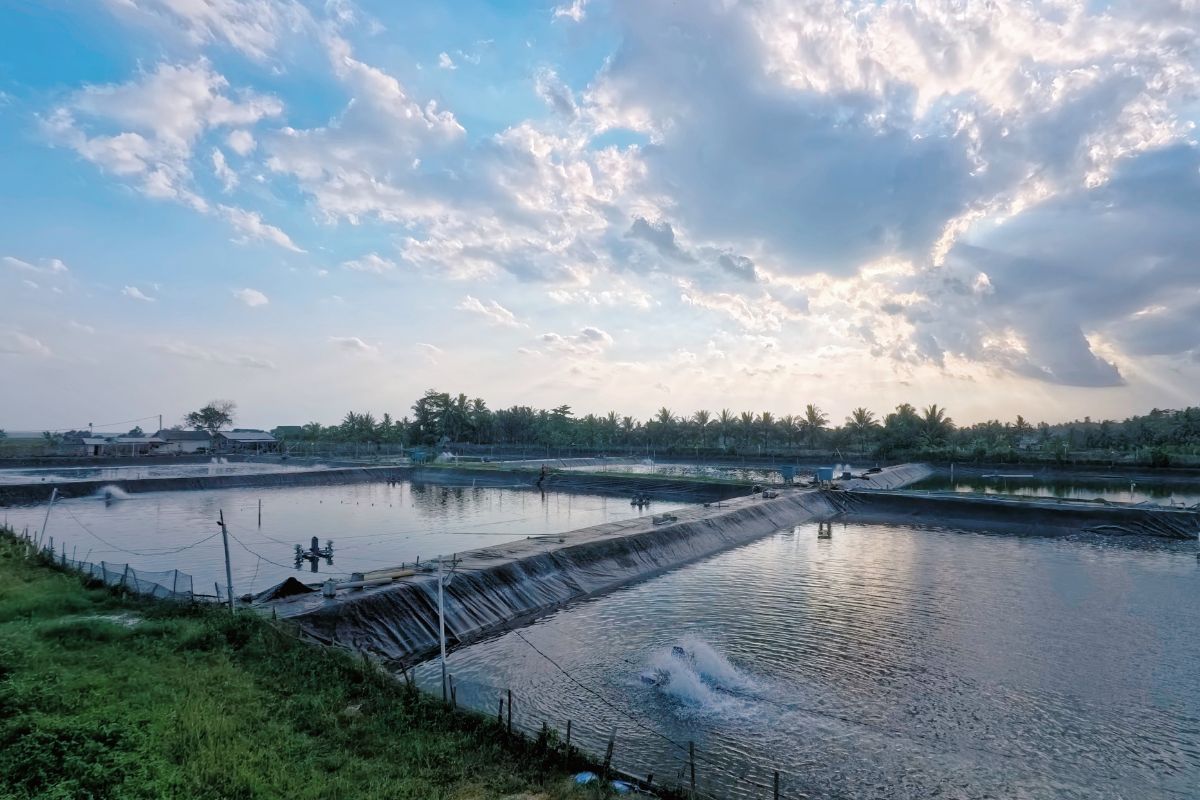
Rainfall does not always arrive when crops need it. A heavy spell can leave large amounts of water flowing away, while a dry period later in the season can leave farmers short of irrigation. Farm ponds offer one way to capture part of that rainwater and store it for later use.
A farm pond is a small water-storage structure built within or near agricultural land. Farmers can collect runoff during rainfall and use the stored water for irrigation, livestock and other farm activities. The design depends on rainfall, soil, land slope, available space and the intended use of the water.
The government promotes water harvesting and farm-level irrigation under several agricultural programmes. Under the Pradhan Mantri Krishi Sinchayee Yojana, the focus includes improving water availability, expanding cultivated areas under assured irrigation and improving water-use efficiency.
How Farm Ponds Store Water
A farm pond collects rainwater either directly or through runoff from surrounding land. The stored water can then be lifted using a pump or supplied through a suitable irrigation system. Farmers need to design the pond according to the amount of runoff that the catchment area can generate.
Soil type affects whether a pond can retain water. Clay-rich soils generally hold water better than highly permeable soils. Where seepage is high, farmers may consider lining the pond after assessing the cost and expected benefit. A technical assessment can prevent farmers from spending money on an unsuitable structure.
The pond should also have a suitable inlet and outlet arrangement. An uncontrolled flow can cause erosion or damage the embankment. Farmers should plan where excess water will go during heavy rainfall so that the structure remains safe when the pond reaches capacity.
Water quality also matters. Runoff from fields can carry soil, fertilisers, pesticides and other material into the pond. Farmers should avoid contaminating stored water and should use appropriate treatment if the water is intended for purposes requiring higher quality.
Stored water can be particularly useful during short dry spells. Farmers do not necessarily need enough water to irrigate the entire field throughout the season. A smaller reserve can sometimes help protect crops during critical growth stages when a lack of moisture can cause major yield losses.
Linking Ponds With Micro-Irrigation
Farm ponds become more useful when farmers combine them with water-efficient irrigation. Drip irrigation delivers water close to the plant root zone, while sprinklers distribute water over the crop. The suitable method depends on the crop, soil, field layout and available water.
The government promotes micro-irrigation under the Per Drop More Crop component of PMKSY. Assistance is provided to eligible farmers for drip and sprinkler systems according to scheme guidelines and state-level implementation.
Using a pond with drip irrigation can help farmers stretch stored water across a larger cultivated area. Instead of releasing large quantities of water at once, the farmer can apply smaller amounts according to crop requirements. This can be useful where water availability is limited.
Mulching can provide another layer of water management. Crop residues or suitable organic materials placed around plants can reduce direct soil exposure and help retain moisture. Farmers should select materials and methods suitable for their crop and local conditions.
Farmers should also avoid treating a pond as an unlimited water source. If evaporation and seepage are high, stored water can decline quickly. The pond’s size should match the likely rainfall and water demand rather than simply being made as large as possible.
Farm Ponds And Climate Risk
Changing rainfall patterns can make water management harder. Farmers may experience intense rainfall over a short period followed by longer dry spells. Capturing some rainfall can help reduce the amount of runoff lost from the farm while creating a reserve for later use.
Climate-resilient agriculture programmes increasingly focus on water harvesting, soil moisture conservation and better irrigation management. ICAR’s National Innovations in Climate Resilient Agriculture programme has demonstrated location-specific water-management practices in Climate Resilient Villages. (pib.gov.in)
Water harvesting can also support livestock. Farmers with cattle, buffaloes, goats or poultry need water throughout the year. A properly managed farm water source can reduce pressure during dry periods, though water quality must remain suitable for animals.
In rainfed farming areas, the timing of rainfall is as important as the total amount received. A farmer may receive sufficient seasonal rainfall but still face crop stress during a critical growth period. Stored water can provide a limited buffer during such gaps.
Farmers should first identify the main water problem on their land. Is rainwater running away quickly? Is irrigation unavailable during dry spells? Does the soil lose moisture rapidly? The answer will determine whether a farm pond, field bunding, mulching, micro-irrigation or another measure is more suitable.
Before Building A Farm Pond
Farmers should seek technical advice before digging a pond. The location, size, soil type, catchment area, groundwater conditions and expected water demand all need to be considered. A poorly placed pond can lose water quickly or create problems during heavy rainfall.
The local agriculture, horticulture or watershed department can provide information about applicable schemes and technical support. Farmers should also check whether their state offers assistance for farm ponds or related water-harvesting structures under current programmes.
A farmer group can also consider a shared water structure where individual farms are too small for separate ponds. Collective water management can spread construction and maintenance costs, but members need clear rules for water use and maintenance.
The goal is not simply to store the maximum amount of water. The goal is to store enough water in a safe structure and use it efficiently when crops need it. Combining rainwater harvesting with drip irrigation, mulching and suitable crop choices can make stored water last longer.
For farmers facing irregular rainfall, a farm pond can provide a useful buffer between a heavy rain spell and the next dry period. Its value depends on local conditions, construction quality and how efficiently the stored water is used.
Before investing, farmers should ask their local agriculture office or KVK for a site-specific assessment. The right pond in the right location can support irrigation and livestock needs, while the wrong design can become an expensive structure that stores little usable water.
Also Read: Punarnava Jal – The world’s first organic fertilizer! Know how it is beneficial for farmers?
Contact us – If farmers want to share any valuable information or experiences related to farming, they can connect with us via phone or whatsapp at 9599273766 or you can write to us at “kisanofindia.mail@gmail.com”. Through Kisan of India, we will convey your message to the people, because we believe that if the farmers are advanced then the country is happy.
You can connect with Kisan of India on Facebook, Twitter, and Whatsapp and Subscribe to our YouTube channel.