



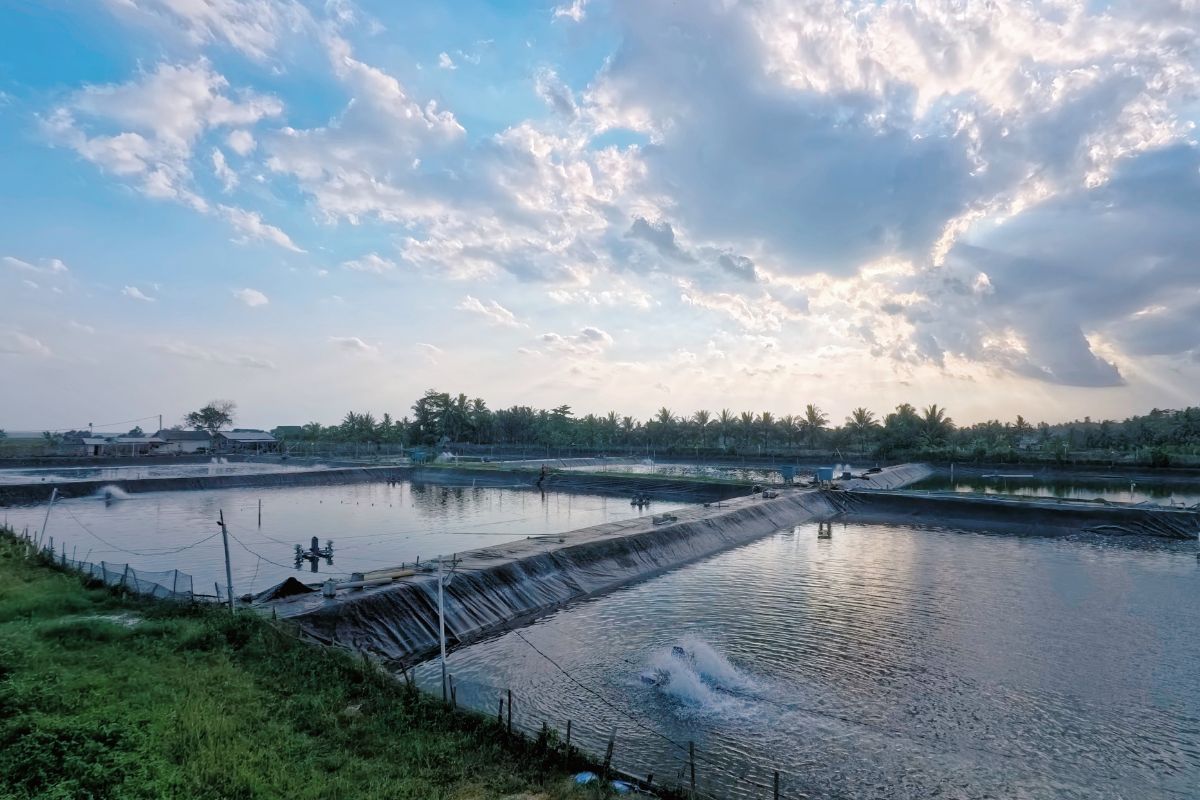
A farm pond can give farmers access to stored water when rainfall becomes irregular or irrigation sources run short. The basic idea is simple: collect runoff during rainfall, store it in a pond and use the water later for crops, livestock or other farm needs.
The practice can be useful in rainfed areas where farmers face dry spells between rainfall events. A pond does not create additional rainfall, but it can help capture part of the water that would otherwise leave the farm as surface runoff.
A farm pond is a small water-storage structure constructed within or near a farm. Rainwater and surface runoff enter the pond and remain available for later use, depending on storage capacity and water losses. The pond can receive runoff from surrounding fields, drainage channels or other suitable catchments. Farmers need to plan the location carefully so that water enters safely without causing erosion or carrying excessive sediment into the storage area.
The stored water can then be lifted using a pump and supplied through irrigation systems. Drip or sprinkler irrigation can make better use of limited pond water by delivering smaller quantities directly to the crop root zone.
Storage depends on the pond’s length, width and depth. There is no single size that works for every farm because rainfall, catchment area, soil type, crop water requirement and available land all differ. Farmers should estimate how much runoff their land can generate before deciding the pond size. Building a very large pond without enough runoff may leave much of its capacity unused, while an undersized pond can overflow during heavy rainfall.
The location should allow runoff to reach the pond without causing excessive erosion. Farmers should also consider soil characteristics, groundwater conditions, proximity to fields and the elevation difference between the pond and crops. A pond located close to the fields can reduce the distance water needs to travel. Farmers should also ensure that excavation does not interfere with existing drainage channels, roads, neighbouring land or structures.
Can farm ponds help during drought?
Farm ponds can provide a reserve during short dry spells when stored water remains available. Their usefulness depends on how much water was captured before the dry period and how carefully farmers use it. During prolonged drought, a pond may not contain enough water for the entire crop season. Farmers should therefore combine water harvesting with moisture conservation, efficient irrigation and crop planning rather than treating the pond as a complete drought solution.
Evaporation can remove a significant amount of stored water, particularly during hot and dry weather. Farmers should consider pond depth, exposed surface area and local climate when planning storage. Where technically suitable, lining can reduce seepage losses from porous soils. But lining also increases construction costs. Farmers should first assess whether seepage is actually reducing useful storage before spending money on a lining system.
Farm pond water can support many crops, depending on its quality and available volume. Vegetables, fruits, pulses and field crops can all benefit from supplemental irrigation where water is available. Farmers should calculate crop water requirements before allocating stored water. High-value crops may justify more controlled irrigation, while limited water may need to be prioritised for critical crop-growth stages.
Farmers can get more benefit from a small water reserve by using irrigation strategically. Drip irrigation can reduce losses during application and deliver water close to plant roots. Irrigation should also be scheduled according to crop growth stage and soil moisture rather than following a fixed timetable. Farmers can check the soil before irrigating and avoid applying water when the root zone remains sufficiently moist.
What about government support?
Farm ponds can be supported through different state and central programmes, depending on the farmer’s location and the type of work proposed. The Pradhan Mantri Krishi Sinchayee Yojana includes water-harvesting and water-management components. Support rules, eligible structures and assistance amounts can differ between schemes and states. Farmers should check with their local agriculture or horticulture department, watershed office or Kisan Call Centre before beginning construction.
Farmers should ask whether their land is eligible, what pond dimensions are approved, whether technical approval is required and which documents must be submitted. They should also find out whether the scheme provides support before construction or reimburses eligible expenses later. Starting work without checking the scheme conditions can create problems when farmers apply for financial assistance.
Does soil type matter?
Yes. Soil affects how quickly water moves through the pond bottom. Clay-rich soils generally retain water better than highly permeable sandy or gravelly soils. Farmers with permeable soils may need additional measures to reduce seepage. A technical assessment can help determine whether natural soil conditions are sufficient or whether lining is economically justified.
Runoff can carry soil particles into a pond. Over time, sediment settles at the bottom and reduces storage capacity. Vegetative barriers, grassed waterways and small sediment-trapping structures upstream can reduce the amount of soil entering the pond. Farmers should inspect the inlet after heavy rainfall and remove accumulated sediment when necessary.
Farmers should not assume that stored runoff is automatically suitable for drinking. Water quality can be affected by fertilisers, pesticides, animal waste, sediment and other contaminants entering with runoff. If pond water is intended for livestock, farmers should assess its quality and use a separate clean drinking-water source where necessary. Water used for irrigation also needs to be considered in relation to crop and soil conditions.
A farm pond requires regular inspection. Farmers should check the embankment for cracks, erosion, seepage or animal burrows and keep the inlet and outlet structures clear. Vegetation on embankments should be managed so that it does not damage the structure. Farmers should also maintain safe access around the pond, especially where children or livestock could reach deep water.
Small farmers can use farm ponds, but land availability and construction costs can make planning more important. A smaller structure linked with efficient irrigation may provide more practical value than a large pond that consumes productive farmland. Farmers can also explore community or group water-harvesting structures where individual farms do not have enough space. Such arrangements require clear agreements on construction, maintenance and water use.
What should farmers calculate first?
Before digging, farmers should estimate rainfall, catchment runoff, expected storage, evaporation, seepage, irrigation demand and construction cost. They should also calculate how much water can realistically be supplied to the crop.
A simple water budget can prevent overbuilding. If the expected runoff is too small, improving soil moisture retention or using smaller harvesting structures may provide a more practical option.
Farm ponds can help farmers capture rainwater and keep part of it available for later irrigation. Their value is greatest when storage is combined with efficient irrigation, suitable crop planning and measures that reduce evaporation and runoff losses.
For farmers considering a pond, the first step should be a site and water assessment rather than excavation. Check rainfall, runoff, soil, crop needs, construction costs and available government support. A properly planned pond can become a useful farm water reserve during short dry spells.
Also Read: Punarnava Jal – The world’s first organic fertilizer! Know how it is beneficial for farmers?
Contact us – If farmers want to share any valuable information or experiences related to farming, they can connect with us via phone or whatsapp at 9599273766 or you can write to us at “kisanofindia.mail@gmail.com”. Through Kisan of India, we will convey your message to the people, because we believe that if the farmers are advanced then the country is happy.
You can connect with Kisan of India on Facebook, Twitter, and Whatsapp and Subscribe to our YouTube channel.