



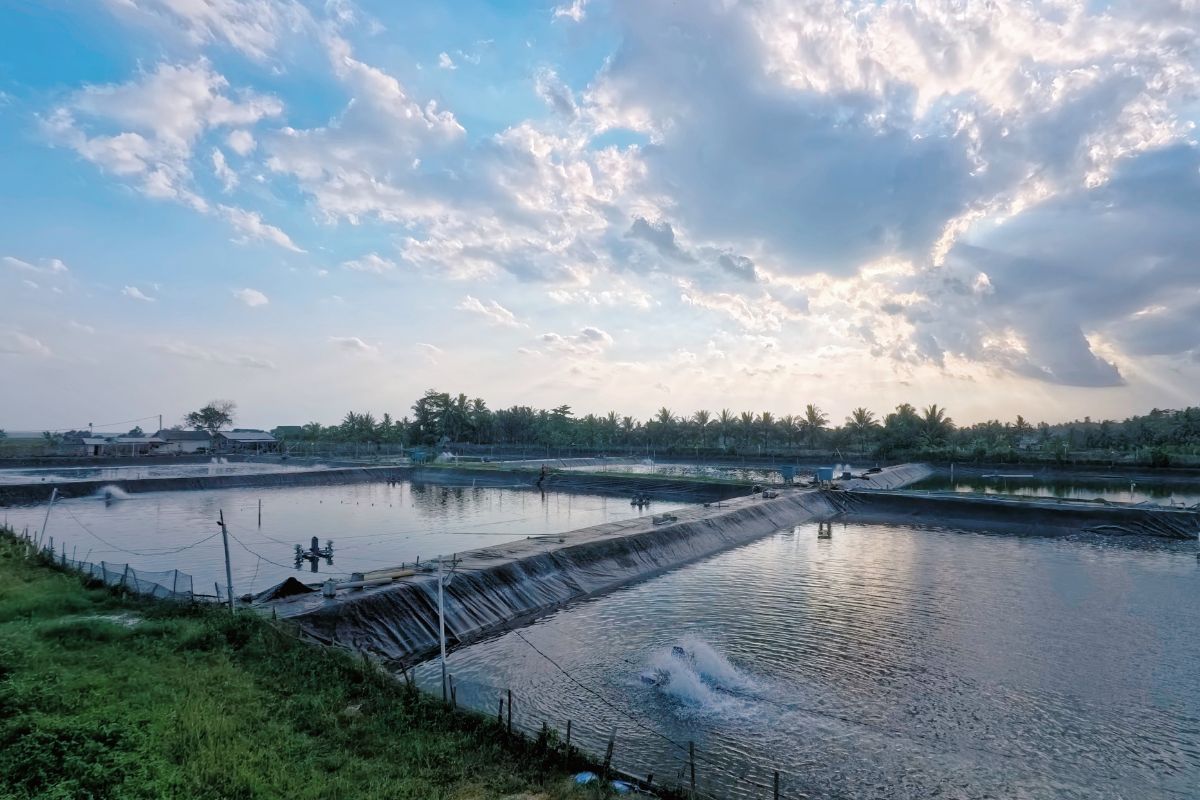
A farm pond is a small water storage structure built to collect and hold runoff from rainfall. For farmers dependent on monsoon rain, storing part of this water can provide a source for supplemental irrigation during dry spells and support other farm activities.
The Indian Council of Agricultural Research promotes rainwater harvesting and farm ponds as part of water-management practices in rainfed agriculture. Their usefulness depends on rainfall, soil, catchment area, evaporation, storage capacity and the crops grown on the farm.
7 Steps to Make a Farm Pond Useful
1. Choose the location carefully
A pond should be located where runoff can be collected without creating problems for neighbouring fields or damaging productive land. Farmers should consider the slope, soil type, drainage pattern and distance from the fields that may use the stored water.
A technically suitable location can improve the amount of water entering the pond while reducing construction costs. Farmers should consult the local agriculture, watershed or rural development department before digging, particularly where government assistance or approved designs are available.
2. Check whether the soil can hold water
Clay-rich soils generally hold water better than highly permeable sandy soils. Where the soil allows excessive seepage, the pond may lose water before it can be used. Farmers should assess soil conditions before construction rather than assuming every location will retain water equally well.
If lining is required, the appropriate material should be selected according to the site and available technical guidance. A poorly designed or constructed pond can develop leaks, erosion or structural problems. Farmers should follow an approved design instead of simply excavating a large pit.
3. Build the pond according to local rainfall
Pond capacity should match the amount of runoff that can realistically reach the site. A very small pond may overflow frequently, while an unnecessarily large structure can increase excavation costs and occupy valuable farmland.
The design should consider the catchment area, rainfall intensity, soil characteristics and expected water demand. Engineers or watershed officials can help farmers calculate the appropriate dimensions. The pond should also have a safe outlet for excess water so that heavy rainfall does not damage the embankment.
4. Protect the embankment
The pond embankment needs regular inspection, especially before and during the monsoon. Farmers should look for cracks, erosion, animal burrows, seepage and vegetation problems. Damage should be repaired early because a weakened embankment can fail during heavy rainfall.
Keep livestock away from vulnerable sections where their movement could damage the structure. Grass or other suitable vegetation may help stabilise exposed soil, but farmers should follow local engineering advice about what can safely grow on the embankment.
5. Keep silt out of the storage area
Runoff can carry soil into a pond, gradually reducing its storage capacity. Farmers can reduce this problem by maintaining vegetation in the catchment and using suitable soil-conservation measures upstream. Small barriers or sediment traps may also be appropriate in some locations.
Inspect the pond after heavy rainfall and check whether sediment is accumulating rapidly. If the storage capacity has fallen substantially, desilting may be required. Farmers can discuss whether removed sediment is suitable for use on fields after considering its quality and any contamination risks.
6. Use stored water strategically
Farm ponds are generally more useful when stored water is treated as supplemental irrigation rather than an unlimited supply. Farmers should prioritise critical crop growth stages identified by local agricultural experts and avoid unnecessary watering.
Drip or sprinkler systems can help deliver stored water more carefully where appropriate. Before investing, calculate installation and maintenance costs and compare them with expected water savings. The best irrigation method depends on the crop, soil, terrain and available water.
7. Combine water storage with crop planning
A pond alone cannot solve water shortages. Farmers should select crops and varieties that match the farm’s water availability and local climate. They can also use mulching, timely weed management and other suitable practices to reduce avoidable moisture loss.
Keep records of rainfall, pond storage, irrigation use and crop yields. These records can show how much water the pond actually provides during a season. They can also help farmers decide whether expanding storage or changing the cropping pattern would make financial sense.
Check Government Support
Farm ponds may be supported through different watershed, irrigation and rural development programmes depending on the state and location. The Pradhan Mantri Krishi Sinchayee Yojana includes water-management and watershed components, while states may provide assistance through their own programmes.
Farmers should contact their block agriculture office, watershed development office or Gram Panchayat to check current eligibility and approved designs. Do not begin construction assuming reimbursement will be available. Funding rules, beneficiary contributions and technical requirements can change between programmes and states.
A farm pond is an investment in water storage, not a guaranteed irrigation source. Its performance depends on rainfall and the amount of runoff reaching the structure. Farmers should therefore calculate the likely water supply before deciding how much land and money to commit.
Regular inspection, safe embankments, sediment control and careful irrigation can extend the usefulness of the pond. When combined with suitable crops and water-saving irrigation, harvested rainwater can give farmers an additional buffer during dry periods.
Also Read: Punarnava Jal – The world’s first organic fertilizer! Know how it is beneficial for farmers?
Contact us – If farmers want to share any valuable information or experiences related to farming, they can connect with us via phone or whatsapp at 9599273766 or you can write to us at “kisanofindia.mail@gmail.com”. Through Kisan of India, we will convey your message to the people, because we believe that if the farmers are advanced then the country is happy.
You can connect with Kisan of India on Facebook, Twitter, and Whatsapp and Subscribe to our YouTube channel.