

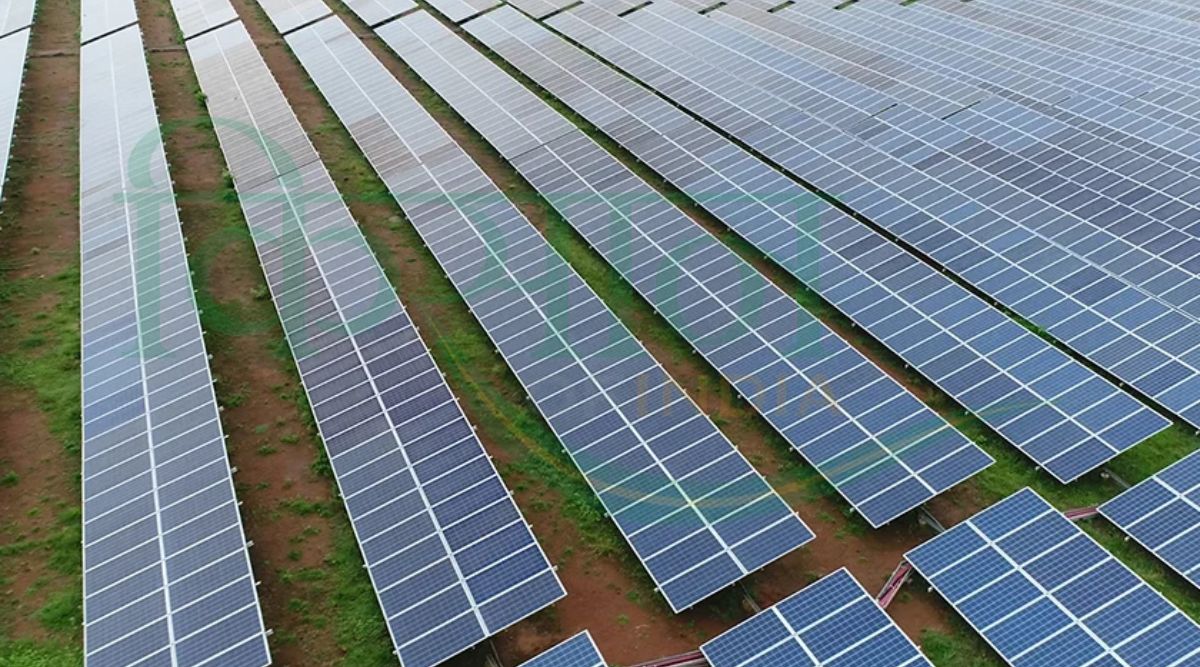
Jammu and Kashmir has installed 3,601 solar agriculture pumps under the Pradhan Mantri Kisan Urja Suraksha Evam Utthan Mahabhiyan, known as the PM-KUSUM scheme, till November 30 of the current financial year.
The Union Ministry of New and Renewable Energy shared this information in the Lok Sabha on Wednesday.
Under the scheme, Jammu and Kashmir received approval for 5,000 standalone off grid solar pumps under Component B. Out of these, farmers have installed 3,601 pumps so far. This places the Union Territory among the leading regions in terms of steady adoption of solar powered irrigation systems.
Officials said the progress reflects growing interest among farmers in shifting away from diesel based irrigation. Solar pumps help reduce fuel costs and offer a reliable source of power during the day. Many farmers in remote and border areas benefit from these systems where grid electricity remains limited or unreliable.
The ministry’s data shows that Jammu and Kashmir has not commissioned any projects under Component A or Component C of the PM KUSUM scheme. Component A focuses on setting up decentralized solar power plants. Component C deals with feeder level solarisation and solarisation of existing grid connected pumps. Both components remain inactive in the Union Territory as of now.
PM KUSUM was launched to support farmers through clean energy solutions. The scheme seeks to cut diesel use in agriculture. It also aims to improve farm incomes by lowering irrigation costs and ensuring stable daytime power supply.
The ministry highlighted that Jammu and Kashmir receives higher financial support under the scheme compared to many other states. Farmers in the Union Territory get Central Financial Assistance covering 50 percent of the benchmark cost of solar pumps. The national average support level stands at 30 percent.
This higher assistance applies because Jammu and Kashmir falls under the special category regions. The added support helps offset higher costs linked to terrain, climate, and logistics. It also encourages farmers to adopt renewable energy technologies at a faster pace.
Agriculture officials said solar pumps play a key role in reducing carbon emissions from farming. They also cut noise and air pollution caused by diesel engines. Over time, they help farmers manage irrigation schedules without worrying about fuel availability or rising prices.
The ministry stated that efforts continue to expand the scheme’s reach. State agencies and local departments work with farmers to identify suitable sites and speed up installations. Authorities expect further progress in the coming months as awareness and demand increase across rural areas of Jammu and Kashmir.
Also Read: Tomato Cultivation: Nethouse technology adopted to reduce cost in tomato cultivation
Contact us: If farmers want to share information or experiences related to farming with us, then they can do this by calling us on the phone number 9599273766 or by writing an email to kisanofindia.mail@gmail.com or by sending your recording. Through Kisan of India, we will convey your message to the people, because we believe that if the farmers are advanced then the country is happy.