
Who is Varad Samant? Goa’s 32-year-old farmer earning Rs 60 lakh annually becomes agriculture brand ambassador

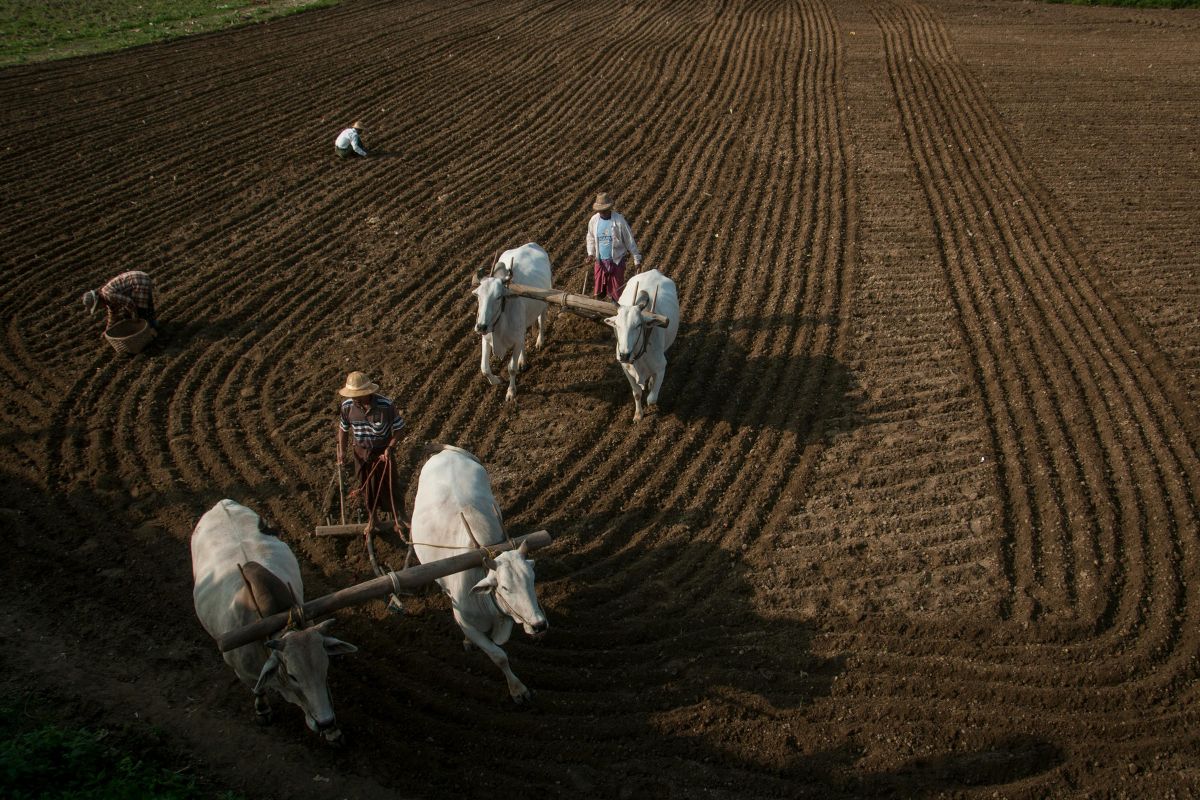
Goa has appointed a 32-year-old Varad Samant vegetable farmer as its agriculture brand ambassador to demonstrate that farming can be profitable and attract young people to the sector.
Varad Samant earns between Rs 50 lakh and Rs 60 lakh annually from vegetable cultivation on approximately 10 acres of land in Dharbandora. After labor and operational costs, he reports a net profit of Rs 30 lakh per year.
Chief Minister Pramod Sawant announced the appointment, highlighting that the state horticulture department has procured Rs 65 lakh, Rs 60 lakh and Rs 58 lakh worth of vegetables from Samant over three consecutive years. All produce was cultivated in Goa, not imported from other states.
The appointment is part of the government’s strategy to make Goa self-reliant in vegetable production and change perceptions about farming viability in the state.
From reluctant farmer to agriculture success
Samant completed his Bachelor of Commerce degree in 2012 with no plans to enter agriculture. His father was a farmer, but Samant did not initially consider it a career option.
Between 2010 and 2014, his family engaged in sugarcane farming. Only after this period did Samant begin exploring vegetable cultivation as a viable business.
He traveled to Karnataka and Maharashtra to study best practices in vegetable farming. He observed techniques, spoke with successful farmers and gathered knowledge about crop management and modern farming methods.
Returning to Goa, Samant started small. He cultivated bhindi, commonly known as lady’s finger, on approximately 2,000 square meters of land. The crop succeeded, generating profits and building his confidence in vegetable farming.
“That was when I realised that vegetable farming is very much possible in Goa,” Samant said.
Expansion and diversification
Encouraged by his initial success, Samant expanded his operations and diversified crops. He gradually increased cultivation to around 10 acres, growing cucumbers, carrots, cabbage and other vegetables alongside bhindi.
He combines traditional agricultural knowledge with mechanized farming methods and efficient crop management practices. This approach allows him to maximize yield while maintaining quality standards required by government procurement programs.
Currently, Samant grows cabbage with a 70-day growth cycle, carrots that mature in 20 days, and watermelons ready for harvest in approximately 60 days. The quick turnover enables multiple cropping cycles annually.
Samant emphasized watermelon farming’s profitability potential. If watermelon sells at Rs 30 per kilogram, a farmer can earn around Rs 6 lakh from 20 tonnes in just 60 days, he explained.
Supply to government programs
Samant supplies 70 to 80 tonnes of cabbage annually to the state horticulture department. He also provides 4 to 5 tonnes of carrots, sometimes up to 10 tonnes, besides bhindi and other vegetables.
The Goa State Horticulture Corporation distributes these fresh vegetables and fruits to the public through its network of vendors. This creates a direct farm-to-consumer supply chain that benefits both farmers and residents.
The procurement arrangement provides Samant with price stability and guaranteed sales. He does not need to search for buyers or negotiate prices in uncertain wholesale markets.
Samant employs 20 to 22 workers on his farm, which covers not more than 60,000 square meters of active cultivation area, according to Chief Minister Sawant. This workforce handles planting, maintenance, harvesting and post-harvest processing.
After accounting for labor costs and other operational expenses, farmers can expect profit margins of around 25 to 30 percent, Samant said. However, the chief minister noted that Samant’s actual net profit is higher than this industry average.
Government support mechanisms
Samant credited government schemes for much of his success, particularly the assured price mechanism operated through the horticulture department.
“For bhindi, farmers get Rs 50 per kg throughout the year. Such assured pricing is not available in any other state,” Samant claimed.
This guaranteed pricing removes market volatility risks that typically discourage farmers from investing in vegetable cultivation. Farmers know their minimum income before planting crops.
Agriculture Director Sandeep Phaldesai said the appointment aligns with the government’s vision of making Goa self-sufficient in vegetable production. The state implements the Promotion of Vegetables with Assured Market scheme through the Agriculture Department and Goa State Horticulture Corporation.
“The Goa government is implementing the Promotion of Vegetables with Assured Market scheme through the Agriculture Department and the Goa State Horticulture Corporation. Under this scheme, we have set an ambitious target of becoming self-sufficient in vegetable production,” Phaldesai said.
Role as brand ambassador
Chief Minister Sawant recently visited Samant’s fields and was impressed by the crop management and farming practices. He then contacted Samant and asked him to accept the brand ambassador role.
“When I started farming, I was not aware of any such role. The chief minister recently contacted me and asked me to take up this responsibility of creating awareness about vegetable farming in Goa,” Samant said.
Phaldesai called Samant a role model for young farmers. As brand ambassador, Samant will conduct sessions, demonstrations and lectures across all talukas of Goa to promote vegetable cultivation.
The agriculture director said the appointment aims to inspire other young Goans to consider farming as a viable and profitable career option rather than viewing it as a last resort occupation.
Inspiring local youth
Several young people from Samant’s village in Dharbandora have already shown interest in farming. Many frequently visit his fields to observe techniques and ask questions about cultivation methods.
Samant cited Mahesh Goankar and members of the Verdikar family as examples of young people inspired by his work who are considering or have started vegetable farming.
He said a widespread belief exists that farming is not possible in Goa due to land constraints and climatic conditions. This perception needs to change, he emphasized.
“With dedication and government support, farmers can grow crops successfully and earn a good income. Anyone with land and water can take up farming and become self-reliant,” Samant said.
Future outlook
Samant appealed to people to protect agricultural fields, warning that loss of farmland would undermine food security. He stressed that agricultural land, once converted for other uses, rarely returns to farming.
Agriculture would offer even more opportunities after 2030 with the adoption of mechanized and automated farming techniques, he predicted. Technology will reduce labor requirements and increase efficiency.
With Samant as its public face, officials said the Goa government is attempting to convey that farming can be modern, profitable and aspirational, especially for the state’s youth.
The initiative challenges traditional views of agriculture as an occupation for those without other options. Instead, it presents farming as a business opportunity capable of generating substantial income with proper planning, government support and modern techniques.
Samant’s journey from a commerce graduate with no farming interest to a successful agricultural entrepreneur earning Rs 30 lakh net profit annually demonstrates the sector’s potential when approached professionally with adequate support systems.
Also Read: Punarnava Jal – The world’s first organic fertilizer! Know how it is beneficial for farmers?
Contact us – If farmers want to share any valuable information or experiences related to farming, they can connect with us via phone or whatsapp at 9599273766 or you can write to us at “kisanofindia.mail@gmail.com”. Through Kisan of India, we will convey your message to the people, because we believe that if the farmers are advanced then the country is happy.
You can connect with Kisan of India on Facebook, Twitter, and Whatsapp and Subscribe to our YouTube channel.