



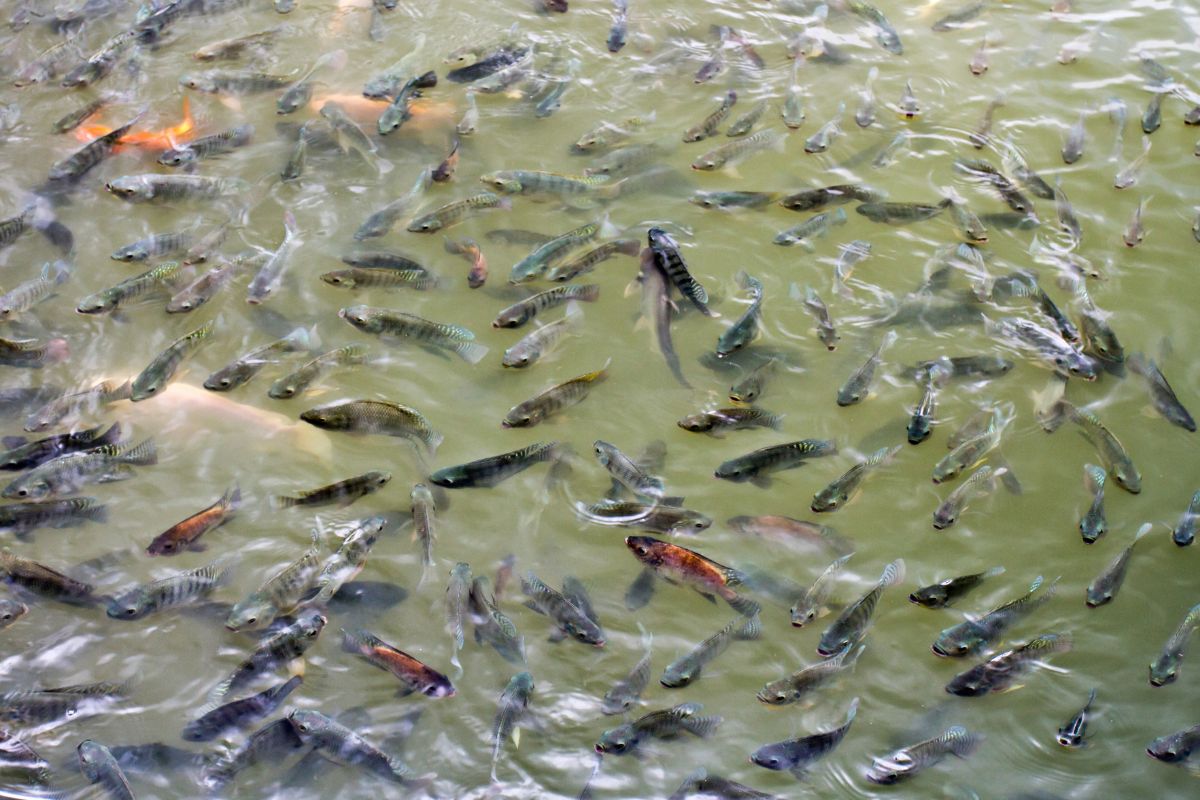
In the hills of Meghalaya, fish has traditionally been an important part of local diets. Yet despite strong demand, the state has long depended on fish imports from neighbouring regions to meet consumption needs. Limited production and fragmented aquaculture systems restricted the growth of the sector for many years.
That situation is gradually changing.
The state government is supporting community-based fish farming initiatives that encourage villages, cooperatives, and farmer groups to develop aquaculture enterprises using ponds, reservoirs, and water bodies spread across rural landscapes.
The programme aims to increase local fish production while creating additional income opportunities for farming households. Officials believe community aquaculture can strengthen food security and reduce dependence on imported fish.
The effort is becoming a significant component of Meghalaya’s rural development strategy.
Fish consumption remains high across much of Northeast India. Urbanisation, population growth, and changing dietary patterns have increased demand, creating opportunities for local producers. Meghalaya’s natural resources provide favourable conditions for aquaculture expansion, yet production has historically lagged behind consumption requirements.
This gap represents both a challenge and an opportunity.
Instead of relying heavily on imports, policymakers want to increase local production capacity. Community fish farming is viewed as one of the most practical ways to achieve that objective.
The approach allows rural communities to participate directly in the sector’s growth.
Demand provides a strong foundation for expansion.
Community Ponds Create Shared Benefits
A key feature of the programme is collective participation. Rather than focusing exclusively on individual farmers, many projects utilise community ponds managed by village organisations, cooperatives, and local groups. Shared management reduces costs and allows wider participation.
Communities contribute labour, management, and local knowledge while benefiting from fish sales and harvests. The model is particularly effective in areas where landholdings are small or where water resources are managed collectively. Officials believe shared ownership improves long-term sustainability. Benefits are distributed across multiple households.
Successful aquaculture requires more than access to water.
Farmers must understand stocking densities, feed management, water quality, disease prevention, and harvesting practices. Training programmes therefore form an important part of the initiative. Extension workers and fisheries departments provide technical guidance designed to improve production outcomes.
Many participants are first-generation fish farmers with limited previous experience in aquaculture. Capacity-building efforts help reduce risks while improving confidence among new entrants. Knowledge transfer remains central to the programme’s success. Better management leads to better productivity.
One reason policymakers support fish farming is its ability to address multiple development objectives simultaneously. Fish provides a valuable source of protein and micronutrients, contributing to improved household nutrition. At the same time, commercial sales generate income that supports rural livelihoods.
Communities participating in aquaculture often benefit from both outcomes.
Part of the harvest may be consumed locally, while surplus production enters markets. This combination strengthens food security while creating economic opportunities. The dual impact makes aquaculture particularly attractive for rural development programmes.
Nutrition and income are closely connected.
Women’s self-help groups are increasingly participating in fish farming activities across several districts.
Many groups manage ponds collectively, oversee feeding operations, maintain records, and coordinate marketing activities. Their involvement is helping expand economic opportunities while strengthening local enterprises.
Officials note that community aquaculture often works well within existing self-help group structures because responsibilities can be shared among members.
The approach promotes inclusive participation while improving household incomes.
Women are becoming important contributors to the sector’s growth.
Their role continues to expand.
Building a Stronger Aquaculture Sector
Aquaculture is one of the fastest-growing food production sectors globally.
Meghalaya’s community fish farming mission reflects growing recognition that fisheries can contribute significantly to rural economies. By combining local resources, collective management, and technical support, the state hopes to create a more self-reliant fish production system.
The programme remains a work in progress.
Yet early results are encouraging communities to view ponds and water bodies not merely as natural resources but as productive economic assets.
As fish demand continues to rise, community aquaculture is helping rural households participate in a growing market.
In Meghalaya’s villages, the future of rural development may increasingly be found beneath the water’s surface.
Also Read: Punarnava Jal – The world’s first organic fertilizer! Know how it is beneficial for farmers?
Contact us – If farmers want to share any valuable information or experiences related to farming, they can connect with us via phone or whatsapp at 9599273766 or you can write to us at “kisanofindia.mail@gmail.com”. Through Kisan of India, we will convey your message to the people, because we believe that if the farmers are advanced then the country is happy.
You can connect with Kisan of India on Facebook, Twitter, and Whatsapp and Subscribe to our YouTube channel.