


Rainfed Area Development Scheme: Can Integrated Farming Help Farmers Reduce Climate Risk?

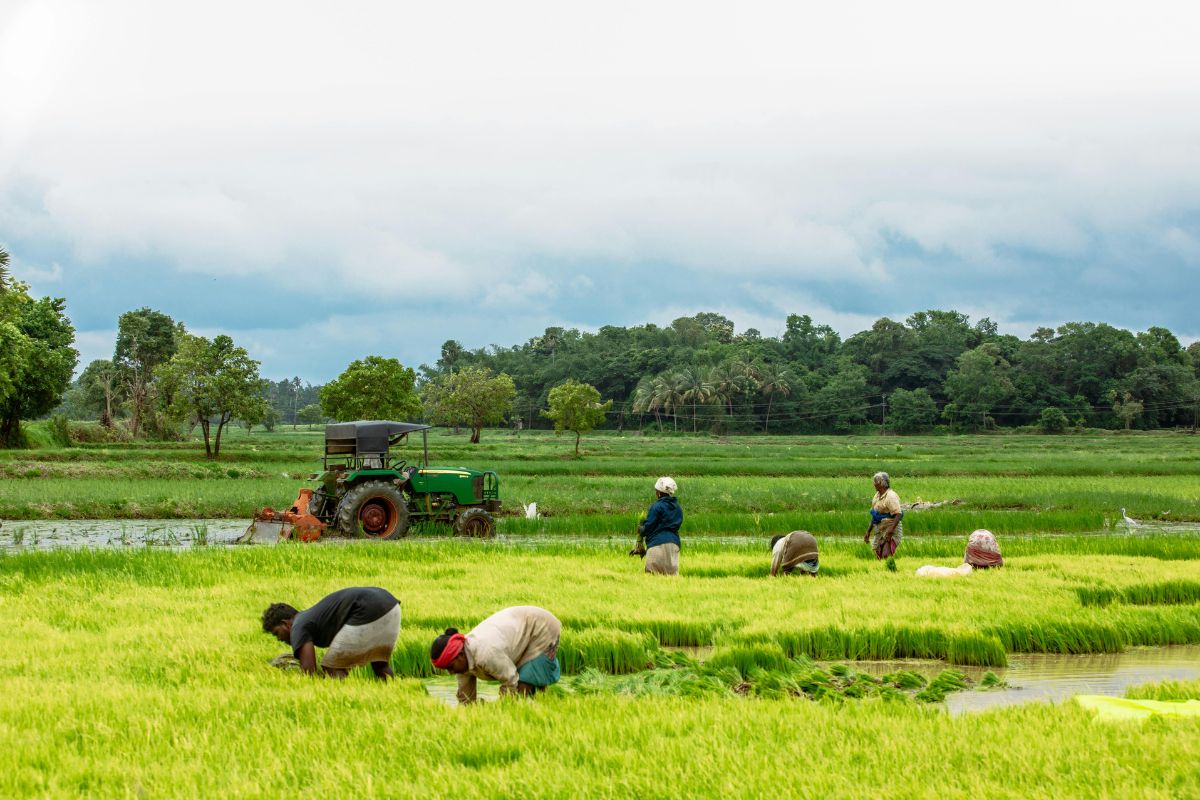
Nearly 60% of India’s net sown area is rainfed, according to the government. These farms depend heavily on rainfall and can face losses when dry spells, droughts or excess rainfall disrupt a single crop. Integrated farming can spread this risk by combining crops with other farm activities.
The Rainfed Area Development (RAD) component of the National Mission for Sustainable Agriculture was created to promote such systems. Since 2022–23, RAD has been implemented under the Pradhan Mantri Rashtriya Krishi Vikas Yojana (PM-RKVY). It supports location-specific Integrated Farming System models developed with ICAR inputs.
Under an Integrated Farming System, farmers can combine crops with horticulture, livestock, fisheries, agroforestry, apiculture and other suitable activities. The idea is to make better use of available land and farm resources while creating more than one source of income for the household.
What Support Does the RAD Scheme Provide?
The government says ₹2,119.84 crore has been released under RAD since 2014–15. These interventions have covered 8.50 lakh hectares and benefited 14.35 lakh farmers through Integrated Farming System activities. The figures show the programme has moved beyond individual demonstrations into wider farm-level implementation.
For 2025–26, ₹343.86 crore was allocated to States and Union Territories for implementing RAD, including farmer capacity building. During 2024–25, Krishi Vigyan Kendras conducted 4,416 demonstrations and trained 96,013 farmers on different Integrated Farming System models.
The scheme also provides ₹10,000 per cluster for farmer capacity building. KVKs support farmers through training and demonstrations of location-specific models. This means the support is not limited to financial assistance but also includes knowledge needed to combine different farm enterprises.
Farmers should remember that RAD is not a single cash-transfer scheme where every farmer automatically receives a fixed amount. States and Union Territories implement the programme, while the actual interventions depend on local farming systems, agro-climatic conditions and approved plans.
How Can Integrated Farming Reduce Risk?
A farmer depending entirely on one rainfed crop faces a larger income risk if rainfall fails during a critical growth stage. An integrated system can provide other outputs such as milk, eggs, vegetables, fruits, honey or fish, depending on what suits the farm and local conditions.
The NITI Aayog evaluation of RAD conducted in 2025 found that site-appropriate, bundled interventions helped strengthen livelihood security in vulnerable agro-climatic regions. The assessment also reported benefits for climate resilience through soil-moisture conservation, diversified cropping systems and landscape-based approaches.
The approach can also improve resource use. Crop residues may become livestock feed, livestock manure can support soil fertility, and farm ponds can support water availability or fish production where technically suitable. Such links can reduce waste and create additional value from resources already available on the farm.
But integrated farming does not mean adding every possible enterprise. Farmers need to select activities according to water availability, land size, labour, local markets, animal-care capacity and technical support. A poorly planned combination can increase costs and workload instead of reducing risk.
Who Should Consider the Scheme?
RAD can be relevant for farmers in rainfed areas who want to diversify beyond a single crop. It may be particularly useful where rainfall is uncertain and households already have access to livestock, horticulture, farm ponds or other compatible activities.
Farmers should first approach their local agriculture department or Krishi Vigyan Kendra to ask whether RAD-supported activities are being implemented in their district. The available support and approved components can vary between States and local programmes, so farmers should confirm current guidelines before spending money.
A farmer should also prepare a basic resource plan. List available land, water sources, livestock, family labour, existing crops and nearby markets. This information can help identify which Integrated Farming System model is realistic instead of copying a model developed for another agro-climatic region.
The government’s wider National Mission for Sustainable Agriculture also includes measures related to water-use efficiency and soil health. Per Drop More Crop promotes micro-irrigation, while Soil Health Management supports balanced nutrient use and sustainable soil management. These components can complement climate-resilient farm planning.
What Farmers Should Check Before Applying
Farmers should ask their KVK or agriculture office whether their village or district is covered under the current RAD plan. They should also ask which Integrated Farming System models are approved locally, what assistance is available and whether training or demonstrations are scheduled.
Farmers should not assume that the ₹10,000 cluster assistance is an individual payment. The government describes it as financial assistance for capacity building of farmers adopting Integrated Farming Systems. Farmers should therefore confirm the structure of support with implementing authorities before making investment decisions.
The strongest benefit of RAD is the shift from depending on one crop towards a farm system suited to local conditions. For rainfed farmers facing increasingly uncertain rainfall, combining crops with suitable allied activities can provide additional income sources while improving the use of farm resources.
Rainfed Area Development is worth exploring for farmers who want to reduce dependence on a single rainfed crop. Its focus on Integrated Farming Systems can help combine crop production with livestock, horticulture, fisheries or other activities suited to local conditions.
The scheme should not be treated as a guaranteed income-support programme. Farmers need to check district-level implementation, approved activities, eligibility and available assistance. A visit to the local KVK or agriculture department can be the first practical step before investing in an integrated farm model.
Also Read: Punarnava Jal – The world’s first organic fertilizer! Know how it is beneficial for farmers?
Contact us – If farmers want to share any valuable information or experiences related to farming, they can connect with us via phone or whatsapp at 9599273766 or you can write to us at “kisanofindia.mail@gmail.com”. Through Kisan of India, we will convey your message to the people, because we believe that if the farmers are advanced then the country is happy.
You can connect with Kisan of India on Facebook, Twitter, and Whatsapp and Subscribe to our YouTube channel.
