



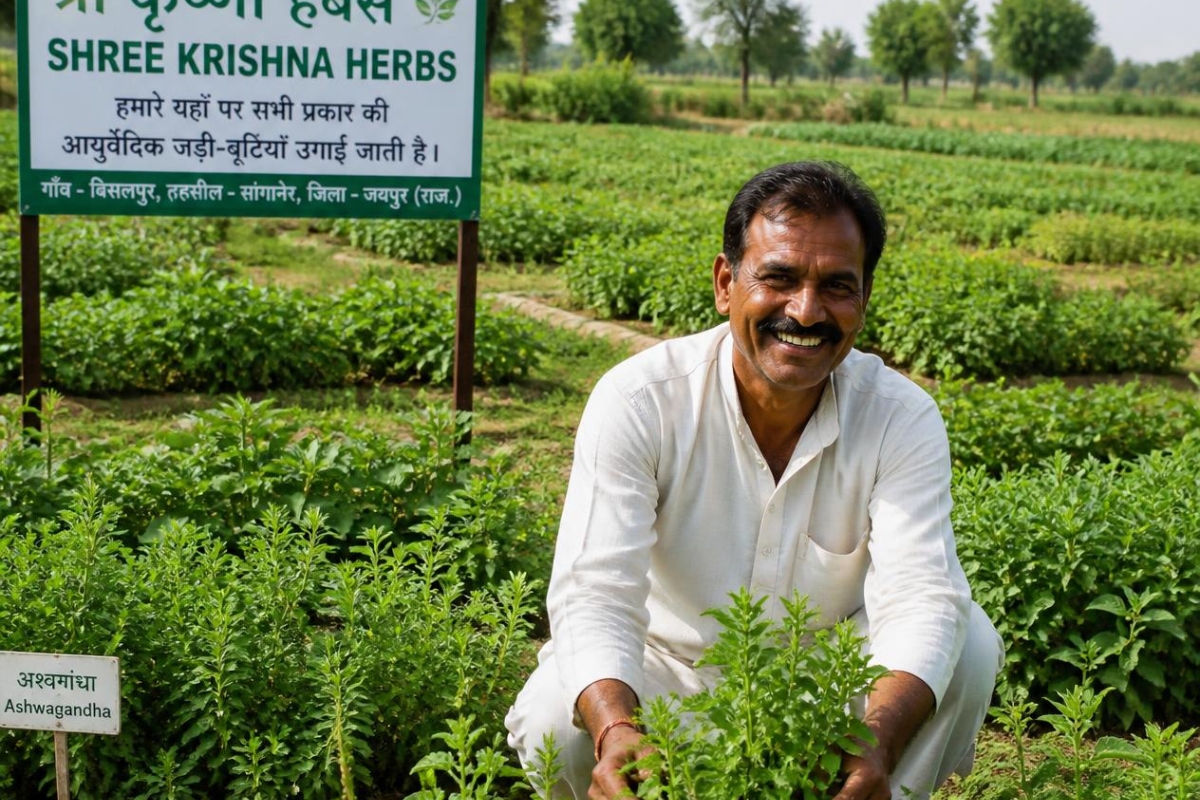
For years, a farmer in Rajasthan cultivated traditional crops such as wheat, mustard, and bajra on his family’s two-acre farm. While these crops provided a steady source of income, profits remained limited because of rising input costs, uncertain rainfall, and fluctuating market prices. Like many small farmers, he found it increasingly difficult to expand earnings through conventional farming alone.
His turning point came after attending an agricultural training programme focused on medicinal and aromatic plants. During the programme, he learned about the growing demand for herbs used in pharmaceuticals, cosmetics, herbal products, and essential oils. The idea of cultivating crops linked directly to expanding industries caught his attention.
After conducting market research and consulting agricultural experts, he decided to dedicate a portion of his land to medicinal herb cultivation. What started as a small experiment eventually developed into a profitable agricultural enterprise.
Rather than converting his entire farm immediately, the farmer began with a limited area. This allowed him to understand cultivation practices, irrigation requirements, harvesting methods, and market conditions before making larger investments.
The first season involved careful observation and learning. He maintained records of production costs, plant performance, and buyer demand. By the end of the harvest, the returns were encouraging enough to justify expansion.
Agricultural experts often recommend gradual diversification because it reduces financial risk while allowing farmers to gain practical experience.
Direct Links With Buyers Improved Returns
One of the biggest advantages of herb cultivation was access to specialised buyers. Instead of depending entirely on local mandis, the farmer established relationships with herbal product manufacturers and traders.
Direct marketing reduced the number of intermediaries involved in the supply chain. This allowed him to negotiate better prices while understanding exactly what buyers expected in terms of quality and harvesting standards.
Agricultural economists frequently note that stronger market connections can be just as important as increasing production.
Water availability remains a major concern in many parts of Rajasthan. The farmer found that several medicinal herbs could be cultivated efficiently using drip irrigation systems that supplied water directly to the root zone.
This reduced water consumption while maintaining healthy crop growth. Efficient irrigation also lowered operational expenses and improved resource use throughout the season.
Researchers studying climate-resilient agriculture increasingly highlight crops that generate higher value without requiring excessive water use.
As production expanded, the farmer explored opportunities beyond selling raw plant material. He began processing and packaging selected products for local markets, increasing the value of each harvest.
Simple value-addition activities improved profitability while creating a distinct identity for his farm products. Customers showed growing interest in traceable and locally produced herbal goods.
Researchers often emphasise that value addition can significantly improve returns from small landholdings.
Other Farmers Began Following the Model
The success of the enterprise attracted attention from neighbouring farmers who were searching for alternatives to conventional crops. Visitors regularly arrived to observe cultivation practices and learn about market opportunities.
The farmer now shares knowledge through demonstrations and informal training sessions. Several growers in nearby villages have started cultivating medicinal and aromatic plants after seeing the results achieved on a relatively small area of land.
Development specialists often point out that farmer-to-farmer learning remains one of the most effective methods of spreading agricultural innovation.
Today, the farmer earns substantially more than he did when relying exclusively on traditional crops. His success was not driven by acquiring more land but by identifying a growing market and adapting his farming system accordingly.
The business continues to evolve as demand for herbal products expands across multiple industries. By combining cultivation, market research, and value addition, he created several sources of income from the same farm.
His journey demonstrates that agricultural success often comes from finding opportunities beyond conventional production systems. For small farmers facing rising costs and climate uncertainty, diversification into specialised crops can open entirely new possibilities.
What began as a trial on a small plot has grown into a thriving enterprise, proving that innovation and market awareness can sometimes be more valuable than farm size alone.
Also Read: Punarnava Jal – The world’s first organic fertilizer! Know how it is beneficial for farmers?
Contact us – If farmers want to share any valuable information or experiences related to farming, they can connect with us via phone or whatsapp at 9599273766 or you can write to us at “kisanofindia.mail@gmail.com”. Through Kisan of India, we will convey your message to the people, because we believe that if the farmers are advanced then the country is happy.
You can connect with Kisan of India on Facebook, Twitter, and Whatsapp and Subscribe to our YouTube channel.