



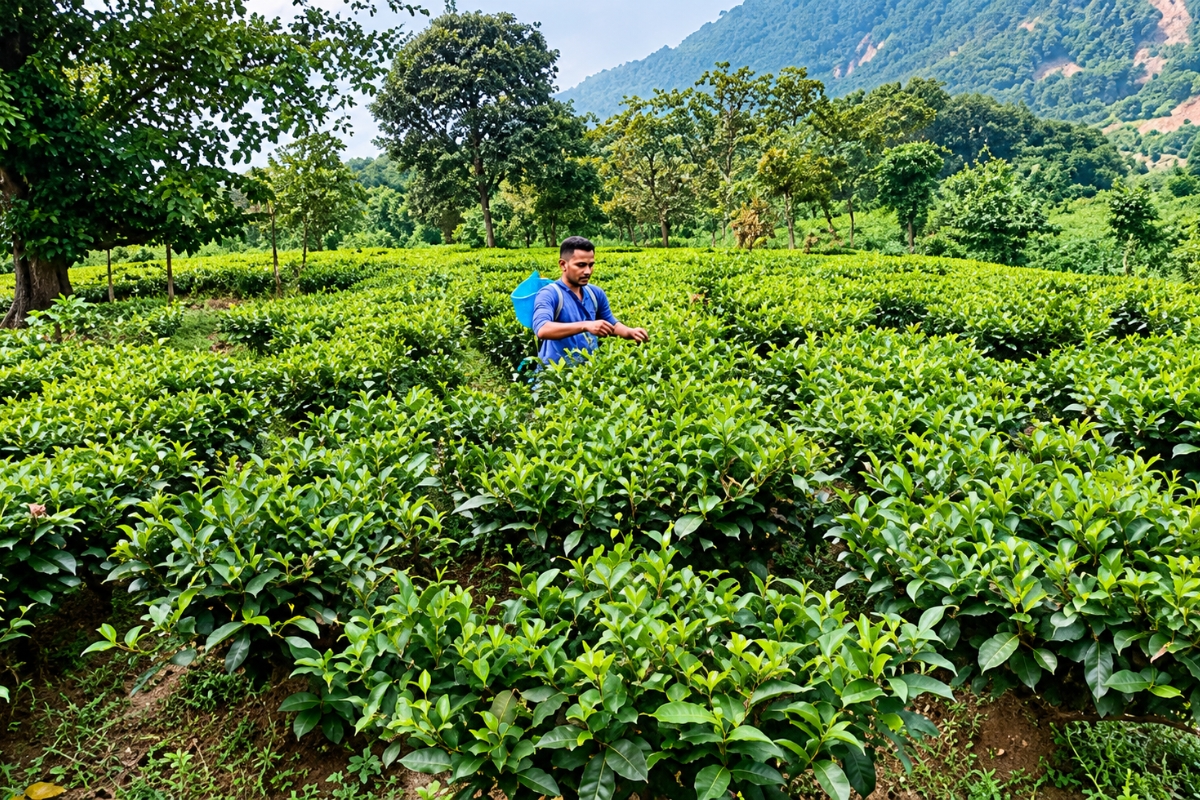
For Gloria Sangtam, farming on one acre in Nagaland once generated only about ₹30,000 a year. The 38-year-old farmer from Tsongpong village in Kiphire district grew maize, rajma, soybean, groundnut and winter vegetables while also keeping pigs and backyard poultry.
Her situation changed after KVK Kiphire introduced her to natural farming. With demonstrations, training and continued technical guidance, Gloria began preparing farm-made inputs, rotating crops and improving soil management. Within a year, her reported annual income reached ₹1.97 lakh.
From Low Returns to Natural Farming
Before the intervention, Gloria faced low productivity and poor soil fertility management. Limited water conservation and pest-management practices also affected production. KVK Kiphire established a demonstration unit on her farm and provided practical training rather than simply advising her to change cultivation methods.
Gloria learned to prepare Jeevamrut using locally available materials such as cow dung, cow urine, jaggery, pulse flour and water. She also received training in vermicomposting, crop rotation and rhizosphere management, allowing her to produce several farm inputs instead of depending entirely on outside purchases.
The transition was not immediate. Gloria initially remained uncertain about reducing chemical fertilisers and pesticides. The first seasons required extra labour and preparation, while visible results took time. Continued support from KVK experts helped her maintain the practices long enough to assess their effect.
One of the major changes was crop rotation. Gloria rotated maize with kholar, a local kidney-bean type crop. By the third cropping season, maize productivity under the rotation had increased by 49.17%, according to the ICAR account of her farm.
Soil Health Also Improved
The changes were not limited to crop yields. Soil testing showed increases in nitrogen, phosphorus and potassium after the natural-farming intervention. Nitrogen rose from 378.89 to 412.26 kg per hectare, while phosphorus increased from 39.75 to 52.24 kg per hectare.
Potassium also increased from 278.69 to 310.45 kg per hectare. Soil organic carbon stock rose by 3.25% after one year. These figures are specific to Gloria’s farm and should not be treated as guaranteed results for every farmer adopting natural farming.
Producing inputs on the farm also helped Gloria reduce dependence on outside resources. Some of the organic materials generated on the farm could also be used for livestock-related needs. This linked her crop production with piggery and backyard poultry instead of treating each activity separately.
Water management became another part of the system. Gloria used mulching and organic mulch to retain soil moisture during drier periods. For a small farm with limited resources, such practices can help reduce moisture loss while adding organic material to the soil.
Income Rose More Than Six Times
The economic change was the most visible result. Gloria’s reported annual income increased from ₹30,000 before the intervention to ₹1.97 lakh after adopting the new practices. The rise came from higher production, lower dependence on purchased inputs and better returns from farm produce.
That represents an increase of ₹1.67 lakh over her earlier annual income. In percentage terms, the reported income was more than six times the previous level. Farmers should still remember that Gloria’s results reflect her particular farm size, crops, local conditions and support received.
Her farm also became a demonstration site for other farmers. People from surrounding villages began seeking advice from her about natural farming practices. Gloria started sharing what she had learned, turning her own experience into an informal source of knowledge within the community.
The transformation also showed that previously underused land can be brought back into production. Gloria worked on rehabilitating Jhum fallows, demonstrating how suitable management could help restore abandoned shifting-cultivation areas for productive use.
What Can Other Farmers Learn?
Gloria’s experience does not mean every farmer will earn ₹1.97 lakh from natural farming. Her results came after technical guidance, crop rotation, soil management, water conservation and several connected farm activities. The example is more useful as a model of gradual farm improvement than as an income guarantee.
Farmers interested in similar practices can start with soil testing and a small demonstration plot. A nearby KVK can provide advice on locally suitable crops, organic inputs, crop rotation and pest management. Farmers should compare production costs and yields before expanding the approach across their entire holding.
The story also shows the value of combining enterprises. Gloria’s crops, piggery and poultry provided multiple sources of farm output. Such diversification can reduce dependence on one crop and make better use of farm resources when managed according to local conditions.
Gloria Sangtam’s journey shows how scientific guidance can change the economics of a small farm. Her success came not from one input or one technique, but from combining natural farming, crop rotation, soil improvement, water conservation and diversified farm activities with continued KVK support.
Also Read: Punarnava Jal – The world’s first organic fertilizer! Know how it is beneficial for farmers?
Contact us – If farmers want to share any valuable information or experiences related to farming, they can connect with us via phone or whatsapp at 9599273766 or you can write to us at “kisanofindia.mail@gmail.com”. Through Kisan of India, we will convey your message to the people, because we believe that if the farmers are advanced then the country is happy.
You can connect with Kisan of India on Facebook, Twitter, and Whatsapp and Subscribe to our YouTube channel.