



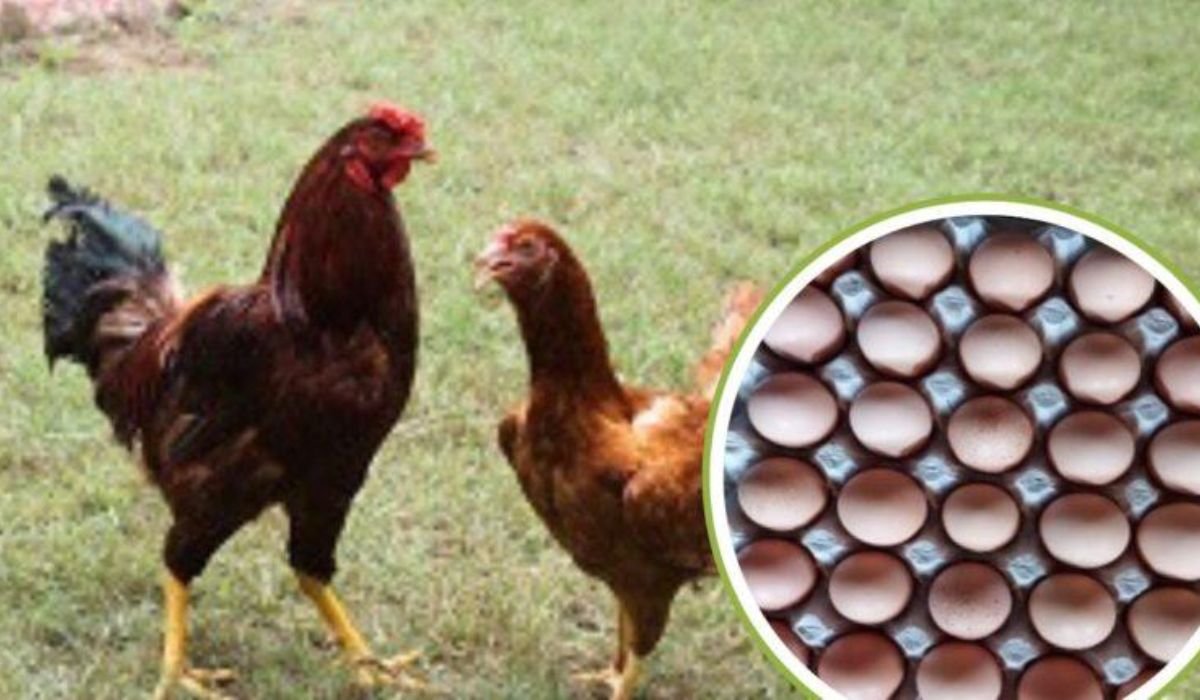
For many small farm families, agriculture alone may not provide regular income throughout the year. Phool Kumari of Borang village in Jharkhand found another opportunity through poultry farming. With support from KVK Gumla, she gradually moved from keeping birds for additional income to running a small poultry and hatchery enterprise.
Phool Kumari started with 100 improved chicks provided through the KVK Gumla intervention. Training and technical guidance helped her learn better poultry management. The support focused on improved breeds, scientific practices and enterprise development, giving her an opportunity to build an income source alongside her existing farming activities.
The poultry unit became more important as the family looked for ways to increase income. Instead of depending only on rainfed agriculture, Phool Kumari began combining crop farming with poultry. This diversification helped spread household income across different activities and created an enterprise that could generate returns within a shorter production cycle.
Hatchery Added Another Income Stream
The turning point came when KVK Gumla supported her Self-Help Group under the Tribal Sub-Plan project. The group received a hatchery machine along with 112 eggs. This allowed Phool Kumari to move beyond selling birds and explore chick production, creating another source of income from the same poultry enterprise.
A hatchery can change the economics of a small poultry unit because farmers can sell chicks as well as mature birds and eggs. In Phool Kumari’s case, the additional activity also helped meet local demand for improved poultry chicks. This made the enterprise useful beyond her own household.
By 2025–26, the enterprise had reached a much larger scale. Phool Kumari sold around 1,000 adult birds during the year at about ₹400 per bird. This generated gross revenue of nearly ₹4 lakh, while the reported input cost was around ₹2.25 lakh.
The poultry unit also generated income from chicks and eggs. Around 960 chicks were sold at ₹40 each, bringing ₹38,400. Another 1,000 eggs sold at ₹10 each added ₹10,000. Together, these activities increased the enterprise’s contribution to household income beyond the earnings from mature birds alone.
Income Rose Through Diversification
According to ICAR, Phool Kumari’s poultry and hatchery activities generated an additional net annual income of approximately ₹2.23 lakh in 2025–26. Before the intervention, her household earned about ₹50,000–60,000 annually from agriculture. The poultry enterprise therefore became an important part of the family’s livelihood.
The change was not limited to income. The additional earnings helped the family support children’s education and invest in another livelihood activity. Phool Kumari also purchased an auto-rickshaw, adding another source of household income. This shows how one farm enterprise can create opportunities beyond agriculture itself.
Her experience also reached other women in Borang village. ICAR reports that around 30 tribal women adopted improved backyard poultry practices after seeing the results of the intervention. Each participating woman generated additional annual income of about ₹35,000–45,000 through poultry farming.
The story also shows why technical support matters for small farmers. Starting with birds alone may not be enough to build a stable enterprise. Training, improved breeds, hatchery facilities, scientific management and continued guidance helped Phool Kumari gradually expand the scale and range of her poultry activities.
What Farmers Can Learn
For farmers considering poultry as an additional enterprise, the experience offers several practical lessons. Starting with a manageable number of birds can reduce initial risk. Farmers can then expand after understanding feed requirements, disease prevention, housing, local demand and the costs involved in raising birds.
Adding chicks and eggs can create multiple income streams, but farmers need proper planning. Hatchery operations require suitable equipment, clean conditions, technical knowledge and reliable demand. Farmers should first contact their nearest Krishi Vigyan Kendra or veterinary department to understand the practices and support available locally.
Poultry can also complement crop farming because farm households can spread labour and income across different activities. For tribal and smallholder families, such diversification can reduce dependence on a single crop. The right enterprise will depend on local feed availability, market demand, family labour and access to veterinary services.
Phool Kumari’s journey from keeping 100 improved chicks to running a poultry and hatchery enterprise shows how training and small interventions can create larger livelihood opportunities. Her experience also demonstrates that agricultural success does not always require large landholdings. Knowledge, suitable technology and local support can help small farmers build new income sources.
For farmers interested in poultry, the first step can be simple: approach the nearest KVK, ask about improved breeds and training, calculate local feed and market costs, and begin at a manageable scale. With proper planning, poultry can become an additional farm enterprise rather than remaining only a backyard activity.
Also Read: Punarnava Jal – The world’s first organic fertilizer! Know how it is beneficial for farmers?
Contact us – If farmers want to share any valuable information or experiences related to farming, they can connect with us via phone or whatsapp at 9599273766 or you can write to us at “kisanofindia.mail@gmail.com”. Through Kisan of India, we will convey your message to the people, because we believe that if the farmers are advanced then the country is happy.
You can connect with Kisan of India on Facebook, Twitter, and Whatsapp and Subscribe to our YouTube channel.