



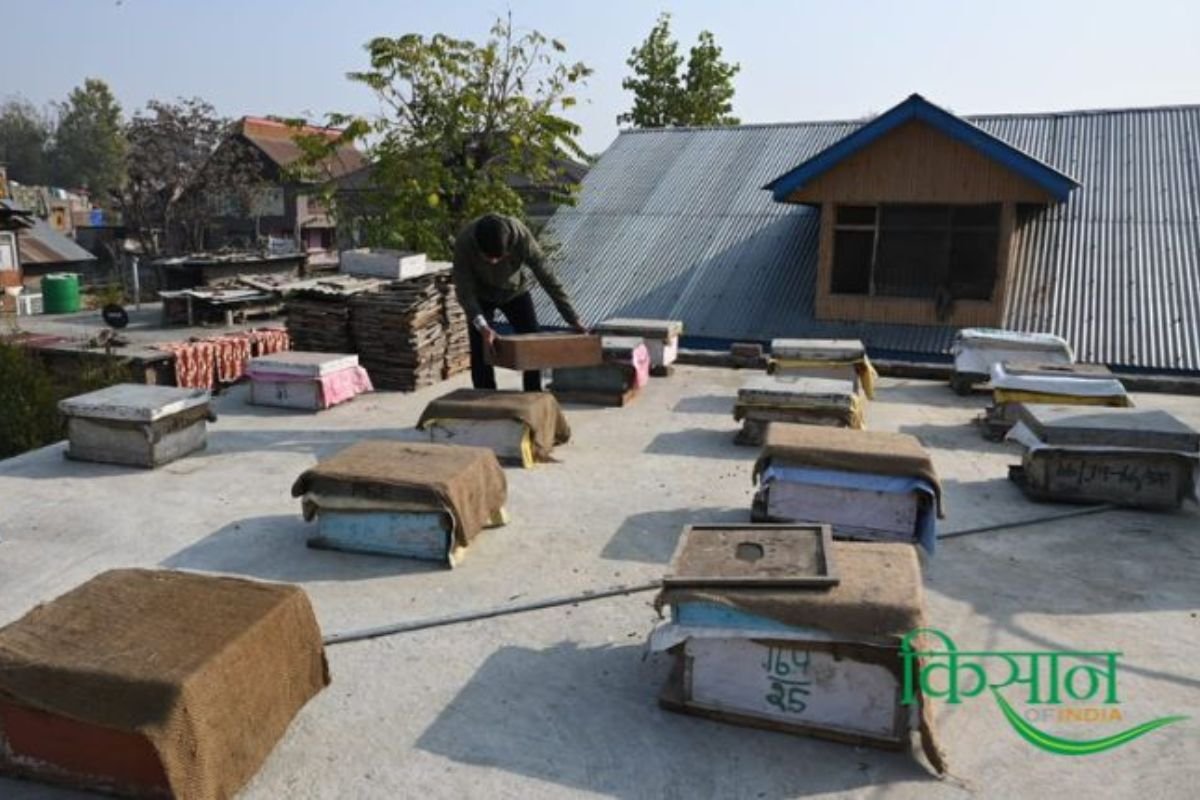
A farmer does not always need additional farmland to start another agricultural business. Beekeeping can use field boundaries, unused spaces and other suitable locations while providing income from honey and other hive products. ICAR describes apiculture as an enterprise that can suit farmers and even landless rural workers.
Honey is only one source of income from a bee colony. Farmers can also earn from beeswax, pollen, propolis, royal jelly, queen bees and bee colonies. Renting colonies for crop pollination provides another possible income stream, according to ICAR.
The business can also support crop production. Bees move between flowers while collecting nectar and pollen, transferring pollen between plants in the process. ICAR-IIHR highlighted this link during its 2026 pollinator programmes in Karnataka, where farmers were trained on beekeeping and pollinator-friendly practices.
For a farmer considering beekeeping, the question is not only how much honey a colony can produce. The larger question is whether the farm has enough flowering resources, suitable management, training and a reliable market for honey and other products.
How much can a farmer earn?
Income depends on the number of colonies, bee species, flowering conditions, management, honey yield, market price and other products sold. Farmers should therefore calculate returns using local costs rather than relying on a single national income estimate.
An ICAR study covering beekeepers across 26 states and Union Territories found that individual beekeepers earned an average net income of ₹92,947 per 50 bee hives, while group beekeepers earned ₹1,28,328 per 50 hives.
A Farmer FIRST programme in Punjab reported average honey production of about 22.5 kg per box. Farmers sold honey at an average ₹300 per kg, giving gross returns of about ₹6,750 per box and reported net returns of ₹4,475 per box.
These figures come from specific farming programmes and should not be treated as guaranteed returns. Honey production varies with floral resources, weather, colony strength, disease, migration practices and management.
Farmers can improve the business case by selling more than raw honey. Beeswax, pollen and propolis can provide additional products, while strong colonies can potentially be used for pollination services or multiplication.
ICAR’s farmer-income material identifies honey, beeswax, propolis, pollen, royal jelly, queen bees, package bees and pollination services as potential areas for diversification within beekeeping.
What does a beginner need?
The first requirement is training. A new beekeeper needs to understand bee behaviour, hive management, feeding, colony multiplication, disease control, harvesting and safe handling. ICAR has repeatedly used training programmes to introduce farmers to scientific beekeeping. In March 2026, ICAR-IIHR organised pollinator and beekeeping programmes involving farmers and women members of a beekeeping FPO in Karnataka.
Farmers should choose the bee species and hive system according to local conditions. The availability of flowering plants, temperature, rainfall and seasonal crops can affect colony performance. The location of the hives also matters. Bees need access to flowers and water, while the apiary should be protected from excessive disturbance, flooding and direct exposure to harsh weather.
Farmers should also plan where the honey will be sold before increasing the number of colonies. Local consumers, retailers, processors, FPOs and direct marketing can provide different routes to market. An ICAR study found that individual beekeepers faced more middlemen involvement than group beekeepers, while groups reported greater use of online marketing.
How do bees increase crop production?
Beekeeping can create a second benefit beyond the income from honey. Bees provide pollination services to crops, which can improve fruit and seed formation in crops that depend on insect pollination. ICAR research from Madhya Pradesh found additional income from honey production when beekeeping was combined with crops. The reported overall additional income from honey and crop production was highest with mustard among the crops studied.
Pollination benefits depend on the crop and its dependence on insects. An ICAR study of 211 Indian crops found that 108 crops had some level of dependence on animal pollination, with mustard among the crops showing high economic value from pollination. This means farmers should consider where the hives are placed relative to flowering crops. The same colonies can generate honey while supporting pollination within and around the farm.
ICAR-IIHR’s 2026 farmer programme encouraged flowering strips to support pollinators. Such flowering plants can provide food resources for bees outside the main flowering period of commercial crops. Farmers should also avoid unnecessary pesticide exposure around bee colonies. Some pesticides can harm bees, so spraying decisions should consider flowering periods, bee activity and recommended pest-management practices.
What does climate change mean for beekeeping?
Climate change can affect beekeeping by altering flowering periods, temperature, rainfall and the availability of nectar and pollen. A 2025 ICAR review on modern beekeeping in northeastern India identified climate change, pests, diseases and habitat loss among the challenges facing beekeepers.
Changing flowering patterns can affect when colonies have access to food. Heat, heavy rainfall and floods can also disturb colonies and reduce bee activity. Farmers can reduce some risks by maintaining diverse flowering plants rather than depending on a single crop. ICAR’s work on pollinator conservation recommends flowering annual strips as one approach for supporting pollinator populations.
Protecting hives from extreme heat and waterlogging also becomes more important as weather patterns change. The apiary should have shade, good drainage and protection from strong winds while maintaining adequate ventilation. Climate-resilient beekeeping therefore starts with the surrounding farm ecosystem. A diverse supply of flowering plants can support colonies across more than one flowering season and reduce dependence on a single nectar source.
Can farmers start with a few colonies?
Farmers can begin at a small scale after receiving proper training and then expand as they gain experience. ICAR describes beekeeping as an enterprise that requires relatively little dedicated land and can be operated alongside other agricultural activities.
Starting small also allows farmers to understand local flowering patterns, colony behaviour, honey yields and market demand before making a larger investment.
The farmer should calculate the cost of bee boxes, colonies, protective equipment, hive tools, honey extraction equipment, transport and packaging. Training and recurring management costs should also be included.
Farmers should look for support from KVKs, agricultural universities, the National Bee Board and relevant state programmes. The National Beekeeping and Honey Mission has been used to promote scientific beekeeping and production of quality honey and other hive products.
For farmers, beekeeping can be more than a honey business. A well-managed apiary can generate income from several products while supporting pollination on farms. The strongest business case will depend on local flowering resources, management skills, market access and the ability to protect colonies from disease, pesticides and changing weather.
Also Read: Punarnava Jal – The world’s first organic fertilizer! Know how it is beneficial for farmers?
Contact us – If farmers want to share any valuable information or experiences related to farming, they can connect with us via phone or whatsapp at 9599273766 or you can write to us at “kisanofindia.mail@gmail.com”. Through Kisan of India, we will convey your message to the people, because we believe that if the farmers are advanced then the country is happy.
You can connect with Kisan of India on Facebook, Twitter, and Whatsapp and Subscribe to our YouTube channel.