



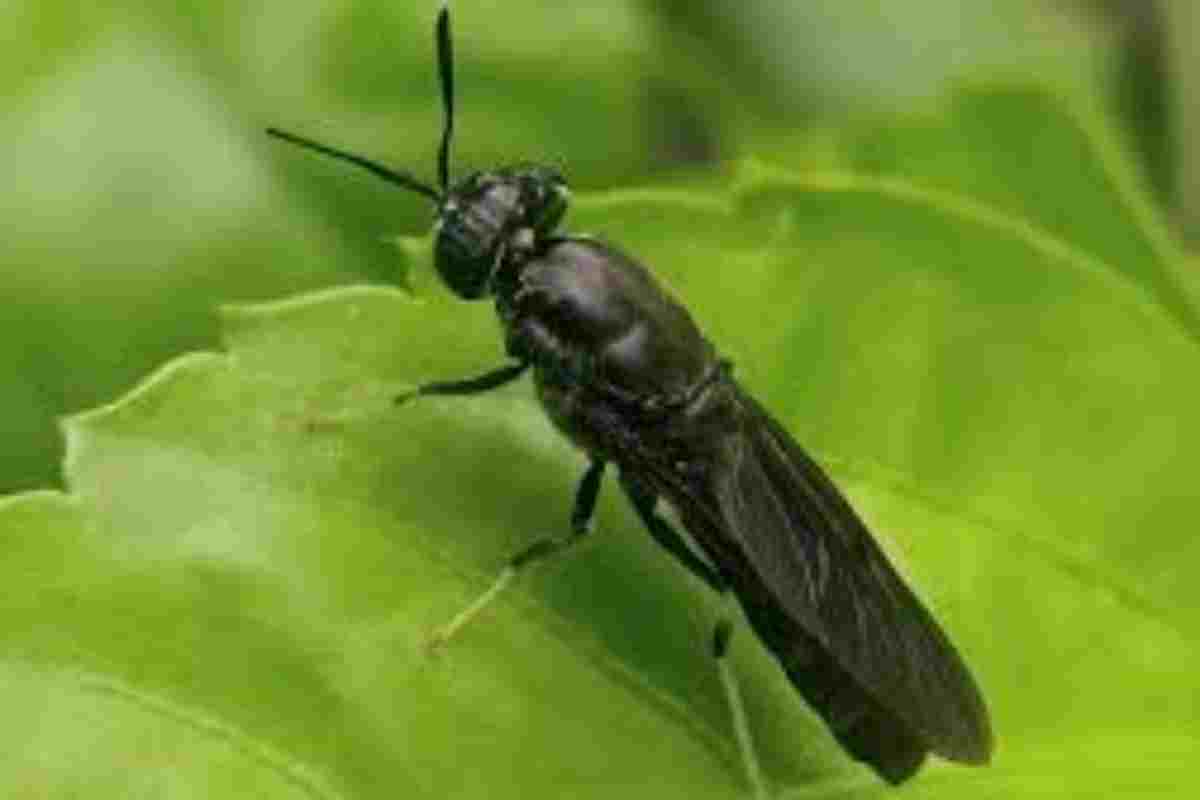
In several Indian cities and peri-urban farming belts, entrepreneurs are now farming insects instead of crops or livestock. The focus is on the black soldier fly, an insect species gaining attention because its larvae can convert food waste into high-protein animal feed ingredients.
Researchers studying sustainable agriculture say the sector could become important as India’s livestock and aquaculture industries struggle with rising feed costs. Agriculture experts believe insect-based farming may reshape future feed systems because conventional protein sources are becoming increasingly expensive and environmentally stressful.
Black soldier fly larvae consume vegetable waste, fruit scraps, food leftovers, and agricultural residue at extremely fast rates. After feeding for several days, the larvae themselves become rich in protein and fat. Farmers later process them into feed products used for poultry, fish farming, and pet food industries.
Researchers say the system creates a circular agricultural economy where organic waste becomes feed instead of landfill material. Agriculture experts believe this could reduce pressure on soybean and fishmeal markets that currently dominate commercial livestock feed production.
India’s aquaculture industry is one of the fastest-growing food sectors in the country, but fish feed costs remain a major burden for farmers. Researchers say insect protein is attracting attention because it can partially replace expensive imported feed ingredients in aquaculture systems.
Some startups are already supplying black soldier fly meal to fish farms in Andhra Pradesh, Tamil Nadu, and West Bengal. Agriculture experts believe alternative protein systems may become necessary because global demand for feed is increasing rapidly alongside poultry and fisheries expansion.
Climate Change Is Increasing Pressure on Feed Systems
Conventional livestock feed production requires large amounts of land, water, and transportation infrastructure. Researchers studying climate-linked agriculture warn that rising temperatures and irregular rainfall are affecting feed crop productivity globally.
Agriculture experts say insect farming offers advantages because it requires very little land and significantly lower water use compared to soybean cultivation or industrial feed systems. Some climate researchers also argue that circular feed production could reduce waste-related emissions while supporting more localized livestock economies.
Several Indian startups have entered the black soldier fly sector during recent years. Most operate near food-processing zones or urban waste clusters where organic waste supply remains steady. Researchers say the business model depends heavily on waste collection and efficient processing systems rather than farmland ownership.
Agriculture experts believe India’s growing food waste problem could indirectly support expansion of insect-based farming industries if regulations and market systems develop properly in coming years.
Despite growing interest, insect farming remains a very new industry in India. Entrepreneurs still face uncertainty regarding feed regulations, product approvals, and consumer acceptance. Researchers say large-scale adoption will depend on whether feed industries fully accept insect protein as a reliable commercial ingredient.
Agriculture experts also warn that quality control and waste safety standards will become critical because insect farming directly depends on organic waste streams. Many farmers remain cautious because the sector is still developing and lacks long-term market stability.
India’s Future Feed Economy May Look Different
For decades, livestock feed systems depended mainly on crops such as soybean and maize along with fishmeal imports. Black soldier fly farming represents a completely different agricultural model built around recycling, biological conversion, and waste management.
Researchers believe future farming systems may increasingly connect food production with circular economies instead of linear industrial supply chains. In India’s emerging insect farms, agriculture is no longer only growing food from soil. Increasingly, it is also transforming waste into protein for the next stage of farming itself.
In several Indian cities and peri-urban farming belts, entrepreneurs are now farming insects instead of crops or livestock. The focus is on the black soldier fly, an insect species gaining attention because its larvae can convert food waste into high-protein animal feed ingredients.
Researchers studying sustainable agriculture say the sector could become important as India’s livestock and aquaculture industries struggle with rising feed costs. Agriculture experts believe insect-based farming may reshape future feed systems because conventional protein sources are becoming increasingly expensive and environmentally stressful.
Black soldier fly larvae consume vegetable waste, fruit scraps, food leftovers, and agricultural residue at extremely fast rates. After feeding for several days, the larvae themselves become rich in protein and fat. Farmers later process them into feed products used for poultry, fish farming, and pet food industries.
Researchers say the system creates a circular agricultural economy where organic waste becomes feed instead of landfill material. Agriculture experts believe this could reduce pressure on soybean and fishmeal markets that currently dominate commercial livestock feed production.
Aquaculture Farmers Are Showing Interest
India’s aquaculture industry is one of the fastest-growing food sectors in the country, but fish feed costs remain a major burden for farmers. Researchers say insect protein is attracting attention because it can partially replace expensive imported feed ingredients in aquaculture systems.
Some startups are already supplying black soldier fly meal to fish farms in Andhra Pradesh, Tamil Nadu, and West Bengal. Agriculture experts believe alternative protein systems may become necessary because global demand for feed is increasing rapidly alongside poultry and fisheries expansion.
Conventional livestock feed production requires large amounts of land, water, and transportation infrastructure. Researchers studying climate-linked agriculture warn that rising temperatures and irregular rainfall are affecting feed crop productivity globally. Agriculture experts say insect farming offers advantages because it requires very little land and significantly lower water use compared to soybean cultivation or industrial feed systems.
Some climate researchers also argue that circular feed production could reduce waste-related emissions while supporting more localized livestock economies.
Several Indian startups have entered the black soldier fly sector during recent years. Most operate near food-processing zones or urban waste clusters where organic waste supply remains steady. Researchers say the business model depends heavily on waste collection and efficient processing systems rather than farmland ownership.
Agriculture experts believe India’s growing food waste problem could indirectly support expansion of insect-based farming industries if regulations and market systems develop properly in coming years.
Farmers Still Face Market and Policy Challenges
Despite growing interest, insect farming remains a very new industry in India. Entrepreneurs still face uncertainty regarding feed regulations, product approvals, and consumer acceptance. Researchers say large-scale adoption will depend on whether feed industries fully accept insect protein as a reliable commercial ingredient.
Agriculture experts also warn that quality control and waste safety standards will become critical because insect farming directly depends on organic waste streams. Many farmers remain cautious because the sector is still developing and lacks long-term market stability.
For decades, livestock feed systems depended mainly on crops such as soybean and maize along with fishmeal imports. Black soldier fly farming represents a completely different agricultural model built around recycling, biological conversion, and waste management. Researchers believe future farming systems may increasingly connect food production with circular economies instead of linear industrial supply chains. In India’s emerging insect farms, agriculture is no longer only growing food from soil. Increasingly, it is also transforming waste into protein for the next stage of farming itself.
Also Read: Punarnava Jal – The world’s first organic fertilizer! Know how it is beneficial for farmers?
Contact us – If farmers want to share any valuable information or experiences related to farming, they can connect with us via phone or whatsapp at 9599273766 or you can write to us at “kisanofindia.mail@gmail.com”. Through Kisan of India, we will convey your message to the people, because we believe that if the farmers are advanced then the country is happy.
You can connect with Kisan of India on Facebook, Twitter, and Whatsapp and Subscribe to our YouTube channel.