



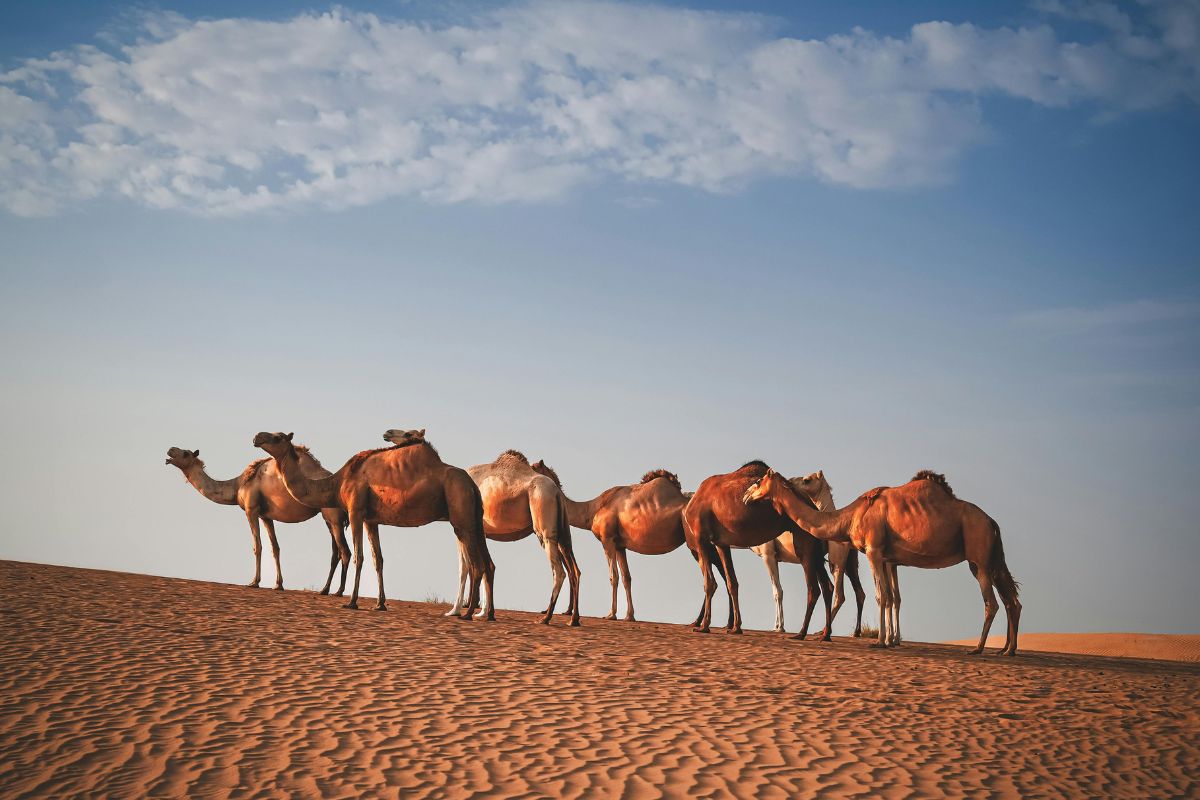
For generations, camels symbolized survival in Rajasthan’s desert landscapes.
They carried goods across dunes, helped transport water, and supported pastoral communities living in some of India’s harshest environments. But over recent decades, mechanisation, shrinking grazing land, and declining demand for transport animals pushed camel populations downward sharply.
Now, a different economy is slowly emerging around them.
Across parts of Rajasthan, camel milk cooperatives are creating new business opportunities linked with alternative dairy products, nutrition markets, and desert livestock systems.
Agriculture experts say camel milk may become one of the most unusual livestock economies developing inside India’s dryland regions.
Pastoral communities such as the Raika and Rabari consumed camel milk for centuries in desert areas where cattle farming remained difficult due to water scarcity and extreme heat.
Researchers studying desert livestock systems say camels survive harsh climates more efficiently than many other dairy animals because they tolerate dehydration and poor grazing conditions better.
For years, camel milk remained mostly part of local consumption systems.
That changed when researchers and dairy entrepreneurs began exploring its commercial potential.
Camel milk is now entering premium urban markets through:
- Powdered milk products
- Chocolates
- Ice cream
- Health supplements
- Specialty dairy brands
Some consumers purchase camel milk because of its nutritional profile and lower fat composition compared to conventional dairy products.
Agriculture experts say alternative dairy sectors are expanding globally as consumers increasingly explore niche animal-based products beyond cow milk.
In India, small camel dairy cooperatives now supply buyers in cities such as Jaipur, Delhi, Ahmedabad, and Mumbai.
Desert Communities Built Cooperative Networks
One major shift came through community-based milk collection systems.
Pastoral families who earlier depended mainly on animal trading or seasonal migration began supplying camel milk collectively through local cooperatives. Cooling centres and small processing facilities later helped extend shelf life and transport capacity.
Researchers say cooperative systems became important because camel herders often live across scattered desert settlements where individual market access remains difficult.
Women in pastoral communities also participate in milk collection and livestock management activities linked with the expanding dairy network.
Researchers studying climate adaptation increasingly view camels as important future livestock for arid regions.
As heatwaves intensify and water stress increases across South Asia, agriculture experts say drought-resilient animals may gain more importance than water-intensive livestock systems in some regions.
Camels require less water than cattle and survive effectively under extreme desert conditions. Researchers believe dryland livestock economies may become increasingly valuable as climate instability affects conventional agriculture.
Some scientists now study camel-based systems as models for climate-resilient pastoralism.
Despite growing commercial interest, camel populations in India remain under pressure.
Pastoral communities face:
- Shrinking grazing routes
- Land-use change
- Urban expansion
- Reduced pasture access
- Declining traditional livelihoods
Researchers warn that many pastoral systems are disappearing faster than policy support arrives.
Agriculture experts say camel dairy alone may not fully protect traditional herding cultures unless grazing ecosystems and pastoral mobility survive as well.
Rajasthan Is Rebuilding a Desert Economy
The rise of camel milk cooperatives reflects a larger shift happening across dryland agriculture.
Communities are trying to rebuild economic value around animals once viewed as declining or obsolete under modern development models.
Some desert regions now explore:
- Camel tourism
- Camel milk cosmetics
- Eco-tourism
- Desert food branding
- Sustainable pastoral systems
Researchers say future climate adaptation may require stronger recognition of pastoral knowledge systems often ignored during industrial agricultural expansion.
India’s dairy economy is usually associated with cattle sheds, green fodder, and intensive milk systems.
Rajasthan’s camel milk cooperatives tell a completely different story.
This dairy economy survives through migration, desert ecology, drought adaptation, and pastoral knowledge shaped over centuries in one of South Asia’s driest landscapes.
As climate pressure grows, agriculture experts say those older desert systems may become more relevant than many people once imagined.
Also Read: Punarnava Jal – The world’s first organic fertilizer! Know how it is beneficial for farmers?
Contact us – If farmers want to share any valuable information or experiences related to farming, they can connect with us via phone or whatsapp at 9599273766 or you can write to us at “kisanofindia.mail@gmail.com”. Through Kisan of India, we will convey your message to the people, because we believe that if the farmers are advanced then the country is happy.
You can connect with Kisan of India on Facebook, Twitter, and Whatsapp and Subscribe to our YouTube channel.