



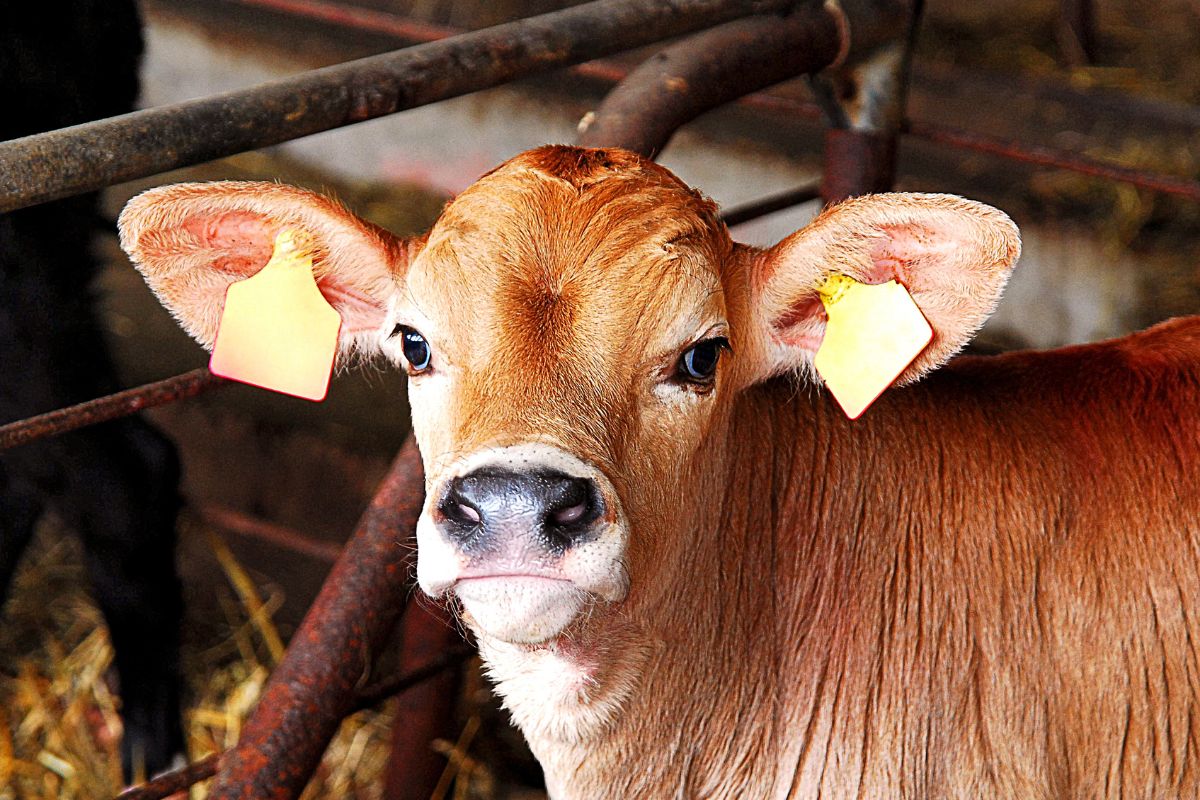
Dairy farmers usually cannot control whether a cow gives birth to a male or female calf through conventional artificial insemination. Sex-sorted semen offers another option. The technology separates sperm so that insemination can substantially increase the probability of producing a female calf.
The government is promoting sex-sorted semen under the Rashtriya Gokul Mission. According to the Department of Animal Husbandry and Dairying, the technology can produce female calves with up to 90% accuracy, helping dairy farmers build herds with more productive female animals.
How Sex-Sorted Semen Works
Conventional semen contains sperm carrying both X and Y chromosomes. Sex-sorting technology separates them before semen doses are prepared. For dairy farming, doses containing a higher proportion of X-chromosome-bearing sperm are used because these are associated with the birth of female calves.
The technology is then used through artificial insemination by a trained technician. Farmers do not need a different breeding procedure on the farm, but semen quality, correct heat detection, insemination timing and the reproductive health of the animal remain important for successful conception.
Sex-sorted semen does not guarantee a female calf every time. The government describes the technology as capable of producing female calves with up to 90% accuracy. Farmers should therefore understand that there is still a possibility of a male calf after insemination.
The technology is particularly relevant to dairy farmers because female calves can enter the future milking herd. Producing more female calves from selected animals can help farmers plan herd replacement and expand dairy production without depending entirely on purchasing animals from outside.
Under the Rashtriya Gokul Mission, the government has supported the production and use of sex-sorted semen for bovine breeding. The programme is part of a wider effort to improve bovine productivity, expand artificial insemination and conserve indigenous cattle and buffalo breeds.
The Department of Animal Husbandry says five government semen stations have established sex-sorted semen production facilities. These are located in Gujarat, Madhya Pradesh, Tamil Nadu, Uttarakhand and Uttar Pradesh. Three private semen stations also produce sex-sorted semen doses in India
The government has also supported indigenous development of the technology. An indigenously developed sex-sorted semen production technology was launched in October 2024, with the aim of reducing the cost of each dose compared with imported or earlier technologies.
Under the Accelerated Breed Improvement Programme, farmers can receive support for pregnancies established using sex-sorted semen. The government provides assistance covering up to 50% of the cost of sorted semen for eligible farmers under the programme.
Can It Improve Dairy Farm Economics?
The main economic argument is straightforward. Dairy farms depend largely on female animals for future milk production. If farmers can increase the proportion of female calves born from selected cows, they may be able to produce more replacement heifers within their own herd.
But the technology has a cost. Farmers need to compare the price of sex-sorted semen and insemination with the expected value of producing a female calf. Breed, milk yield, animal age, reproductive health and local dairy economics should all influence that decision.
Conception is another important factor. A farmer may use a sex-sorted dose but still fail to achieve pregnancy. Correct heat detection and timely insemination remain essential. Farmers should therefore use trained artificial insemination technicians rather than trying to manage breeding without veterinary or technical support.
Animal selection also matters. Using more expensive breeding technology on an unhealthy animal with reproductive problems may not give the expected return. Farmers should first check the animal’s breeding history, body condition and reproductive health with a veterinarian or trained livestock worker.
Which Animals Should Farmers Select?
Farmers should not use sex-sorted semen on every animal simply because the technology is available. The best candidates can depend on age, reproductive history, breed, health and the farmer’s breeding objective. Veterinary advice can help identify suitable animals.
Farmers should also pay attention to heat detection. Signs can include restlessness, mounting behaviour, standing to be mounted, mucus discharge and changes in activity. Missing the correct heat period can reduce the chance of conception regardless of the semen technology used.
Keeping breeding records can help. Farmers should record heat dates, insemination dates, semen details, pregnancy diagnosis and calving outcomes. These records can show whether sex-sorted semen is providing better results than conventional semen under their own farm conditions.
Pregnancy diagnosis is also important after insemination. Farmers should follow veterinary advice on when to check whether the animal has conceived. If conception repeatedly fails, the underlying cause should be investigated before spending money on additional insemination attempts.
What Farmers Should Check Before Using It
The first step is to check whether sex-sorted semen is available through the local animal husbandry department, artificial insemination centre or authorised breeding service. Availability can differ between states, breeds and semen stations.
Farmers should ask about the breed and bull from which the semen was produced. Genetic quality matters because the objective should not only be producing a female calf. Farmers also need animals with traits suitable for milk production, health and local climatic conditions.
The cost should also be confirmed before insemination. Farmers should ask whether government support is available under the Rashtriya Gokul Mission or state programmes. Subsidy rules and service availability can change, so current information should be obtained from the local department.
Farmers should also avoid buying semen from unverified sources. Artificial insemination requires proper semen storage and handling because doses are maintained under controlled conditions. Poor handling can affect semen quality and reduce the likelihood of conception.
Is Sex-Sorted Semen Worth It?
For dairy farmers who want more female calves from selected animals, sex-sorted semen can provide a useful breeding option. The technology offers much greater control over the probability of calf sex than conventional semen, although it cannot guarantee the outcome.
Its value will depend on the animal selected, conception success, semen cost, available subsidy and the economic value of a future dairy female. Farmers should calculate these factors rather than choosing the technology only because it is newer.
The government’s expansion of domestic sex-sorted semen production could make the technology more accessible. Under the Rashtriya Gokul Mission, breeding infrastructure, artificial insemination and genetic improvement are being expanded together rather than treating sex-sorted semen as a stand-alone intervention.
For farmers, the practical starting point is simple: identify a healthy breeding animal, check the available semen and breed, confirm the cost and subsidy, and use a trained insemination technician. Keeping records afterward can show whether the technology makes financial sense for the herd.
Sex-sorted semen will not solve every dairy breeding problem. Nutrition, animal health, heat detection and reproductive management remain equally important. But when used on suitable animals with proper technical support, it can help farmers plan the future composition of their dairy herd more carefully.
Also Read: Punarnava Jal – The world’s first organic fertilizer! Know how it is beneficial for farmers?
Contact us – If farmers want to share any valuable information or experiences related to farming, they can connect with us via phone or whatsapp at 9599273766 or you can write to us at “kisanofindia.mail@gmail.com”. Through Kisan of India, we will convey your message to the people, because we believe that if the farmers are advanced then the country is happy.
You can connect with Kisan of India on Facebook, Twitter, and Whatsapp and Subscribe to our YouTube channel.