



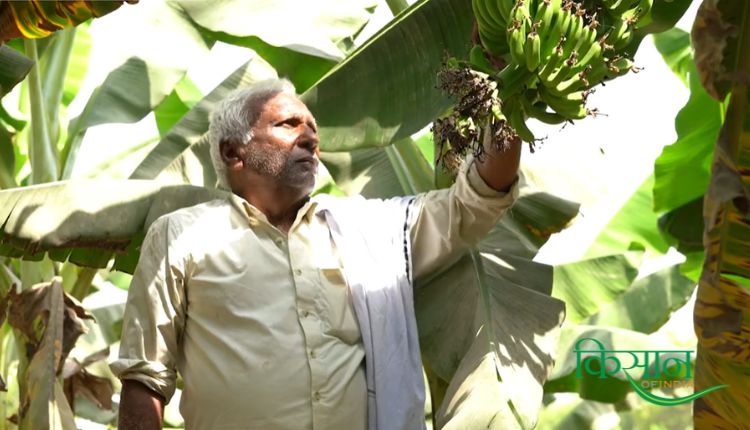
Banana farmers in Tamil Nadu are being advised to prepare for possible weather stress linked to the expected Super El Niño conditions. The ICAR-National Research Centre for Banana organised a Kisan Mela in Tiruchirappalli on August 22 to discuss ways farmers can protect banana crops from changing weather conditions.
The event was held on the 33rd foundation day of ICAR-NRCB and focused on mitigation strategies for banana-based farming systems. Scientists explained practices that could help farmers manage crop risks linked to heat and changes in rainfall.
Banana is sensitive to several weather stresses. Strong winds can damage plants, while excessive rainfall can create waterlogging and affect roots. Heat and moisture stress can also affect plant growth and fruit development.
Weather risks can become more difficult when several stresses occur during the same crop cycle. A farmer may face heavy rain during one period and high temperatures during another.
This makes crop management important even when farmers cannot control the weather.
Scientists at the Kisan Mela discussed adaptive measures that farmers can use to maintain banana production under changing weather conditions.
Farmers learn adaptive practices
The ICAR-NRCB programme focused on practical measures rather than treating weather forecasts as the only solution.
Farmers were introduced to techniques aimed at protecting plants and maintaining productivity during periods of weather stress. Such measures can include better drainage, maintaining soil moisture, supporting plants against wind and adjusting farm practices according to local conditions.
The exact practice needed depends on the type of stress and the stage of the crop.
For example, drainage becomes important during periods of heavy rainfall, while maintaining adequate soil moisture becomes more important during dry spells.
Farmers cannot prevent El Niño or control rainfall, but they can change some farm decisions based on weather information. Early preparation can be important for perennial crops such as banana because the crop remains in the field for a long period.
Farmers can inspect drainage channels before heavy rainfall, check plant support systems and maintain suitable soil conditions. Weather-based advisories can also help farmers decide when to irrigate, apply nutrients or carry out other field operations.
ICAR maintains a weather-based crop advisory system that provides agricultural recommendations linked to weather conditions.
Crop management must match local conditions
There is no single climate-resilience method that works for every banana-growing region.
Soil type, rainfall, temperature, irrigation facilities, variety and planting density all affect how a farmer should manage the crop.
This is why local agricultural advice matters. A practice suitable for a well-drained plantation may not work in a low-lying field where waterlogging is common.
Farmers also need to consider the cost of each adaptation measure. A practice that protects the crop but adds a large expense may not be suitable for a small farmer unless the expected benefit justifies the cost.
The banana programme is part of a wider research focus on helping farmers adapt to weather risks. At ICAR’s 97th Annual General Meeting this month, agricultural researchers and policymakers highlighted climate resilience, soil health, water management and improved planting material as important areas for future farm research.
The focus is shifting towards preparing farms before weather-related losses occur.
For banana farmers, this means using weather information along with crop and soil management to reduce exposure to extreme conditions.
Farmers need timely local advisories
The success of climate adaptation depends partly on how quickly information reaches farmers. A forecast issued several days before heavy rainfall or a heat spell can give farmers time to prepare drainage, irrigation or crop-support measures.
Farmer groups, extension workers and local research centres can help turn weather forecasts into practical farm advice.
The Tiruchirappalli Kisan Mela gives banana growers a direct opportunity to learn about these measures from agricultural scientists.
For farmers, the practical lesson is to prepare before weather stress arrives. Checking local advisories, maintaining drainage, protecting plants from wind and managing water carefully can reduce some of the risks faced by banana plantations.
As weather patterns become harder to predict, crop planning will need to include not only what farmers grow, but also how they protect that crop from changing conditions.
Also Read: Punarnava Jal – The world’s first organic fertilizer! Know how it is beneficial for farmers?
Contact us – If farmers want to share any valuable information or experiences related to farming, they can connect with us via phone or whatsapp at 9599273766 or you can write to us at “kisanofindia.mail@gmail.com”. Through Kisan of India, we will convey your message to the people, because we believe that if the farmers are advanced then the country is happy.
You can connect with Kisan of India on Facebook, Twitter, and Whatsapp and Subscribe to our YouTube channel.