



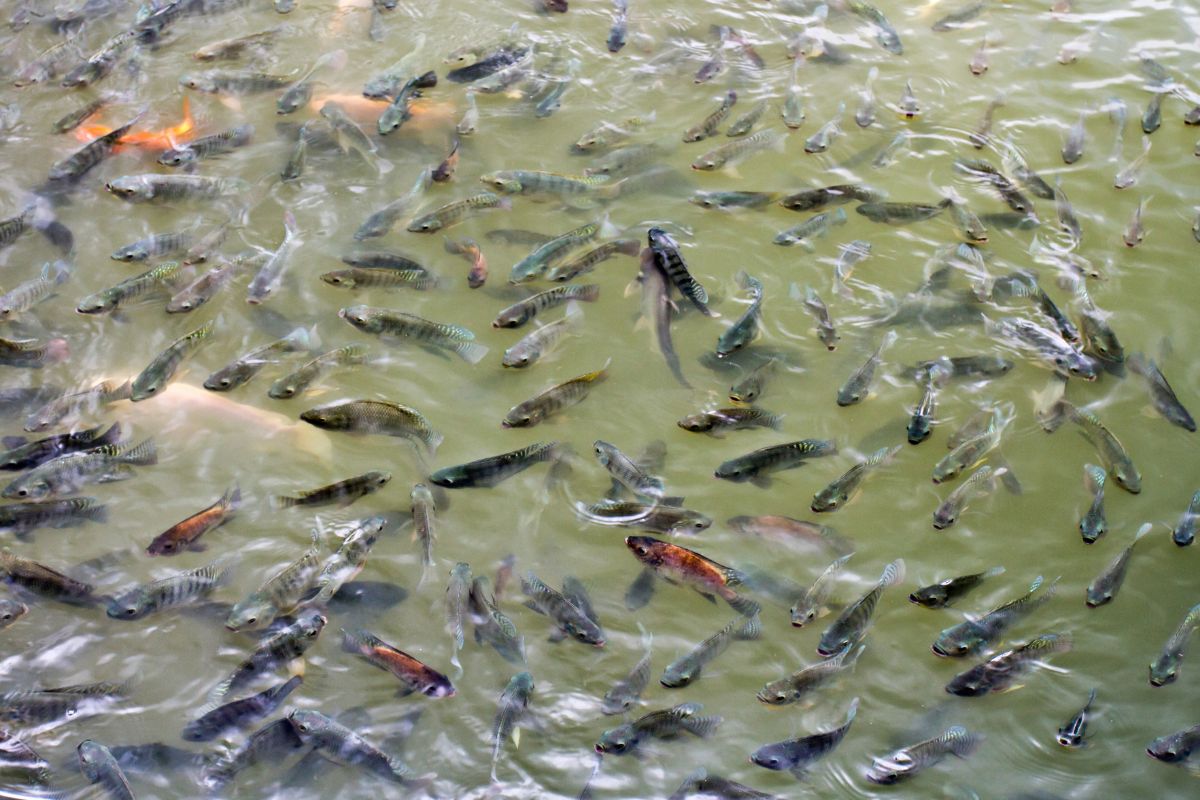
Fresh fish can lose quality quickly after harvest, especially when cooling is delayed. For small fish farmers, fishers and traders, better chilling can protect both quality and selling value. One option studied by ICAR-CIFT is slurry ice, a fluid mixture of tiny ice particles and water.
Unlike ordinary block or flake ice, slurry ice surrounds the fish closely. Its small ice particles create more contact with the fish surface, allowing faster and more even cooling. ICAR-CIFT research says this can also reduce dehydration during storage and help maintain fish quality.
The technology is not completely new in India. ICAR-CIFT researchers have studied slurry ice for several fish species and onboard preservation. Their work has compared slurry ice with conventional flake ice, looking at microbial changes, chemical quality, texture and overall shelf life.
What does the research show?
In a study on Bombay duck, researchers compared fish kept in slurry ice with fish stored in conventional flake ice. The slurry-ice samples showed lower values for several quality indicators, including pH, total volatile base nitrogen and trimethylamine nitrogen during storage.
The same study found that Bombay duck stored in slurry ice retained acceptable quality for up to 15 days, compared with 12 days for the control samples stored in flake ice. This result came from a controlled research experiment and should not be treated as a fixed shelf life for every fish.
ICAR-CIFT has also studied croaker fish under slurry and conventional ice. Researchers reported lower microbial counts and some better quality measures in slurry-ice samples. Sensory and microbiological observations indicated a shelf life of about 15 days under the conditions used in that experiment.
For farmers and fishers, the main attraction is faster chilling. Fish deteriorates through chemical, enzymatic and microbial processes after harvest. Lowering the temperature quickly slows these processes. Slurry ice can cool fish rapidly because its small particles provide a large contact area and surround the product.
How does slurry ice work?
The system can also reduce empty spaces between fish and ice. With conventional solid ice, contact may not be uniform, particularly around uneven surfaces. Slurry ice flows around the fish and can provide more even heat transfer, helping cool the catch more consistently.
But slurry ice is not simply crushed ice mixed with water. The system needs equipment that produces and maintains the required ice concentration and temperature. A 2026 review found that equipment needs, operation complexity and cost remain important challenges for wider use.
This matters for small farmers because buying a complete slurry-ice system may not make sense for every operation. The technology is more likely to suit organised fishers, cooperatives, collection centres, processors or businesses handling enough fish to justify specialised chilling equipment.
Farmers should also consider where the fish will be sold. If the market is nearby and fish reaches buyers quickly, ordinary hygienic icing may be sufficient. When transport takes longer, better chilling can become more useful because maintaining quality becomes important during the extra travel time.
Is it practical for small fish farmers?
The amount of ice needed must also be planned carefully. ICAR-CIFT material notes that conventional fish icing commonly uses a fish-to-ice ratio of about 1:1. Slurry systems change how the cooling medium is prepared and handled, so users need technical guidance rather than simply changing the ice type.
Clean water, clean containers and proper handling remain essential. Better chilling cannot compensate for poor hygiene. Fish should be handled carefully after harvest, protected from contamination and kept cold continuously. Any system should also be operated according to food-safety requirements and manufacturer guidance.
For small fish farmers, the practical question is not whether slurry ice is better in every situation. Research shows clear preservation advantages under tested conditions, but the investment, fish species, transport distance and market value all matter. A cost comparison should come before adopting the technology.
Slurry ice can give fish farmers another tool for protecting quality between harvest and sale. ICAR-CIFT research shows that rapid, even cooling can slow quality deterioration and extend shelf life for some species. But adoption needs local testing, reliable cold-chain management and a clear economic reason.
Also Read: Punarnava Jal – The world’s first organic fertilizer! Know how it is beneficial for farmers?
Contact us – If farmers want to share any valuable information or experiences related to farming, they can connect with us via phone or whatsapp at 9599273766 or you can write to us at “kisanofindia.mail@gmail.com”. Through Kisan of India, we will convey your message to the people, because we believe that if the farmers are advanced then the country is happy.
You can connect with Kisan of India on Facebook, Twitter, and Whatsapp and Subscribe to our YouTube channel.