


Centre Orders States to Intensify Stubble-Burning Action: What Farmers Need to Know

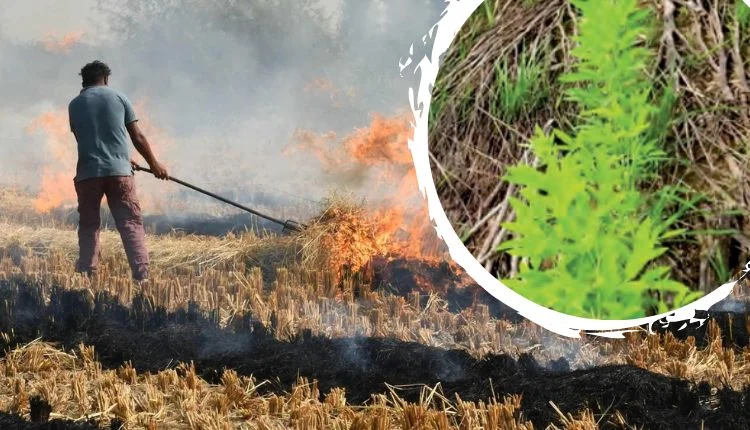
The Centre has asked states to intensify action against stubble burning as the paddy harvesting season progresses and farmers prepare fields for Rabi crops. At a high-level meeting on 13 October, Union ministers directed state authorities to strengthen monitoring and provide practical alternatives to burning crop residue.
The meeting flagged a sharp rise in reported farm fires in Madhya Pradesh and Rajasthan, even as incidents declined in Punjab, Haryana and Uttar Pradesh during the comparison period. The government said district officials must help farmers manage residue within the limited interval between harvesting and the next sowing.
Farm fires rise in Madhya Pradesh and Rajasthan
According to figures discussed at the meeting, Madhya Pradesh recorded 277 farm-fire incidents between 15 September and 12 October, compared with 55 during the corresponding period last year. Rajasthan reported 60 incidents against 20 previously. These increases prompted calls for district-specific plans and stronger field-level monitoring.
The same review reported declines of 53.3% in Haryana and around 32% in Uttar Pradesh compared with the corresponding period last year. Punjab also recorded a fall. Yet the Centre warned that the harvesting season was still underway, meaning the figures could change as more fields are harvested.
Farmers cultivating paddy often face a short turnaround between harvesting and sowing wheat. Clearing fields manually can require substantial labour and time, while residue-management machinery may be expensive or difficult to access at the required moment. Burning can therefore appear to be the quickest option, despite its environmental and soil-related costs.
The Centre said crop residue burning releases pollutants and destroys beneficial soil organisms and nutrients. It urged states to ensure that farmers have affordable, accessible alternatives rather than relying only on warnings or enforcement. The challenge is to make residue management workable within farmers’ sowing schedules and financial constraints.
The Centre said more than 3.54 lakh crop residue management machines had been supplied to states, including 26,109 during the current financial year. Yet a central survey found that around 40% of older machines in Punjab and 48% in Haryana were idle or non-functional, according to the meeting report.
The government has called for repairing existing machinery alongside distributing new equipment. It also wants Custom Hiring Centres activated so small and marginal farmers can rent suitable machines rather than purchase them individually. Farmers should contact local agriculture offices or hiring centres early to check equipment availability, booking arrangements and charges.
What farmers can do with paddy straw
Farmers have several options, depending on their crop, soil, machinery access and local facilities. Residue can be managed in the field with suitable equipment or collected for use in fodder, biomass-based electricity, bio-CNG and bioethanol production. Each option requires suitable handling, equipment and access to a buyer or service provider.
Incorporating residue into soil can help return organic material, but the method must suit the crop and available sowing equipment. Farmers should ask local agricultural experts which approach works with their fields and the time remaining before the next crop. They should not assume every residue-management method is suitable for every farm.
The government has emphasised that crop residue management requires more than machinery distribution. Farmers need timely access to working equipment, affordable services and reliable buyers where straw is collected for industrial use. Without these arrangements, the cost and effort of managing residue may still make burning attractive.
The Centre has also called for stronger links between farmers, biomass aggregators, power plants and biofuel facilities. These supply chains could create additional uses for straw, but they need to operate reliably and offer farmers clear terms. District authorities have been asked to coordinate implementation and improve the use of available funds.
What farmers should check this season
Farmers preparing for wheat sowing should contact their local agriculture department, cooperative or Custom Hiring Centre before harvesting begins. They can ask which machines are operational, when they can be hired and whether local arrangements exist for collecting or purchasing paddy straw. Early planning can reduce last-minute delays.
Farmers should also follow crop-specific advice from their Krishi Vigyan Kendra or state agricultural university. The choice between in-field residue management and collection depends on soil conditions, machinery, crop variety and the time available for sowing. Any subsidy or machinery assistance should be confirmed through official channels rather than assumed to be available automatically.
The Centre’s 13 October meeting places the responsibility on states to prevent farm fires while making practical alternatives available to farmers. The rise in reported incidents in Madhya Pradesh and Rajasthan shows why local monitoring and region-specific planning matter during the harvest season.
For farmers, the key issue is whether working machinery, affordable services and dependable residue buyers are available when needed. Reducing stubble burning will require these arrangements to reach fields on time, alongside enforcement and public awareness.
Also Read: Punarnava Jal – The world’s first organic fertilizer! Know how it is beneficial for farmers?
Contact us – If farmers want to share any valuable information or experiences related to farming, they can connect with us via phone or whatsapp at 9599273766 or you can write to us at “kisanofindia.mail@gmail.com”. Through Kisan of India, we will convey your message to the people, because we believe that if the farmers are advanced then the country is happy.
You can connect with Kisan of India on Facebook, Twitter, and Whatsapp and Subscribe to our YouTube channel.