

Want to Start a Goat or Sheep Farm? What Government Support Can Farmers Get?

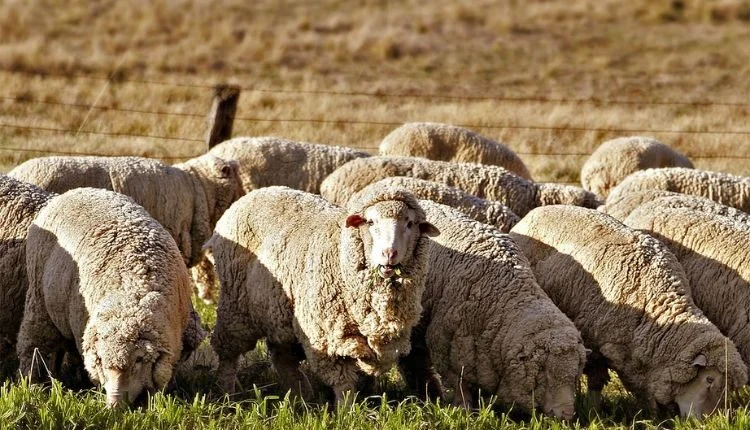
Farmers planning to establish commercial sheep or goat breeding units can get capital support under the National Livestock Mission’s Entrepreneurship Development Programme. The scheme provides a capital subsidy of up to 50% of eligible project costs, subject to the applicable ceiling and conditions.
The programme is not meant for buying a few goats or sheep for backyard rearing. It supports structured breeding enterprises and requires applicants to meet project, animal, infrastructure and financing conditions. Farmers should understand these requirements before preparing an application.
How much subsidy is available?
Under NLM-EDP, eligible beneficiaries can receive a capital subsidy of up to 50% of the project cost, with the maximum subsidy reaching ₹50 lakh for applicable projects. The remaining project cost has to be arranged through a bank loan or the beneficiary’s own contribution.
The subsidy is linked to the eligible capital cost rather than being a simple cash payment for purchasing animals. The exact ceiling depends on the type of enterprise and the applicable NLM guidelines. Farmers should therefore calculate their eligible project cost before estimating the amount they could receive.
The scheme is open to individuals as well as Farmer Producer Organisations, Self-Help Groups, Joint Liability Groups, Farmer Cooperative Organisations and eligible Section 8 companies. This allows both individual entrepreneurs and organised farmer groups to establish livestock enterprises.
For an individual farmer, the project still needs to meet the technical and financial conditions of the programme. Being a farmer alone does not guarantee approval. The proposed unit, financing arrangement and required infrastructure must also satisfy the scheme’s conditions.
The NLM guidelines specify a minimum breeding unit of 500 female animals and 10 males for the sheep and goat entrepreneurship component. The animals are expected to be of suitable genetic quality for the intended production system.
This requirement makes the programme different from schemes aimed at small backyard livestock units. A farmer planning to apply should first determine whether the proposed scale is financially and practically manageable before preparing a project report.
What can the project include?
The subsidy is intended for eligible capital components required to establish the enterprise. The NLM guidelines provide an indicative list of components that can receive support under the sheep and goat breeding activity.
The project can therefore involve more than simply purchasing animals. Farmers need to plan housing, breeding infrastructure and other required facilities as part of the complete enterprise. The exact components and limits should be checked against the current guidelines before submitting the proposal.
The farmer does not necessarily have to finance the entire remaining project cost through personal savings. The guidelines allow the balance to be arranged through a bank or financial institution or through self-financing.
In projects using bank finance, the entrepreneur must meet the lender’s requirements separately. A subsidy approval does not mean that the bank loan is automatically sanctioned. Farmers should discuss the proposed project with the financing institution before committing to major expenditure.
The NLM describes the support as a capital subsidy, and the guidelines provide for back-ended subsidy in the sheep and goat component. This means farmers should not assume that the full subsidy amount will be transferred before the project is established.
The release of subsidy follows the programme’s prescribed process and project conditions. Farmers should understand the payment stages and financing requirements before starting construction or purchasing animals.
Which breeds can farmers choose?
The guidelines allow farmers to select suitable sheep and goat breeds from the prescribed list or in consultation with the state government. Breed choice should match the purpose of the enterprise, local climate, feed availability and market demand.
Farmers should not select animals only because a breed has a higher price in another market. A breed that performs well under local conditions can be more practical than one requiring feed, climate or management conditions unavailable on the farm.
The government designed NLM-EDP to encourage entrepreneurship and breed development in livestock and poultry. For sheep and goats, the programme aims to support organised production systems and create links between livestock producers and markets.
The scheme also aims to improve productivity and promote scientific livestock management. It is part of a broader effort to develop enterprises around livestock production rather than limiting support to individual animals or household consumption.
The scale of the programme has grown considerably. A December 2025 government update reported 3,169 approved small-ruminant projects, covering sheep and goat enterprises, with an approved project cost of ₹2,240.40 crore and approved subsidy of ₹1,050.34 crore.
The same data showed planned capacity of about 11.43 lakh sheep and goats across those approved projects. These figures refer to approved projects and should not be interpreted as the number of farms already fully operational.
Is the scheme available across India?
The National Livestock Mission is implemented across India. The Department of Animal Husbandry and Dairying says the scheme covers entrepreneurship development and breed improvement in poultry, sheep, goat and piggery, along with other eligible activities.
State governments play an important role in processing and verifying applications. Farmers should therefore check the current process with their state animal husbandry department rather than relying on older application procedures or information from private agents.
A farmer should begin with a realistic project plan. It should cover the number and type of animals, housing, breeding arrangements, feed, labour, veterinary care, expected production, market access and financing.
The applicant should then check the current NLM guidelines and the state-level procedure. The Department of Animal Husbandry and Dairying provides information on NLM applications and scheme guidelines through its official website.
Farmers should calculate the total investment, their own contribution, expected loan requirement and recurring expenses. Feed, labour, veterinary care, breeding, insurance, water and electricity can continue to cost money after the project receives capital support.
The subsidy reduces part of the capital burden, but it does not remove the operating costs of running a large livestock enterprise. A farmer should therefore assess whether the unit can remain financially viable after the subsidy is received.
What should farmers avoid?
Farmers should avoid treating the ₹50 lakh figure as a guaranteed payment. It is the maximum subsidy ceiling for applicable NLM-EDP projects, not an automatic amount available to every applicant.
They should also avoid paying private agents based only on promises of approval. The application process is digitised, and farmers should verify the current procedure through the Department of Animal Husbandry and Dairying or their state implementing agency.
For a farmer planning a commercial sheep or goat unit, the National Livestock Mission can reduce part of the initial capital burden. The support is substantial, but it comes with conditions on enterprise size, financing, animals and infrastructure.
Before applying, farmers should first work out whether they can manage the required scale. A 500-female breeding unit needs land, feed, labour, veterinary care and a reliable market. The subsidy alone cannot make the enterprise viable.
The practical starting point is the project report. Farmers should calculate the full cost, identify their contribution, discuss financing with a bank if required and confirm the latest state-level application process before investing.
Also Read: Punarnava Jal – The world’s first organic fertilizer! Know how it is beneficial for farmers?
Contact us – If farmers want to share any valuable information or experiences related to farming, they can connect with us via phone or whatsapp at 9599273766 or you can write to us at “kisanofindia.mail@gmail.com”. Through Kisan of India, we will convey your message to the people, because we believe that if the farmers are advanced then the country is happy.
You can connect with Kisan of India on Facebook, Twitter, and Whatsapp and Subscribe to our YouTube channel.