



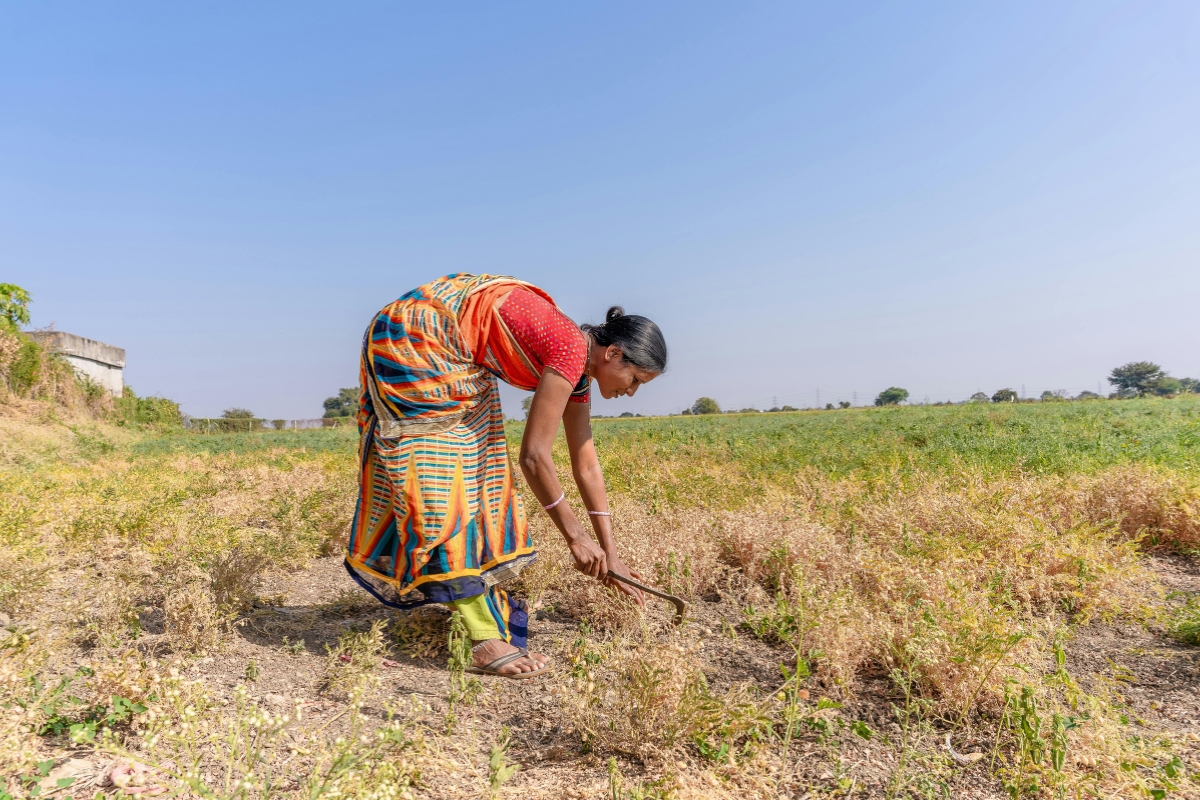
Farmers in Nagpur’s Katol area have been trained to manage Congress grass, an invasive weed that can spread rapidly around agricultural fields and affect farm productivity.
The ICAR-Central Institute for Research on Cotton Technology organised an awareness and demonstration programme on August 20 at Bilawar Gondi village in Katol tehsil. About 25 farmers participated in the programme.
The programme focused on integrated management of Parthenium, commonly known as Congress grass or Gajar Ghaas. Farmers were shown methods to identify the weed and manage it before it spreads further.
Why Congress grass is a farm problem
Parthenium is an invasive weed that can grow rapidly in open areas, field boundaries and wastelands. Once established, it can compete with crops for space, nutrients and water.
The weed can also become a problem for livestock when it grows around grazing areas.
Its spread is particularly difficult to control when farmers remove individual plants but leave large areas of infestation untreated. Seeds can remain in the soil and new plants can emerge in subsequent seasons.
This makes early identification and repeated management important.
Farmers learn integrated control
The ICAR programme used demonstrations rather than classroom training alone. Farmers were shown practical approaches for managing Parthenium in and around agricultural areas.
Integrated weed management means using more than one method instead of depending on a single control measure.
Depending on the stage and location of the infestation, management can include manual removal, preventing seed formation, maintaining crop competition and using suitable control measures recommended by agricultural experts.
Farmers also need to avoid allowing removed plants to produce seeds. A mature Parthenium plant can contribute to further spread if it is left on the field.
Early action can reduce the problem
Weed management is usually easier when infestations are detected early.
Farmers can regularly inspect field boundaries, irrigation channels and unused patches of land. Removing young plants before they flower and set seed can help reduce the number of seeds entering the soil.
This is especially important around farms where machinery, livestock or water movement can help spread seeds to new areas.
Field sanitation can also support crop management. Keeping weeds under control reduces competition between unwanted plants and crops.
Farmers need local weed advice
The most suitable control method depends on the crop, growth stage and location of the weed. A method suitable for an empty field may not be appropriate inside a standing crop.
This is why farmer demonstrations and local agricultural advice matter.
The Katol programme brought scientists directly to farmers and focused on a weed already present in the local farming environment.
Such programmes can also help farmers distinguish invasive weeds from plants that may have other uses.
Weed management is part of farm resilience
Farm productivity depends on more than seeds, fertilisers and irrigation. Uncontrolled weeds can reduce the resources available to crops and add labour costs.
Climate and weather conditions can also influence weed growth and spread. Changes in rainfall, temperature and land-use patterns can create suitable conditions for some invasive plants to expand.
This makes regular field monitoring important.
For farmers in Nagpur, the recent programme offers a practical starting point. Identifying Congress grass early, preventing seed formation and using suitable control methods can help limit its spread.
The larger lesson is simple: weed management works better when farmers act before an infestation becomes difficult and expensive to control.
Also Read: Punarnava Jal – The world’s first organic fertilizer! Know how it is beneficial for farmers?
Contact us – If farmers want to share any valuable information or experiences related to farming, they can connect with us via phone or whatsapp at 9599273766 or you can write to us at “kisanofindia.mail@gmail.com”. Through Kisan of India, we will convey your message to the people, because we believe that if the farmers are advanced then the country is happy.
You can connect with Kisan of India on Facebook, Twitter, and Whatsapp and Subscribe to our YouTube channel.