



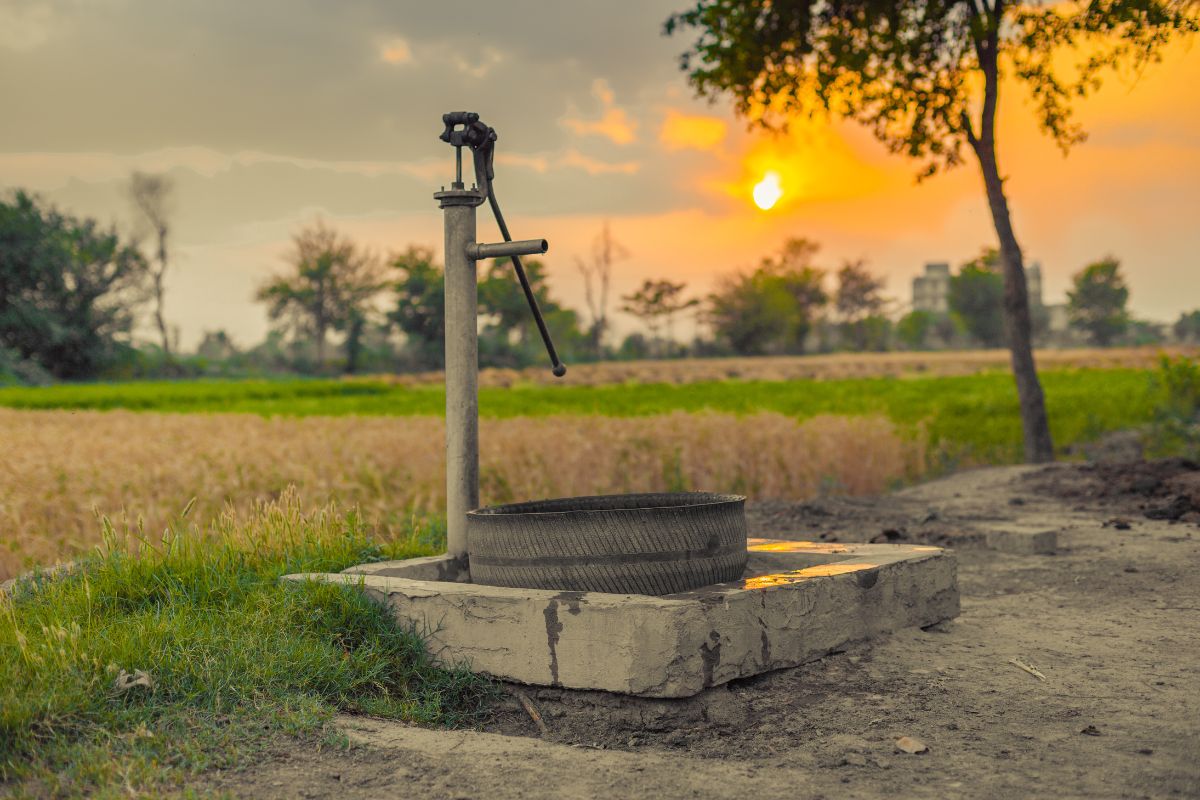
Before sunrise, farmers across Punjab begin preparing their fields for the Kharif season. Tractors move through villages. Tube wells start running. Paddy nurseries are ready. In many districts, the familiar cycle of rice cultivation is beginning once again.
But beneath the fields lies a growing crisis.
The groundwater that powered Punjab’s agricultural success for decades is disappearing.
For years, scientists warned that intensive paddy cultivation was extracting water faster than nature could replenish it. Today, those warnings are no longer theoretical. Falling water tables, rising irrigation costs, and climate-driven rainfall uncertainty are forcing the state to rethink how rice is grown.
The challenge has become one of the most important agricultural questions facing India.
Punjab may produce food for millions, but many experts now believe its farming system is approaching environmental limits.
Punjab became the centre of India’s Green Revolution during the 1960s and 1970s. High-yielding wheat and rice varieties transformed agricultural production and helped the country overcome food shortages. Assured procurement, minimum support prices, irrigation expansion, and government support encouraged farmers to cultivate paddy on a massive scale.
The model worked.
Punjab emerged as one of India’s largest contributors to national food stocks.
But rice came with a hidden cost. Paddy requires enormous amounts of water, and much of Punjab depends on groundwater pumped through millions of tube wells. Decades of extraction gradually pushed water tables deeper underground. Today, large parts of the state are witnessing serious groundwater decline.
Climate Change Is Making the Situation Worse
The water crisis is no longer driven only by agriculture. Climate change is adding pressure. Rainfall patterns have become more unpredictable. Farmers increasingly report long dry spells interrupted by short periods of intense rainfall. Even when total rainfall appears normal, distribution often becomes uneven.
This creates greater dependence on irrigation.
Groundwater becomes the backup system whenever rainfall fails to arrive at critical crop stages. Researchers studying sustainable rice cultivation in Punjab describe groundwater depletion as one of the region’s most serious environmental challenges. Some estimates show groundwater levels falling by more than 40 centimetres annually in several areas.
For farmers, the effects are becoming visible. Wells must be drilled deeper. Pumps run longer. Electricity use increases. Cultivation costs continue rising.
In response, Punjab is aggressively promoting Direct Seeded Rice, commonly known as DSR. Unlike traditional paddy cultivation, DSR eliminates nursery transplantation and reduces water use significantly. Seeds are sown directly into fields rather than being transplanted after puddling. State officials say the technique can reduce irrigation requirements by 15 to 20 percent while also lowering labour costs.
The Punjab government has now set a target of bringing five lakh acres under DSR cultivation during the 2026-27 Kharif season.
A dedicated budget of Rs 40 crore has been allocated for the programme, and farmers are receiving incentives of Rs 1,500 per acre to adopt the practice.
Agriculture Minister Gurmeet Singh Khudian recently described the programme as a major step toward groundwater conservation.
Adoption, however, is not always straightforward. Many farmers acknowledge the water-saving benefits but remain cautious. Traditional paddy transplantation is familiar. DSR requires different weed management practices and careful field preparation. Some growers worry about yield risks, especially during years with uncertain rainfall. Researchers have also pointed to concerns around increased herbicide use in some DSR systems. While the method conserves water, experts continue debating how to balance groundwater protection with soil health and chemical management.
For farmers, the decision often comes down to economics.
Saving water matters.
Protecting yields matters more.
The Bigger Question Is Crop Diversification
Many agricultural economists argue that water-saving rice techniques alone cannot solve Punjab’s groundwater crisis. The larger issue is crop diversification. Despite repeated discussions over the past two decades, rice continues expanding across large parts of the state because it offers stable procurement and assured income.
Alternative crops often lack the same market security.
This creates a difficult policy dilemma.
India still depends heavily on Punjab’s grain production for food security, yet environmental pressures make the current system increasingly difficult to sustain. Experts say meaningful diversification requires strong procurement systems and market support for crops beyond rice and wheat.
Without economic incentives, large-scale shifts remain difficult.
Punjab’s situation is no longer only a state concern. The state plays a critical role in India’s food supply system. Any major decline in agricultural productivity would have implications far beyond its borders. At the same time, continuing current practices indefinitely could deepen environmental damage.
This tension sits at the centre of agricultural planning discussions today. How can India protect food security while reducing pressure on groundwater? There is no simple answer.
Every Kharif season now carries a larger significance in Punjab.
The state is not only planting rice. It is testing whether a new agricultural model can emerge before groundwater reserves fall further. Direct seeded rice, staggered sowing schedules, diversification efforts, and water conservation campaigns all reflect attempts to slow a crisis that has been building for decades.
The outcome will shape more than Punjab’s future.
It may help determine how India balances food production, climate resilience, and water security in the decades ahead.
For now, the pumps continue running beneath the fields. The question is how much longer the water below can keep supporting the system above.
Also Read: Punarnava Jal – The world’s first organic fertilizer! Know how it is beneficial for farmers?
Contact us – If farmers want to share any valuable information or experiences related to farming, they can connect with us via phone or whatsapp at 9599273766 or you can write to us at “kisanofindia.mail@gmail.com”. Through Kisan of India, we will convey your message to the people, because we believe that if the farmers are advanced then the country is happy.
You can connect with Kisan of India on Facebook, Twitter, and Whatsapp and Subscribe to our YouTube channel.